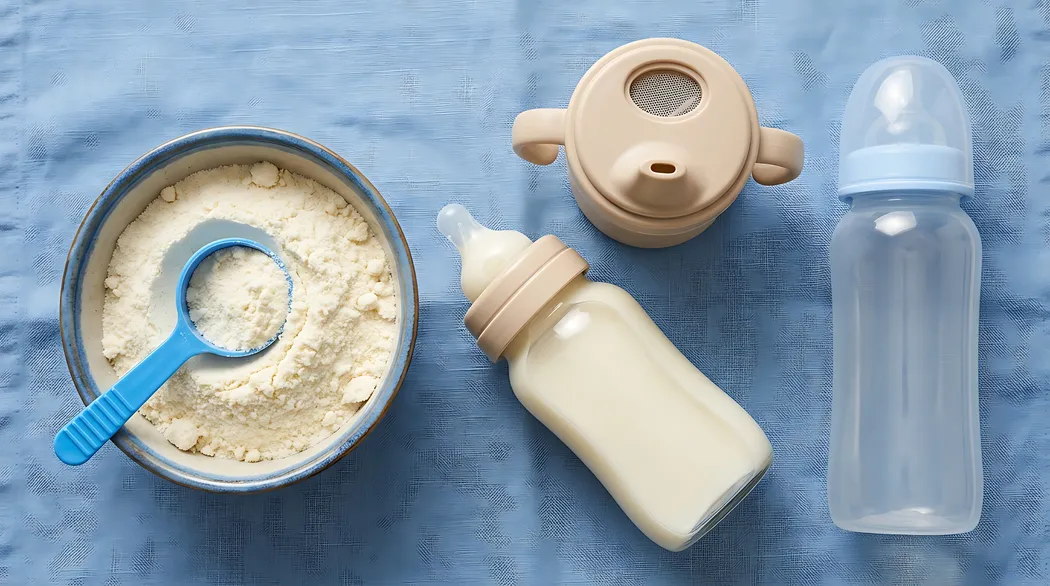
Learn how to choose and use an infant milk bottle, including bottle types, nipple flow, materials, cleaning, sterilisation, feeding safety, and practical tips.
Dr.Ezhilrasan
Choosing the right infant milk bottle can feel overwhelming when you are staring at a wall of options in a pharmacy or scrolling through hundreds of listings online. Yet the decision matters: the bottle type, material, and nipple flow all affect how comfortably your baby feeds, how much air they swallow, and how safely you can clean and store milk. This guide walks you through everything you need to know, from picking the right bottle to keeping it spotlessly clean.
What Is an Infant Milk Bottle and When Do Babies Need One?
An infant milk bottle is a feeding vessel used to give expressed breast milk, infant formula, or a combination of both to babies who cannot or do not feed directly at the breast. Common reasons include low milk supply, a mother returning to work, shared feeding between caregivers, or a medical need identified by a paediatrician.
Before starting bottle feeding, especially with a newborn, talk to your paediatrician or a lactation consultant. They can advise on the right time to introduce a bottle without disrupting breastfeeding. If breastfeeding is established, many consultants suggest waiting until around the 4th to 6th week, though medical situations may require earlier introduction.
Understanding baby feeding bottle types helps you match the bottle to your situation.
Standard-neck bottles are narrow at the top and widely available. They work well with most standard nipples and are easy to replace.
Wide-neck bottles have a broader opening and a nipple shape closer to the breast, making them popular with breastfed babies who switch between breast and bottle.
Anti-colic baby bottles include a venting system such as an internal straw, a membrane, or an angled neck, designed to reduce the air a baby swallows during feeds. They are a practical choice for babies who seem gassy or unsettled after feeding.
Angled bottles have a bent neck so the nipple stays full of milk even when the bottle is held at a lower angle, reducing air intake without a complex vent system.
Disposable-liner bottles use a collapsible plastic bag inside a holder. The bag collapses as the baby feeds, limiting air ingestion. They are convenient for travel but generate more waste and cost more over time.
No single type suits every baby. Many parents try two or three before settling on one that works well.
The best material for baby bottles depends on your priorities around safety, weight, durability, and ease of cleaning.
Material
Pros
Cons
Plastic (BPA-free)
Lightweight, affordable, shatter-proof
Can scratch over time; replace regularly
Glass
No chemical leaching, easy to sterilise
Heavy and breakable; use a silicone sleeve
Silicone
Soft, lightweight, flexible, BPA-free
Costlier; can retain odours if worn
Stainless steel
Very durable, no leaching, long-lasting
Cannot see milk level; heavier and pricier
Plastic bottles manufactured today are required to be BPA-free, but scratches and repeated high-heat sterilisation can degrade the material over time. Glass baby bottles do not carry this risk and are considered a safe choice by many paediatricians, though the breakage risk means you should use a protective silicone sleeve, particularly once babies begin gripping the bottle themselves. Silicone and stainless steel are excellent if budget allows.
Whatever material you choose, look for bottles clearly labelled BPA-free and food-grade, from a reputable manufacturer.
Choosing the Right Nipple Flow and Bottle Size
Using the wrong nipple flow is one of the most common early mistakes parents make. A flow that is too fast can cause choking, overfeeding, and breast refusal. One that is too slow can exhaust and frustrate your baby. This baby bottle nipple flow guide maps flow rate to age and feeding pace to help you get it right.
Flow level
Typical age range
Description
Slow (Stage 1)
0 to 3 months
One small hole; best for newborns and breastfed babies
Medium (Stage 2)
3 to 6 months
Slightly faster; suits babies frustrated on slow flow
Fast (Stage 3)
6 months and above
Faster delivery for older babies
Variable / Y-cut
6 months and above
Flow changes with sucking strength; suits thicker liquids
Age ranges in any nipple flow guide are a starting point, not a rule. Watch your baby: if they are gulping, coughing, or spilling milk, move to a slower flow. If they are working hard and getting frustrated, a slightly faster nipple may help.
For bottle size, a 60 ml to 120 ml bottle suits newborns, who take small, frequent feeds. Move to 150 ml to 250 ml bottles as feed volumes increase, usually from around 3 to 4 months.
Paced bottle feeding is worth learning early. Hold the bottle horizontally, let the baby control the pace, and pause periodically to mimic the rhythm of breastfeeding. It helps prevent overfeeding and eases the transition between breast and bottle.
How to Clean and Sterilise Infant Milk Bottles?
Knowing how to clean an infant milk bottle properly is as important as choosing the right one. Residual milk is a breeding ground for bacteria.
After every feed:
Rinse the bottle and nipple under cold water immediately.
Wash with hot, soapy water using a dedicated bottle brush. Clean inside the nipple carefully.
Rinse thoroughly to remove all soap residue.
Sterilising methods:
Health authorities broadly recommend sterilising baby bottles, especially for newborns and infants under 3 months, those born prematurely, or any baby with a weakened immune system. Choose one of these methods:
Boiling: submerge all parts in water, boil for 5 minutes, and allow to cool before removing with clean tongs.
Electric or microwave steam steriliser: typically 5 to 8 minutes, following the manufacturer's instructions.
Cold-water sterilising tablets or solution: submerge all parts for the time stated on the packet, usually around 30 minutes.
After sterilising, allow bottles to air-dry on a clean rack. Avoid towel-drying, as this can transfer bacteria. Store in a clean, covered container until needed. Report adverse events related to any sterilising product to your healthcare provider or the relevant regulatory authority.
Safe Bottle-Feeding Practices and Common Mistakes
A few habits cause more problems than the bottle itself.
Propping the bottle so the baby feeds alone is unsafe. It raises the risk of choking, ear infections, and tooth decay.
Overheating milk, especially in a microwave, creates hot spots that can scald a baby's mouth. Warm bottles in a bowl of warm water and always test a few drops on your wrist before feeding.
Bottle rot is a real concern. Putting a baby to sleep with a bottle of milk or juice allows sugar to pool around emerging teeth and cause early decay. Water is the only safe option if a bottle is needed at sleep time.
Replace nipples every 1 to 2 months or sooner if you see any discolouration, thinning, stickiness, or small tears. Replace the bottle itself if it is scratched, cloudy, or cracked.
Contraindications and When to Avoid Certain Bottles or Feeding Practices
Standard infant milk bottles are not suitable for every baby.
Babies born with a cleft palate or cleft lip often cannot create enough suction to feed from a standard bottle. Specialised bottles with squeezable bodies or one-way valves are designed for this purpose; your paediatric surgeon or speech therapist will guide you to the right option.
Babies with severe gastro-oesophageal reflux may benefit from an anti-colic baby bottle with a vent system, but the underlying reflux should be assessed by a paediatrician rather than managed with bottle choice alone.
Never use a bottle that is damaged, unlabelled, or of unknown manufacturing origin. Avoid older plastic bottles that may predate BPA-free regulations. If your baby has a known milk protein allergy or intolerance, the formula choice is at least as important as the bottle; work with your doctor on both.
If you notice your baby consistently coughing, gagging, arching their back, or refusing feeds, consult a paediatrician rather than simply switching bottles.
Conclusion
Choosing the right infant milk bottle involves considering the baby's age, feeding needs, nipple flow, bottle material, ease of cleaning, and overall safety. There is no single bottle that works best for every baby, so parents may need to try age-appropriate options while observing how comfortably the baby feeds. Bottles, nipples, and other feeding equipment should be cleaned and sterilised appropriately, particularly for young infants, and damaged or worn parts should be replaced. During bottle feeding, babies should be held in a safe, supported position and should not be left alone with a propped bottle. Whether feeding expressed breast milk or infant formula, following safe preparation, storage, and feeding practices is essential. Parents with concerns about feeding, reflux, poor weight gain, or difficulty using a bottle should seek guidance from a paediatrician or qualified feeding professional.
FAQS
How many bottles do I need for a newborn?
Most parents find that 6 to 8 bottles cover a full day without constant washing. If you plan to breastfeed primarily, 2 to 4 bottles may be enough to start.
Is it safe to reuse boiled water for formula in bottles?
Water should be freshly boiled and cooled to around 70 degrees Celsius before mixing formula, as this temperature helps destroy any bacteria in the powder. Water that has been sitting for more than 30 minutes should be discarded and fresh water boiled.
Can I microwave a baby bottle to warm milk?
No. Microwaves heat unevenly and create hot spots that can scald your baby's mouth even if the outside of the bottle feels warm. Use a bottle warmer or a bowl of warm water instead, and always test the temperature before feeding.
How long can prepared formula stay in a bottle?
Prepared formula kept at room temperature should be used within 2 hours. If refrigerated immediately after preparation, it can be stored for up to 24 hours. Discard any formula left in the bottle after a feed.
What is the difference between anti-colic and regular bottles?
Regular bottles have no air-management system, so air can mix with milk as the baby feeds. Anti-colic bottles use vents, valves, or angled designs to reduce the air swallowed, which may ease gas, fussiness, and discomfort in some babies, though results vary from baby to baby.