logo
0

Infant Teething Age: Timeline, Symptoms & Remedies Guide

Learn when babies start teething, common symptoms, the usual tooth eruption timeline and safe remedies to soothe teething discomfort.

article image

Dr.Ezhilrasan

Every parent remembers the moment their baby's first tooth broke through. Understanding teething infant age, what to expect, and how to help your child through the discomfort can make this milestone far less stressful. This guide covers the full timeline, genuine signs of teething, and the safest ways to bring relief.

At What Age Do Babies Start Teething?

Most babies sprout their first tooth around 6 months of age, but the normal range stretches from 3 to 12 months. Some babies arrive with a natal tooth already present; others celebrate their first birthday still gum-smooth and perfectly healthy.

Timing is largely genetic. If you and your partner were early or late teethers, your baby likely will be too. A child who gets their first tooth at 10 months will still complete the full set of 20 primary teeth on roughly the same schedule as one who started at 4 months.

Most paediatricians consider any first tooth appearing between 3 and 15 months within the normal spectrum. If no teeth appear by 18 months, a dental review is sensible.

Baby Teething Timeline: Order Teeth Appear

Teeth rarely appear randomly. There is a typical sequence, though individual babies vary by a few months either way.
 

Approximate Age    Teeth Appearing
6 to 10 monthsLower central incisors (bottom front pair)
8 to 12 monthsUpper central incisors (top front pair)
9 to 13 monthsUpper lateral incisors (beside top front)
10 to 16 monthsLower lateral incisors (beside bottom front)
13 to 19 monthsFirst molars (upper and lower)
16 to 23 monthsCanines (upper and lower)
23 to 31 monthsSecond molars (upper and lower)

Most children have all 20 primary teeth by their third birthday. By age 1, a typical baby has anywhere from 1 to 8 teeth, though having fewer is completely normal.

Common Teething Symptoms to Watch For

Knowing the genuine signs of teething helps you respond appropriately and avoid alarm when something unrelated crops up.

Reliable teething symptoms in babies include:

  • Increased drooling, sometimes enough to cause a mild chin rash
  • Red, swollen, or tender gum tissue where a tooth is emerging
  • More chewing and mouthing of objects than usual
  • Irritability and disrupted sleep in the days around eruption
  • Pulling at the ear on the same side as an erupting tooth, because pain can radiate
  • Reduced appetite for solid foods due to gum soreness

Does Teething Cause Fever or Diarrhoea?

A teething fever baby is one of the most common concerns parents bring to their doctor, but current evidence does not support a direct link between teething and true fever. A slight temperature rise is sometimes noticed around tooth eruption, but a reading above 38 degrees Celsius is not a proven teething symptom and should be treated as a separate illness.

Loose stools are similarly unproven as a teething symptom. If your baby develops a teething fever, rash, or persistent diarrhoea alongside other signs of illness, consult your doctor rather than attributing everything to a new tooth coming through.

Safe Soothing Remedies for Teething Pain

Learning how to soothe a teething baby at home starts with the simplest options.

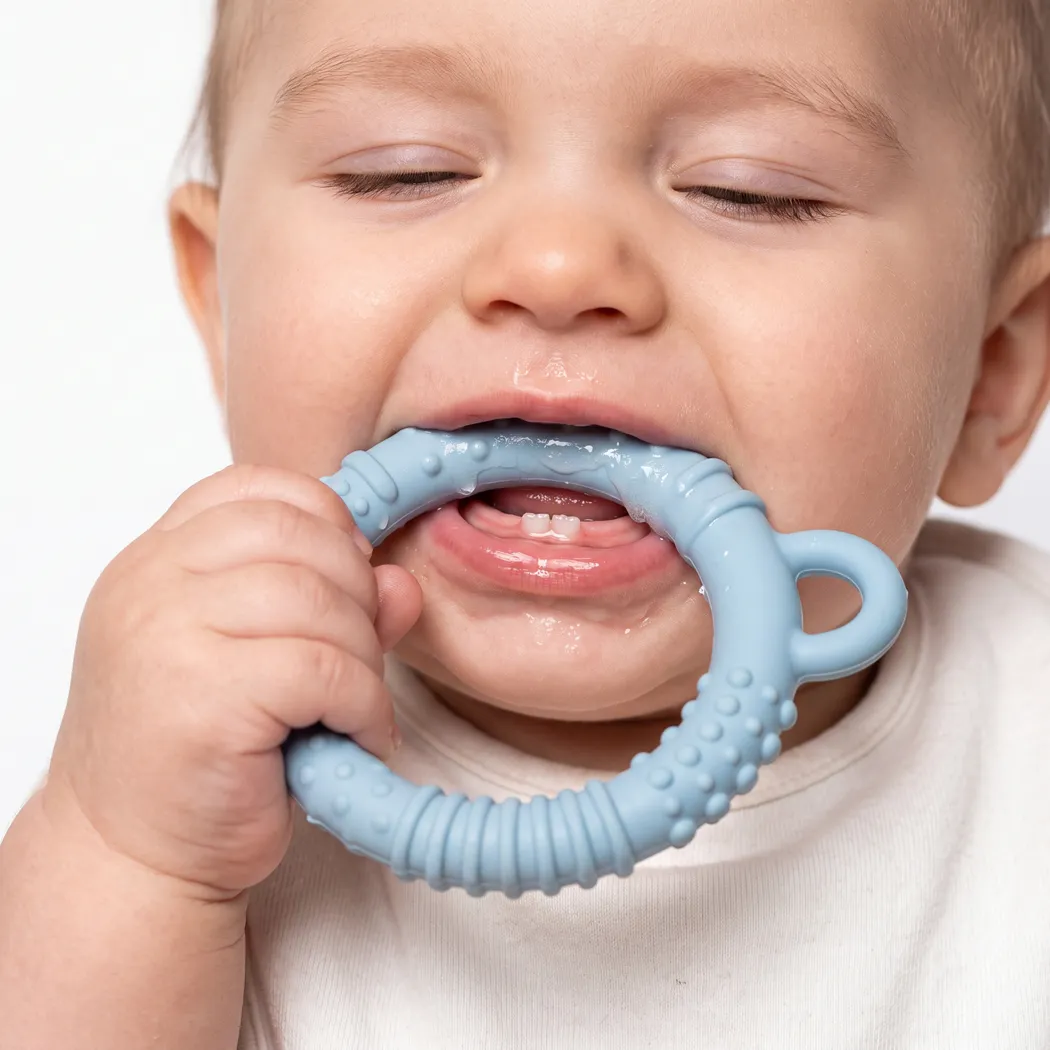
  • Cold pressure works best. Chilling a silicone teether in the refrigerator (not the freezer) for 15 to 20 minutes gives a baby something cold and firm to chew on, numbing the gum and providing counter-pressure against the emerging tooth. A clean, damp washcloth chilled in the fridge works just as well and costs nothing.
  • Gum massage with a clean finger can bring short-term relief. Apply gentle, circular pressure directly on the swollen area for a minute or two. Babies often settle quickly with this approach.
  • Chilled fruit in a mesh feeder suits babies already eating solids. It combines cold relief with something to bite down on.
  • Pain relief medication should only be used under a doctor's or pharmacist's guidance. For babies above the appropriate age, paracetamol syrup in the correct weight-based dose is commonly recommended by paediatricians. Never estimate the dose; always follow medical advice.

Are Teething Gels Safe for Babies?

Topical anaesthetic gels are not recommended for infants. Many contain benzocaine or similar agents that carry safety risks in young children. Plain teething gels without active anaesthetics exist but offer limited evidence of benefit. Discuss any product with your paediatrician before using it on your baby.

Report adverse events to your healthcare provider or the relevant regulatory authority.

Contraindications and Safety Warnings

Certain widely used remedies carry real risks and must be avoided entirely.

  • Benzocaine-containing teething gels can cause a rare but serious condition affecting oxygen in the blood and are not approved for infants under 2 years.
  • Aspirin in any form must never be given to children; it is associated with Reye syndrome, a serious condition affecting the liver and brain.
  • Teething necklaces (amber, silicone bead, or any material worn around the neck) are a strangulation and choking hazard. No pediatric body endorses them.
  • Frozen teethers or ice applied directly to gums can damage sensitive tissue.
  • Homoeopathic teething tablets have drawn regulatory concern in several countries due to inconsistent amounts of active compounds.

Who should not use home remedies unsupervised: Any baby with a known allergy to a product's materials, and any baby showing signs of illness rather than straightforward teething, needs medical assessment first.

How to Choose the Right Teether?

The best teether for infants is one that is safe, appropriately sized, and textured for where the baby is in the teething timeline.

Material: Food-grade silicone and natural rubber are the most widely recommended choices. They are soft enough not to damage emerging gum tissue, durable enough to withstand biting, and easy to clean.

Safety checks before buying:

  • BPA-free and free of phthalates or heavy-metal-based dyes
  • No small detachable parts that could become a choking hazard
  • Solid construction with no liquid-filled chambers that could crack or leak
  • Large enough that the baby cannot push the entire teether into their mouth

Texture variety helps. Different surfaces (nubs, ridges, flat pads) reach different parts of the mouth, which matters as molars start coming in later. A teether that worked well for front teeth may offer little comfort once back teeth are erupting.

Are silicone teethers safe? Yes, provided they carry a safety certification, are free of harmful chemicals, and are inspected regularly for cracks or bite-through damage.

When to Consult a Paediatrician?

Most teething discomfort resolves on its own, but some symptoms need a doctor's attention.

Seek medical review if your baby has:

  • A temperature above 38 degrees Celsius (this is not a normal teething fever symptom and signals a possible infection)
  • A rash spreading beyond the chin drool area
  • Refusal to feed for more than a few feeds in a row
  • Prolonged, inconsolable crying that home measures do not ease
  • Diarrhoea lasting more than 24 hours
  • No teeth at all by 18 months of age

Good general newborn and infant health management goes hand in hand with navigating teething. For broader guidance on keeping your baby comfortable in the early months, see this newborn care essentials guide.

Conclusion

Teething usually begins during infancy, although the timing varies from baby to baby. Sore or swollen gums, increased drooling and a desire to chew are common signs, while significant fever or illness should not automatically be attributed to teething. Safe measures such as a cool teething ring, gentle gum massage and appropriate feeding can help ease discomfort.

FAQS

What age does teething usually start and end?

Most babies cut their first tooth between 6 and 10 months, though anywhere from 3 to 12 months is normal for teething infant age. The full set of 20 primary teeth is usually complete by around 3 years of age.

Can teething cause fever or diarrhoea?

A true teething fever (temperature above 38 degrees Celsius) is not a proven teething symptom; treat any significant fever as a separate illness and consult your doctor. Diarrhoea is similarly unrelated to teething and should not be dismissed.

What home remedies help a teething baby?

A refrigerated silicone teether, a chilled damp washcloth, and gentle finger massage on the gums are the most effective and safest options for soothing a teething baby at home.

Is it safe to use teething gel on infants?

Gels containing benzocaine are not safe for infants and should be avoided. If you are considering any topical product, speak with your paediatrician first.
How long do teething symptoms last per tooth?

Symptoms typically peak in the few days before and just after a tooth breaks through the gum, so around 3 to 5 days per tooth, though this varies by baby.

Apollo 247 Floating Action Button