logo
0

Infant Vitamin A Drops: Why, When, and How Much Babies Need

Learn about infant vitamin A drops, including why babies may need them, when supplementation is recommended, dosage considerations, benefits, safety, and precautions.

article image

Dr. Nallapu Siri

Vitamin A is essential for a baby's vision, immune defence, and healthy growth, and in India, where dietary gaps are common across many communities, infant vitamin A drops can make a meaningful difference in early health outcomes. Yet parents are often unsure whether their child actually needs a supplement, how much to give, and when to start. This guide answers those questions clearly, with safety at the centre.

Do Babies Need Vitamin A Drops?

Not every baby needs a vitamin A supplement, but the risk of deficiency in India is higher than in many high-income countries, and national public-health programmes reflect that reality.

  • Breastfed babies generally receive vitamin A through breast milk, provided the mother's own diet is adequate. If the mother is malnourished or eats very little animal produce and orange-yellow vegetables, her milk may not carry enough of the vitamin to fully meet her baby's needs.
  • Formula-fed babies in most cases receive vitamin A through fortified formula, so routine supplementation is usually unnecessary unless a doctor identifies a shortfall.
  • Preterm and low-birth-weight infants are at higher risk because they miss the last trimester of pregnancy, when vitamin A stores accumulate in the liver. A paediatrician will often recommend supplementation for this group from early on.

Beyond infancy, government guidelines in India include vitamin A supplementation as part of routine immunisation visits, starting at nine months. This is not a prescription for individual deficiency but a population-level measure in a country where subclinical deficiency remains a public-health concern. Always confirm with your child's paediatrician whether your baby falls into a group that genuinely needs extra vitamin A, rather than assuming supplementation is universal.

Recommended Vitamin A Dosage for Infants

The generic name for the active compound is retinol or vitamin A (retinyl palmitate/retinyl acetate are common formulations). Doses are expressed in International Units (IU) or micrograms of retinol activity equivalents (RAE).

India's national programme (under the Ministry of Health and Family Welfare) follows a schedule that paediatricians and ASHA/ANM workers administer at government facilities:

AgeDoseForm
9 months (with measles vaccine)1,00,000 IUOral solution
16 to 18 months2,00,000 IUOral solution
Every 6 months until 5 years2,00,000 IUOral solution

These are single oral doses given at scheduled intervals, not daily supplements. For everyday nutritional support in at-risk infants, a paediatrician may prescribe a lower daily or weekly dose separately; the exact amount depends on the child's age, weight, and clinical status.

Never estimate the dose yourself. Too little fails to correct a deficiency; too much causes toxicity. Both extremes are avoidable with proper medical guidance.

Signs and Symptoms of Vitamin A Deficiency in Babies

Spotting vitamin A deficiency in infants symptoms early can prevent lasting harm, particularly to eyesight. The signs range from subtle to severe:

  • Difficulty seeing in dim light or at dusk (night blindness), though this is hard to detect in very young infants
  • Dry, dull eyes, or a gritty appearance to the white of the eye (conjunctival xerosis)
  • Bitot's spots, which are small, foamy white patches on the conjunctiva in more advanced cases
  • Unusually frequent respiratory or gastrointestinal infections, because vitamin A supports the integrity of mucous membranes that act as a first line of defence
  • Poor weight gain and growth faltering compared with expected milestones

Skin changes such as rough, bumpy skin (follicular hyperkeratosis) can also appear, though these are less common in infants than in older children.

None of these signs should lead to self-diagnosis or self-treatment. If you notice any of them, take your baby to a paediatrician. Diagnosis is clinical, sometimes supported by a serum retinol blood test. Deficiency often overlaps with other nutritional gaps, so a thorough evaluation matters.

When and How to Give Vitamin A Drops Safely?

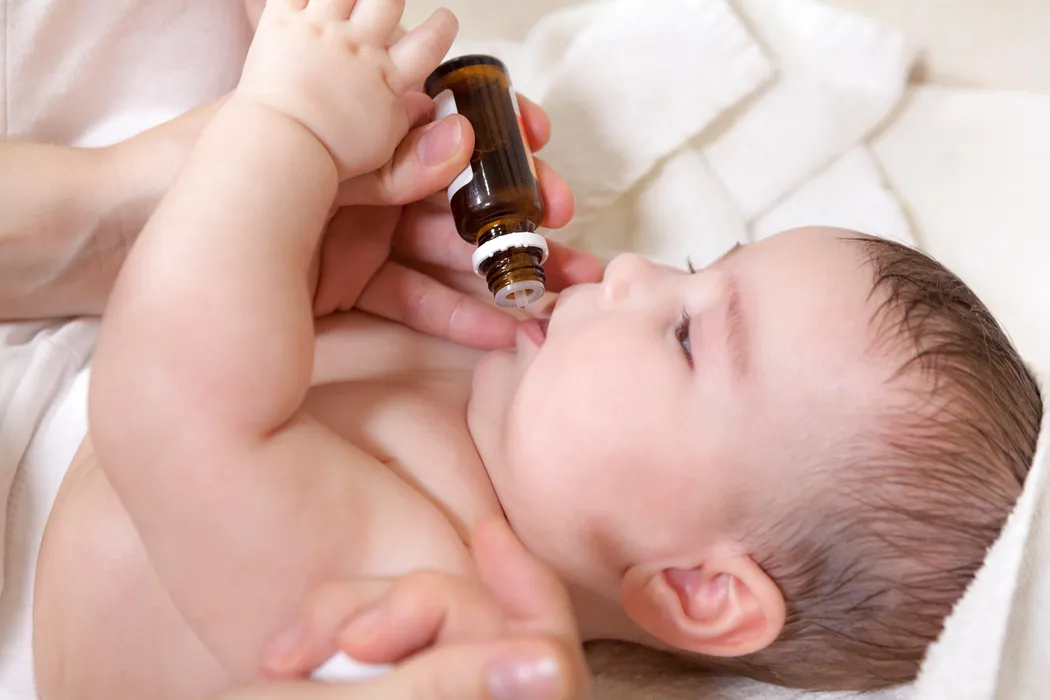
For parents whose doctors have prescribed infant vitamin A drops, here is what safe administration looks like in practice.

Timing with feeds: Vitamin A is fat-soluble, so giving it with or shortly after a feed that contains some fat (breast milk or formula naturally qualifies) helps absorption. For older babies who eat solids, giving the drops alongside a meal containing a small amount of fat is ideal.

How to administer:

  • Use the dropper or dosing device that comes with the product.
  • Place the drops inside the cheek, not directly at the back of the throat, to prevent gagging.
  • Do not mix drops into a full bottle of milk; the baby may not finish it, and you cannot be sure of the dose received.
  • Never use a household teaspoon to measure.

Storage: Keep the bottle tightly closed, away from direct sunlight, and at the temperature stated on the label. Most formulations are stable at room temperature but should not be frozen.

Prescription-only rule: Therapeutic doses of vitamin A syrup for infants, especially anything at or above the doses in the national programme, must be given only under medical supervision. Over-the-counter multivitamin drops that contain a small amount of vitamin A within safe daily limits are different, but even these should be cleared with your paediatrician first. For broader newborn care basics every parent should know, including hygiene and nutrition guidance, speak to your child's doctor.

Contraindications and Precautions

Vitamin A supplementation is not appropriate for every child in every situation.

  • Hypervitaminosis A (vitamin A toxicity) is a real risk with fat-soluble vitamins because the body stores excess amounts in the liver rather than excreting them. Symptoms include bulging fontanelle in infants, vomiting, irritability, and bone pain.
    Babies with existing liver disease should not receive high-dose vitamin A without specialist guidance, because the liver is the primary storage organ.
  • If a baby or a breastfeeding mother is already taking a retinoid medication (used for severe skin conditions), additional vitamin A supplementation can push total intake into a toxic range.
  • Babies who have received a high-dose supplement recently should not receive another dose ahead of schedule.

Always tell your doctor about all supplements and medications the baby is receiving before starting vitamin A drops.

Prescribing Information and Safety Reporting

Vitamin A drops for infants at therapeutic doses are a prescription product. Do not purchase or administer high-dose preparations without a valid prescription from a registered medical practitioner.

Report adverse events to your healthcare provider or the relevant regulatory authority. If your baby shows an unusual reaction after receiving vitamin A drops, such as a swollen fontanelle, persistent vomiting, or extreme irritability, contact your paediatrician immediately or visit the nearest emergency facility.
Conclusion

Vitamin A plays an important role in supporting healthy vision, immune function, growth, and development in infants. While some babies may require vitamin A supplementation based on age, diet, health status, or local supplementation programmes, the need and dose can vary. Parents should not give vitamin A drops without appropriate guidance, as excessive intake can be harmful. Following paediatric or public health recommendations can help ensure that babies receive the right amount safely.

FAQs

At what age should babies start vitamin A drops?

Under India's national immunisation programme, vitamin A supplementation typically begins at nine months of age alongside the measles vaccine. Preterm or malnourished infants may need supplementation earlier, as advised by a paediatrician.

Can vitamin A drops be given daily?

The national programme uses infrequent high-dose schedules rather than daily dosing. Some paediatricians prescribe lower daily doses for specific clinical situations, but daily administration of high-dose drops without medical supervision carries a toxicity risk and should never be self-initiated.

What foods provide vitamin A for infants naturally?

Once a baby starts solids (around six months), foods such as mashed sweet potato, carrot, pumpkin, egg yolk, and ripe mango are good sources. Breast milk from a well-nourished mother also contributes meaningfully in the first six months.

Is vitamin A deficiency common in Indian infants?

Subclinical deficiency, where blood levels are low but frank symptoms have not appeared yet, remains a public-health concern in India, particularly in lower-income and rural populations. This is the main reason India runs a national supplementation programme.

What happens if a baby misses a vitamin A dose?

If a scheduled dose at a government clinic is missed, contact your nearest health centre or paediatrician to reschedule. Do not give a double dose to compensate, as this increases the risk of toxicity.

Apollo 247 Floating Action Button