logo
0

Infant Vitamin Drops: Types, Dosage & When to Start

Learn about infant vitamin drops, including common vitamins and minerals, when supplementation may be needed, safe dosing, administration and precautions for babies.

article image

Dr.Bhanu Prakash

Bringing a newborn home comes with a long list of questions, and one of the most common is whether infant vitamin drops are necessary. For many babies, especially those who are exclusively breastfed, the answer is yes. Breast milk is remarkable, but it does not reliably supply every nutrient a growing infant needs, and certain gaps, particularly vitamin D, can have lasting consequences if left unaddressed.

Do Babies Need Vitamin Drops?

Breast milk provides the ideal mix of proteins, fats, and most micronutrients, but it is naturally low in vitamin D and, depending on the mother's diet, may also fall short on vitamin B12. A breastfed baby's vitamin D deficiency can lead to rickets, a condition that softens and weakens developing bones.

Formula-fed babies are generally better covered because commercial infant formulas are fortified with key nutrients. However, a baby drinking less than roughly 1 litre of formula per day may still not reach adequate vitamin D intake, so supplementation is sometimes needed in early infancy.

The Indian Academy of Pediatrics (IAP) and most global paediatric bodies recommend routine vitamin D supplementation for all breastfed infants, starting shortly after birth. If you are unsure whether your baby needs drops, your paediatrician is the best person to advise you based on your infant's diet, sun exposure, and health status.

Recommended Vitamins and Minerals for Infants

Not every baby needs every supplement. The nutrients most commonly requiring supplementation are:

  • Vitamin D is the most widely recommended supplement for infants worldwide. It supports bone mineralisation, calcium absorption, and immune function.
  • Iron becomes especially important from around 4 to 6 months. Breast milk contains iron in a highly bioavailable form, but the total amount declines relative to a growing baby's needs. Preterm infants and those born with low birth weight often need iron drops for infants from as early as 2 to 4 weeks of age.
  • Vitamin B12 matters most for babies born to mothers following a strict vegan or vegetarian diet, since B12 is found almost exclusively in animal-source foods.
  • Vitamin K is given as a single injection at birth in most hospitals to prevent rare but serious bleeding. It is not an ongoing drop, but worth noting as part of the newborn nutrient picture.

Multivitamin drops for babies are available and can cover several nutrients in one dose, but they are not always necessary. A paediatrician will usually recommend targeted supplementation rather than a broad multivitamin unless there is a specific clinical reason.

Recommended Dosage by Age

The figures below are general illustrative ranges. Always confirm the correct baby vitamin supplement dosage for your child with a paediatrician, because individual needs vary significantly.
 

Nutrient    0 to 6 months6 to 12 months
Vitamin D400 IU per day400 IU per day
Iron (if indicated)2 mg of elemental iron for preterm or low-birth-weight infants, as recommended by the paediatricianIAP recommended elemental iron dose for preterm or low-birth-weight infants under 6 months
Vitamin B12 (if indicated)Supplementation should be individually assessed and prescribed by a paediatrician, particularly for exclusively breastfed infants of mothers following a vegan dietIAP or ICMR-NIN recommended B12 dose for breastfed infants of vegan or vegetarian mothers, 0 to 6 months

The 400 IU per day figure for vitamin D is consistent with recommendations from major paediatric bodies for healthy term infants. Higher doses may be considered for preterm babies or confirmed deficiency, but only under medical supervision.

Liquid vitamin preparations are concentrated. A small excess repeated daily can accumulate quickly, so never estimate doses by eye.

When to Start Vitamin Supplementation?

For vitamin D, the IAP advises starting within the first few days of life for exclusively or predominantly breastfed infants. Waiting weeks is not ideal because very young babies have limited sun exposure and their stores from birth deplete rapidly. When to start vitamin D for infants is one of the most frequent questions new parents ask; the short answer is: within the first week if your baby is breastfed.

Iron supplementation timing depends on feeding method and gestational age:

  • Term, exclusively breastfed babies: iron drops are typically introduced around 4 to 6 months, alongside the start of complementary foods.
  • Preterm or low-birth-weight babies: earlier supplementation, sometimes from 2 to 4 weeks, is often recommended.
  • Formula-fed term babies: most commercial formulas contain added iron, so additional iron drops for infants are usually unnecessary unless a doctor identifies a deficiency.

How to Administer Infant Vitamin Drops Safely?

Getting vitamin drops into a baby can feel tricky at first. A few practical points:

  • Use only the dropper supplied with the product. Droppers from different products are not interchangeable and can alter the dose.
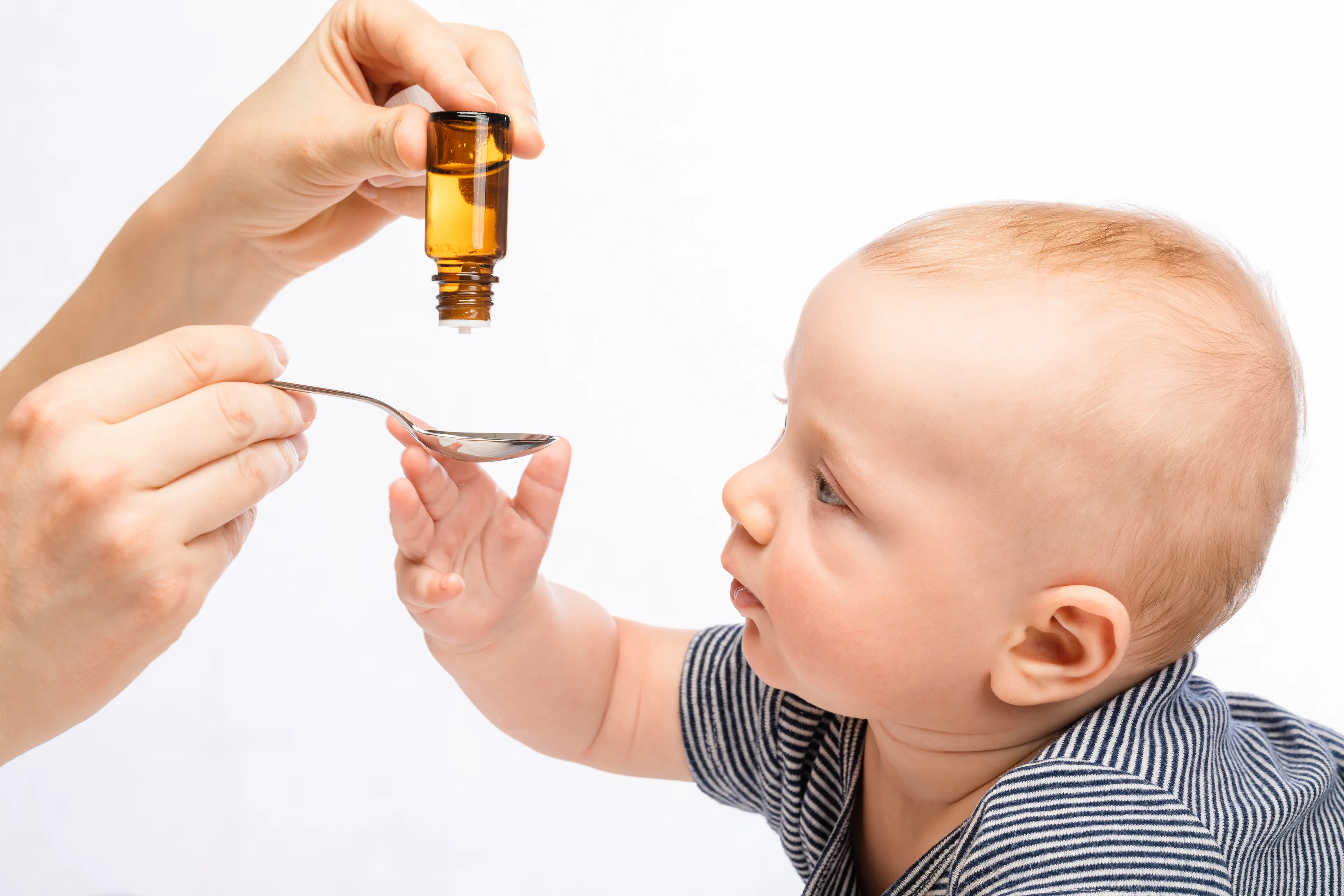
  • Place the drops on the inside of the baby's cheek or under the tongue rather than at the back of the throat, which can cause gagging.
  • Drops can be mixed into a small amount of expressed breast milk or formula in a spoon, but avoid adding them to a full bottle in case the baby does not finish it.
  • Give drops at the same time each day so it becomes routine and missed doses are easier to avoid.
  • Store as directed on the label, usually at room temperature away from direct sunlight, and recap tightly after each use.
  • Never exceed the prescribed dose.

For broader guidance on newborn care basics beyond nutrition, including umbilical cord care and hygiene in the early weeks, Apollo's newborn care resources are a helpful starting point.

Contraindications and Precautions

Infant vitamin drops are safe for most babies when used as directed, but there are situations where caution or medical clearance is needed before starting supplementation.

Vitamin D supplementation should be approached carefully if your baby:

  • Has a condition affecting calcium metabolism, such as hypercalcaemia or certain rare genetic disorders
  • Is receiving other vitamin D-containing preparations, including some fortified formulas, where combined intake could exceed safe levels
  • Has a known allergy to any ingredient in the specific drop formulation

Hypervitaminosis D (vitamin D toxicity) is the most important overdose risk with infant vitamin drops. Symptoms can include excessive thirst, irritability, vomiting, poor weight gain, and in severe cases, kidney damage. This is why sticking to the recommended dose matters so much.

Iron drops should be used with caution in babies with certain rare conditions affecting iron metabolism. Never give iron supplementation without a paediatrician's guidance, as excess iron can be harmful.

If your baby has any chronic health condition, was born very preterm, or is taking other medications, always discuss supplementation with your doctor before starting.

Report any adverse events or unexpected reactions to your healthcare provider or the relevant regulatory authority. In India, adverse drug reactions can be reported through the Pharmacovigilance Programme of India (PvPI) via your nearest ADR Monitoring Centre.

Conclusion

Infant vitamin drops can help provide specific vitamins or minerals when a baby has an identified nutritional need or is at risk of deficiency. The need for supplementation varies with age, feeding method, diet, medical conditions and local guidance. Parents should use products formulated specifically for infants and follow the recommended dose rather than giving multiple supplements without professional advice. Vitamin drops should complement, not replace, breast milk, infant formula or age-appropriate complementary foods. If you are unsure whether your baby needs a supplement, or if there are concerns about feeding, growth or possible deficiency, consult a paediatrician before starting or changing supplementation.
FAQS

Can I give my baby too much vitamin D?

Yes. Excess vitamin D causes hypervitaminosis D, which can lead to high calcium levels, vomiting, irritability, and kidney problems. Always stick to the dose your paediatrician recommends and avoid giving multiple products that contain vitamin D simultaneously.

What happens if I miss a dose of vitamin drops?

Give the dose as soon as you remember, but if it is almost time for the next scheduled dose, skip the missed one and carry on as normal. Never double up to make up for a missed dose.

Do vitamin drops cause side effects in babies?

At recommended doses, side effects are uncommon. Some babies may show mild digestive upset, particularly with iron drops, which can cause darker stools or occasional constipation. If you notice persistent vomiting, rash, or unusual symptoms, contact your paediatrician promptly.

Can vitamin drops be given with formula milk?

Vitamin D drops can be added to a small amount of formula, but add them to a spoon or a portion of the feed rather than a full bottle, so you can be sure your baby receives the complete dose. Iron drops are best given on an empty stomach or with a small feed for better absorption.

How long should infants take vitamin D drops?

Most guidelines recommend continuing vitamin D supplementation throughout infancy and into early childhood, particularly if the child's diet and sun exposure remain limited. Your paediatrician will advise when, and whether, supplementation can be stopped or reduced.

Apollo 247 Floating Action Button