logo
0

Nestlé CERELAC® — Is It Safe for Your Baby?

Learn whether Nestlé CERELAC® is safe for babies, how its ingredients are tested and how freshness is maintained without preservatives. Explore its safety standards, digestion considerations and independent lab verification.
 

article image

Dr. Bhanu Prakash

Safety is one of the biggest concerns parents have when choosing food for their baby, and rightly so. When it comes to a packaged baby cereal, the questions that come up most often are simple but important: Is it safe? How is it actually tested? And does it affect digestion? This article walks through what Nestlé says about its safety standards for CERELAC®, using information from its official sources so you can feel more informed the next time you reach for a pack.
 

How we ensure Nestlé CERELAC is safe for your baby | Cerelac 
 

Why Does Safety Matter More During This Stage?


Between six months and two years, a baby's body is changing faster than at almost any other point in life. The gut is still maturing, the immune system is still learning to tell harmless substances apart from genuine threats, and the kidneys and liver, the organs responsible for processing and clearing anything a baby eats, are still developing the full capacity they'll eventually have as an adult. This is exactly why food safety standards for infants tend to be stricter than those for general food products, and why parents are right to ask more questions before introducing something new.

It also explains why "safe" isn't a single, simple claim for a baby food brand to make. It has to hold up across several different dimensions at once: the raw materials going in, the way the product is manufactured, how it's packaged and stored, and how it behaves once it reaches a baby's digestive system. 
 

Is Nestlé CERELAC® Safe for Babies? 

Yes, according to Nestlé, CERELAC® is safe for babies. To help ensure this, batches are tested to be free from preservatives, flavours and colours, and the brand's strict safety protocols are designed to meet the standards set by FSSAI (the Food Safety and Standards Authority of India). Nestlé has also stated publicly that it strictly adheres to the regulations and standards set by FSSAI and BIS (the Bureau of Indian Standards) for infant food products, in addition to following Codex international standards, particularly around added sugars.

This compliance isn't a one-time check. It applies across the manufacturing process, from how ingredients are sourced and screened to how the cereal is processed to how it is packaged and sealed. In other words, safety isn't treated as a single test that a finished product either passes or fails - it's a standard that's meant to be maintained at every step along the way, starting well before the cereal is even made.
 

How Are The Ingredients Checked?

Safety, in Nestlé's framing, starts well before the cereal reaches the packaging line, it starts with the raw materials themselves. According to Nestlé, every ingredient undergoes rigorous screening:

  • Milk is tested for aflatoxins, heavy metals, antibiotics and pesticides
  • Grains and other ingredients are screened for microbial purity and chemical contaminants

The idea behind this is straightforward: if a contaminant is going to be caught, it's far better to catch it at the raw-material stage than after the product has already been made. Only ingredients that clear these checks move forward into the making process.

This screening step also reflects something worth understanding about how fortified infant foods work more broadly. The ingredients that go into a product like CERELAC® - milk solids, grains, fruit or vegetable concentrates - are agricultural and dairy products by nature, which means their quality can vary depending on the source, the season and the supply chain they pass through. Testing raw materials before it's used is what allows a brand to keep that natural variability from carrying through into the finished product a baby actually eats.
 

How Is Freshness Maintained During Manufacturing?

Once the ingredients pass screening, freshness is maintained through a few deliberate steps in how the cereal is made and packed:

  • Heat treatment: High-temperature processing is used to keep the cereal free from microbes such as bacteria and viruses.
  • Dehydration: Drying reduces the moisture content to a level where future bacterial growth is prevented. This is part of how the product manages a shelf life of around twelve months without preservatives.
  • Oxygen removal during packaging: The air inside the sealed pack is replaced with a food-grade inert gas (nitrogen). This helps prevent oxidation and rancidity, keeping the product fresh and nutrient-dense without relying on chemical antioxidants.

Together, these three steps are what allow Nestlé to make CERELAC® with No Preservatives while still holding up on a shelf for several months, as long as the pack remains sealed. It's worth understanding why this combination works: bacteria and other microbes generally need moisture, oxygen and a hospitable temperature to grow. Removing these factors significantly slows down spoilage, and CERELAC®'s process is designed to address these issues at once, rather than relying on a single safeguard.

It's also worth keeping in mind that this shelf life applies specifically to the sealed, unopened pack. Once a pack is opened, the same protections, particularly the nitrogen environment inside, are no longer in place, which is why it matters to follow the storage guidance on the pack once it's been opened, and not assume the printed shelf life still applies in the same way.

For parents who want to verify this for themselves, Nestlé has built in a way to do exactly that: each pack carries a QR code that, when scanned, shows test results from independent, NABL-certified laboratories. This means the safety claims on the box aren't only a statement from the brand - they're backed by third-party lab data that you can look up yourself. NABL accreditation is a recognised mark of laboratory competence in India, which means the labs producing these results are themselves periodically assessed against international standards for testing and calibration. For a parent who wants more than a printed claim to go on, this is a fairly direct way to check the underlying data.
 

Does Nestlé CERELAC® Cause Constipation?

No, Nestlé CERELAC® is not known to cause constipation.
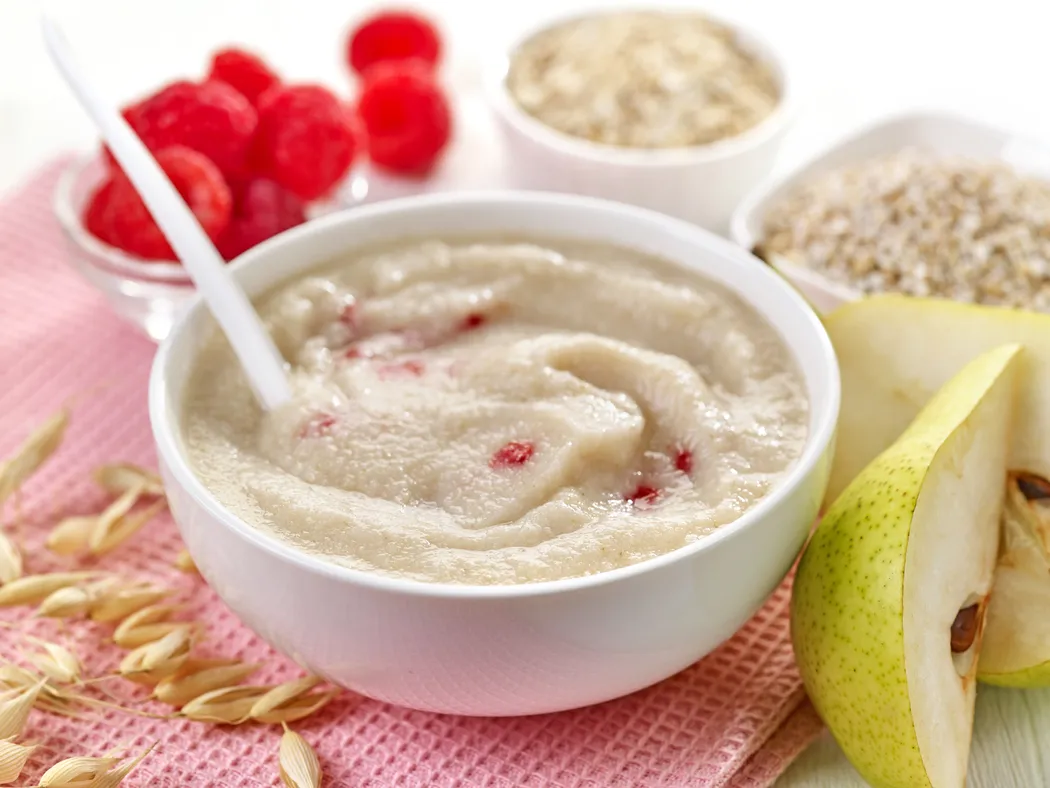
CERELAC’s ingredient list mentions an ingredient called alpha amylase. This is an enzyme which breaks down the complex carbohydrates in cereal grains into simpler ones. Infact, examples of amylase rich foods are sprouted grains, banana which are good for digestion of babies.

That said, every baby's digestion responds a little differently to new foods, especially during the early months of complementary feeding. Constipation around this stage is fairly common and is often tied to broader changes happening at the same time — a baby moving from an almost entirely liquid diet to one that includes solids for the first time, changes in how much water they're getting, or simply trying several new foods in close succession, which makes it harder to isolate any one cause.

If you do notice constipation after introducing CERELAC®, or any new food, for that matter, it's worth speaking to your paediatrician to understand what might be behind it, rather than assuming it's necessarily linked to the cereal itself. Sometimes it's about hydration, sometimes it's about the broader mix of foods being introduced, and a paediatrician is best placed to help you figure out which it is, given how many variables tend to be changing at once during this stage of feeding.


Is Nestlé CERELAC® good or bad for babies ?

The honest answer is that this is not really a question of being good or bad but rather your choice. What makes Nestlé CERELAC® good is that it is made from three very familiar ingredients: grains, milk, and fruits or vegetables. Nestlé CERELAC® does not have too much sugar and has no preservatives, no added colours and no flavours. In addition, Nestlé CERELAC® is a source of 15 key nutrients, that support your baby during a stage when they are growing and developing quickly:

•    Brain and cognitive development: Supported by Iron, Omega-3 (ALA) and Vit.B1
•    Bone and muscle growth: Supported by Protein, Calcium, Vitamin D and Phosphorus
•    Immune function and a reduced risk of infections: Supported by Vitamins A, C and Zinc

Nestlé CERELAC® offers consistency, with fortified nutrition and rigorous safety testing in every serving. 
But CERELAC® is designed to be a part of a varied diet with 1-2 serves a day only, working alongside breastmilk and the home foods you are introducing, rather than the only thing on your baby’s plate.

Hence you should evaluate which complementary feeding option best meets your baby's nutritional needs and stage of development basis your choice and your paediatrician's advice. And as always, do speak to your paediatrician before introducing any new foods to your baby.
 

The Bigger Picture On Safety

Taken together, these points are meant to address the questions parents most commonly have at this stage: Cerelac ingredients undergo rigorous screening before manufacturing even begins, a manufacturing process built around heat, dehydration and oxygen control instead of chemical preservatives, independent lab verification you can check yourself via QR code, and a digestion-focused enzyme system designed to make the cereal easier on a baby's stomach. That makes CERELAC® a product that can be trusted for a baby at this stage of growth.None of this replaces your paediatrician's advice for your specific baby - but it does give you a clearer picture of what "safe" means in Nestlé's own description of the product, and how to verify it rather than just take it at face value.
 

Apollo 247 Floating Action Button