logo
0

Is Vicks VapoRub Safe for Newborns? Parent Guide

Learn whether Vicks VapoRub is safe for newborns, why it may be unsuitable for young babies, ingredients to avoid, and safer options for congestion.

article image

Dr.Vasantha Sree

When your newborn is congested and struggling to breathe comfortably, the urge to reach for something familiar like Vicks VapoRub is completely understandable. But vicks vaporub newborn use is a situation where good intentions can lead to real harm. Here is what every parent needs to know before opening that iconic blue jar.

Why Vicks VapoRub Is Not Recommended for Newborns?

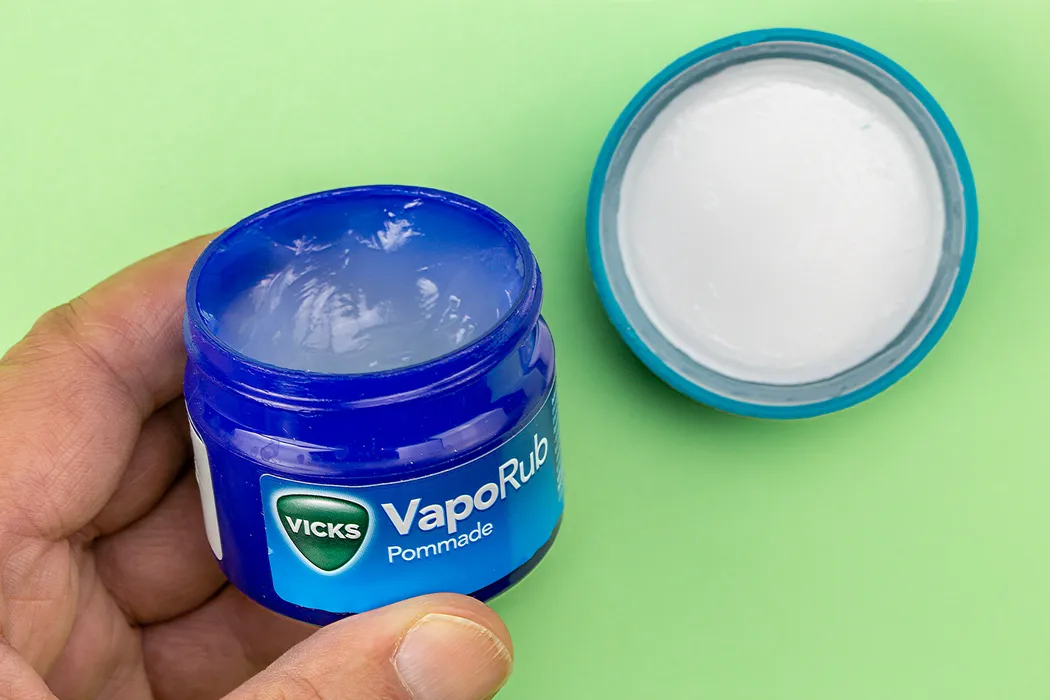
Vicks VapoRub contains three active ingredients: camphor, menthol, and eucalyptus oil. In adults, these create a cooling sensation that eases the feeling of congestion. In infants, especially newborns, the same compounds can be dangerous.

The manufacturer's own label states the product should not be used on children under 2 years of age. This is not cautious over-statement. Research has shown that camphor and menthol can overstimulate an infant's airways, causing mucous membranes to produce more secretions rather than fewer. A newborn's airway is narrow to begin with, so any increase in secretions or swelling can quickly turn uncomfortable breathing into a genuine emergency.

Camphor is also absorbed through the skin more readily in infants than in adults, raising the risk of systemic toxicity even from external application. So to answer a common question directly: is vaporub safe for babies under 2? No. There is no safe dose or application site for this age group.

What Happens If Vapor Rub Is Used on a Newborn?

Knowing vicks vaporub for babies safety risks means understanding what accidental or uninformed exposure can look like. Symptoms can appear within minutes to hours and may include:
  • Rapid or laboured breathing
  • Worsening nasal congestion, the opposite of the intended effect
  • Skin redness, rash, or irritation at the application site
  • Watery eyes and increased mucus production
  • Agitation and difficulty settling
  • In rare but serious cases involving camphor ingestion or heavy skin absorption: seizures, vomiting, or loss of consciousness

If you notice any of these signs after applying a vapor rub product to a newborn, remove clothing covering the area, wipe the skin gently with a soft damp cloth, and call your paediatrician or a poison helpline immediately. Do not wait to see if it improves.

Report adverse events to your healthcare provider or the relevant regulatory authority.

Contraindications and Who Should Never Use It?

Camphor menthol infant risk is highest in specific situations. Vicks VapoRub is contraindicated in:

  • Children under 2 years: Vicks VapoRub should not be used in infants or children younger than 2 years.
  • Newborns and premature babies: Avoid using vapour rubs containing camphor, menthol, or eucalyptus in newborns and premature babies unless specifically advised by a healthcare professional.
  • Near the nose, mouth, or eyes: Do not apply vapour rub near these sensitive areas, as the ingredients can cause irritation.
  • Broken or irritated skin: Do not apply the product to broken, inflamed, or irritated skin, as this may increase irritation and absorption.
  • Respiratory conditions: Children with asthma or other respiratory conditions should not use such products without medical advice.
  • Known sensitivities: Avoid use in anyone with a known allergy or sensitivity to camphor, eucalyptus, menthol, or any other ingredient in the product.

These are not edge-case warnings. They reflect the core pharmacology of the product and are consistent with paediatric medical guidance.

Safer Alternatives for Newborn Congestion

The reassuring part: newborn congestion home remedies that are genuinely safe do exist. None of them involve medicated rubs.

  • Saline nasal drops: Saline drops are a simple option for relieving infant nasal congestion. Place a few drops in each nostril to loosen mucus, then use a soft nasal aspirator if needed. Choose plain saline without added medication.
  • Cool-mist humidifier: A cool-mist humidifier can add moisture to the air and may help soothe irritated nasal passages. Clean it regularly to reduce mould and bacterial growth, and keep it safely out of your baby's reach.
  • Upright positioning: Holding your baby upright while they are awake may make breathing more comfortable during congestion. Do not use pillows, folded towels, wedges, or other positioning devices inside the baby's cot, and always follow safe-sleep guidance.
  • Warm, steamy bathroom: Sitting with your baby in a warm, steamy bathroom for a short period may temporarily loosen mucus. Keep your baby away from hot water and direct steam to prevent burns.
  • Frequent feeds: Offer feeds regularly to help maintain hydration. If nasal congestion makes feeding difficult, smaller, more frequent feeds may be easier for some babies.

Baby cold relief without medicine is almost always the right approach for newborns. Over-the-counter cold medicines, decongestants, and antihistamines are not recommended for children under 2.

If you are curious about traditional approaches, some parents explore ayurvedic remedies for cold relief for older family members, but always confirm any remedy with your paediatrician before trying it on a newborn. For broader guidance on keeping your baby well in the early weeks, this newborn care essentials guide covers useful practical tips.

When to Call a Paediatrician?

Mild congestion in a newborn often resolves on its own in 7 to 10 days. But some signs mean you should not wait.

Call your paediatrician promptly if your baby:

  • Is under 3 months old and has any fever. A rectal temperature of 100.4 degrees F (38 degrees C) or higher in this age group is a medical emergency, not a "wait and see" situation.
  • Is breathing rapidly, using belly muscles to breathe, or has nostrils that flare visibly with each breath
  • Has bluish or greyish colour around the lips or fingertips
  • Refuses to feed or is taking far less than usual
  • Is unusually drowsy or difficult to wake
  • Has symptoms that worsen after several days rather than improving gradually

A paediatrician can rule out conditions like RSV, whooping cough, or pneumonia, all of which can look like a common cold in the early stages but require proper treatment.

Conclusion

Vicks VapoRub is not recommended for newborns or children under 2 years because its ingredients, including camphor, menthol, and eucalyptus oil, can pose safety risks in young children. For a congested newborn, safer supportive measures include plain saline nasal drops, gentle nasal suction when needed, a clean cool-mist humidifier, adequate feeding, and keeping the baby upright while awake. Never use medicated vapour rubs, over-the-counter cold medicines, or decongestants on a newborn without medical advice. Seek prompt medical attention if your baby has difficulty breathing, feeds poorly, becomes unusually sleepy, develops bluish or greyish skin, or has a temperature of 38°C (100.4°F) or higher if under 3 months old.

FAQS

Can I put Vicks VapoRub on my newborn's feet?

No. Applying Vicks VapoRub anywhere on a newborn, including the feet, is not safe. The skin on the soles is thinner than many people assume, and camphor can still be absorbed, posing a toxicity risk.

At what age can babies use Vicks VapoRub?

The manufacturer states Vicks VapoRub is not suitable for children under 2 years of age. Always read the label and check with your paediatrician before using any medicated product on a young child.

Is Vicks BabyRub different from regular VapoRub?

Yes. Vicks BabyRub is a separate product formulated without camphor, and it is labelled for use in babies 3 months and older. It is not the same as regular VapoRub, and even BabyRub should be used only as directed and kept away from the face.

Can Vicks vapours in the room affect a newborn?

They can. Diffusing or heating products containing camphor or menthol in a small, enclosed room can concentrate vapours to a level that irritates a newborn's airways. It is safest to keep such products out of the baby's immediate environment entirely.

What home remedies help a newborn with a blocked nose?

Saline nasal drops followed by gentle suctioning with a nasal aspirator are the most effective and safest options. A cool-mist humidifier and keeping the baby in an upright position during feeds also help ease congestion without any risk of adverse effects.

Apollo 247 Floating Action Button