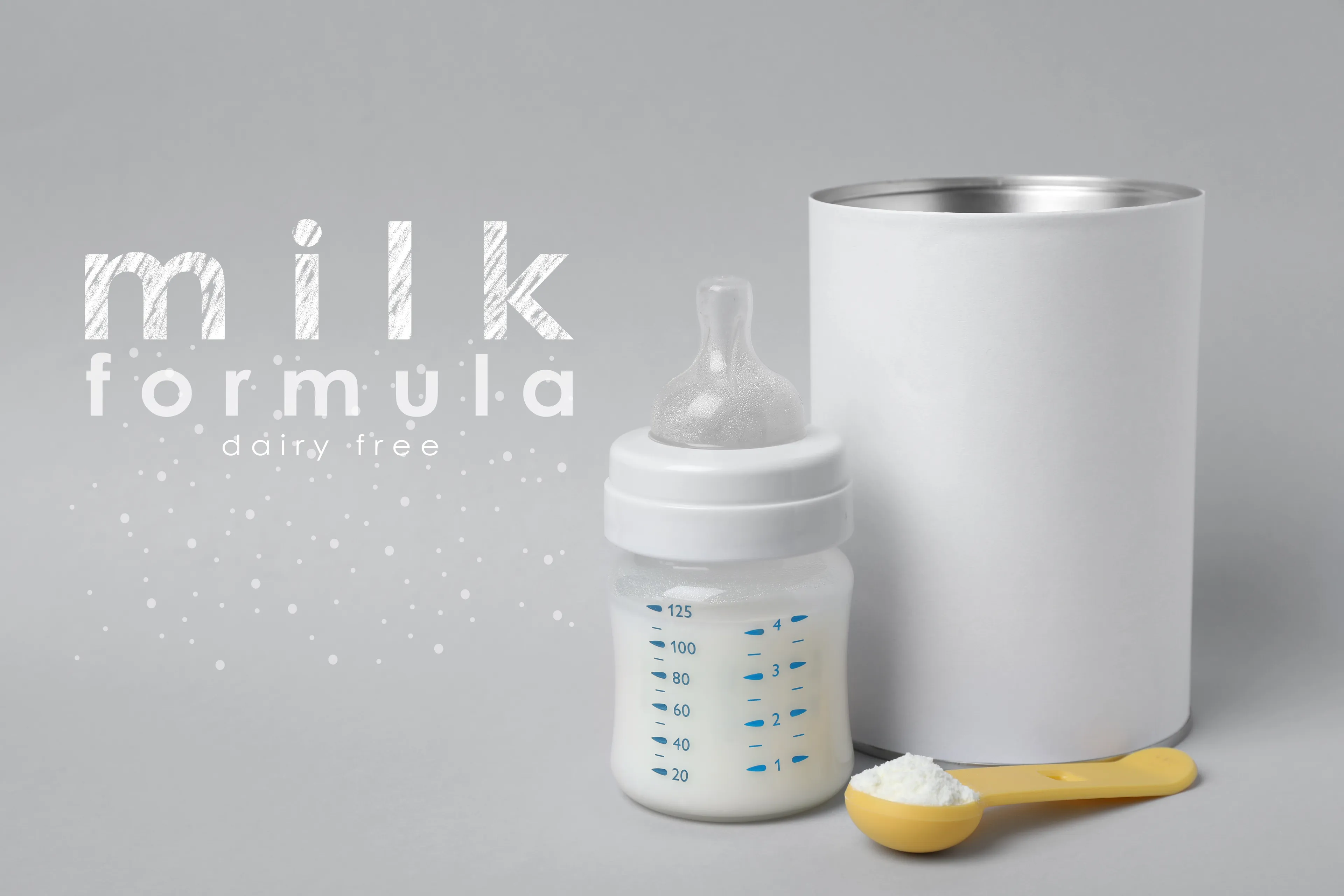
Lactose-Free and Alternative Milk Options for Infants
When a doctor confirms secondary or congenital lactose intolerance, there are a few safe routes:
Lactose-Free Infant Formula
The most straightforward option for baby formula for lactose intolerance is a lactose-free infant formula. These contain the same nutrients as standard milk-based formula, with lactose replaced by glucose polymers or corn syrup solids. They still contain cow's milk proteins, so they are not appropriate for CMPA.
Soy-Based Infant Formula
Soy formula eliminates both lactose and cow's milk proteins. However, some babies with CMPA also react to soy protein, so always discuss this option with your doctor before making the switch.
Lactase Enzyme Drops for Babies
Lactase enzyme drops for babies are a particularly useful option for breastfed infants, because they allow your baby to continue receiving breast milk without switching to formula. You add a few drops of a liquid lactase supplement to expressed breast milk and let it sit for a few minutes before feeding, or some drops are given directly to the baby just before breastfeeding begins.
A few things to know about lactase drops:
- They are available over the counter at most pharmacies without a prescription.
- Dosing varies by product and by the volume of milk, so follow your pharmacist's or paediatrician's guidance rather than guessing.
- They are considered safe for infants, but consult your doctor before starting if your baby is unwell, premature, or has other medical conditions.
- They address lactose intolerance only; they will have no effect if the real problem is a milk protein allergy.
Hydrolysed and Amino-Acid Based Formulas
These are prescribed for severe allergy cases, not typical lactose intolerance. Do not use them without a doctor's recommendation.
A Note on Plant-Based Milks
Rice milk, oat milk, almond milk, and similar drinks are not nutritionally complete for infants. They must not be used as a main milk source in the first year of life.