logo
0

Lotion for Newborn Skin Allergy

Learn how to choose and safely use lotion for newborn skin allergies, including eczema-friendly ingredients, application tips, precautions, and when to see a doctor.

article image

Dr. Mayank

Choosing the right lotion for skin allergy in a newborn is one of the most anxious decisions new parents face. Newborn and infant skin is still developing and differs from adult skin in structure and barrier function. This can make it more susceptible to irritation and changes in moisture balance, particularly in premature infants. Getting the choice wrong can worsen a rash; getting it right can bring a baby genuine relief.

What Causes Skin Allergies and Eczema in Newborns

Newborn skin loses moisture quickly because its outermost barrier layer is still maturing. When that barrier breaks down, irritants and allergens enter more easily and trigger inflammation.

Common triggers include:

  • Dry indoor air, especially in air-conditioned or heated rooms
  • Fragrances and preservatives in skincare products
  • Detergent residue on clothing and bedding
  • Saliva and drool around the mouth and neck folds
  • A family history of eczema, asthma, or hay fever (atopic tendency)

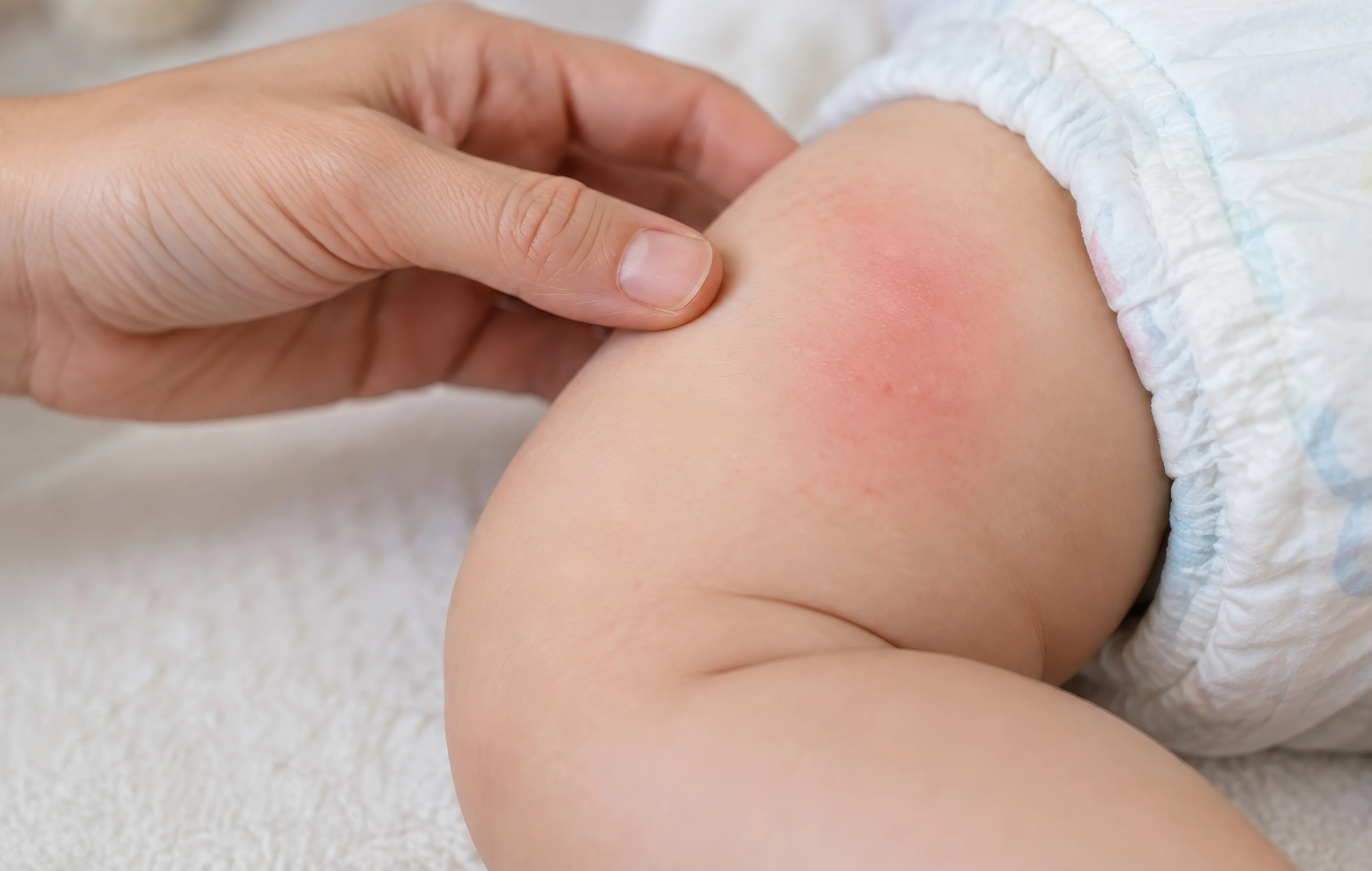
Infantile eczema, or atopic dermatitis, often appears as red, dry, scaly patches on the cheeks, scalp, and skin folds. The itch-scratch cycle can disturb sleep and feeding, which is why early moisturizing and trigger control matter so much.

What to Look for in a Lotion for Baby Skin Allergy

Label claims like "gentle" or "natural" are not regulated the same way as "fragrance-free." Here is what to actually check before buying.

Ingredients to seek

  • Ceramides: lipids naturally present in healthy skin that help rebuild the barrier
  • Colloidal oatmeal: clinically studied to calm itch and reduce redness in sensitive skin
  • Glycerin and petrolatum: humectants and occlusives that lock moisture in
  • A short, transparent ingredient list with fewer chances of a reaction

Ingredients to avoid

  • Fragrances listed as "fragrance," "parfum," or certain essential oils such as lavender
  • Parabens (methylparaben, propylparaben)
  • Sodium lauryl sulfate (SLS)
  • Denatured or isopropyl alcohol
  • Artificial dyes and colours

Fragrance-free and hypoallergenic are not the same thing. "Fragrance-free" means no added scent compounds, a specific and meaningful claim. "Hypoallergenic" means the product is formulated to be less likely to cause a reaction, but it is not a guaranteed standard. Look for both labels together, ideally alongside "dermatologist-tested" and "safe for newborns." A good hypoallergenic lotion for babies will have a simple, readable ingredient list you can look up before use.

Expert-Recommended Fragrance-Free, Hypoallergenic Lotions

Dermatologists generally recommend building your shortlist around well-studied ingredient classes before comparing brands.

Ceramide-based lotions

Ceramide formulas are the first choice for newborn eczema cream recommendations because they directly address the defective skin barrier underlying atopic dermatitis. Ceramide-containing moisturizers can support skin-barrier care in children with atopic dermatitis. Rather than focusing on specific ceramide types or their position in the ingredient list, look for a fragrance-free moisturizer containing ceramides and follow the product's age and usage instructions.

Colloidal oatmeal lotions

Colloidal oatmeal-containing moisturizers have been studied in children with atopic dermatitis and may help improve dryness, irritation, and itch. Evidence in very young infants is more limited, so choose an age-appropriate product and follow its directions. It works best as a daily fragrance-free baby lotion for maintenance rather than for acute flares. Fragrance-free colloidal oatmeal moisturizers may be considered for mild, ongoing dryness when the product is appropriate for the baby's age.

Petrolatum-based ointments

Plain white petrolatum (petroleum jelly) is one of the most effective, lowest-risk options for very dry or cracked newborn skin. It has no added ingredients to react to and forms a reliable occlusive barrier. Parents often reserve it for overnight use or particularly dry patches. When choosing the best moisturizer for baby eczema, pick a thick ointment or cream over a thin lotion; thin lotions contain more water and more preservatives and evaporate quickly.

How to Apply Lotion Safely on Newborn Skin

The method matters as much as the product. Follow these steps:

  • Introduce new products cautiously: Choose products formulated for infant skin and introduce one new product at a time. If redness, swelling, hives, or worsening irritation develops after application, stop using the product and seek medical advice.
  • Moisturize after bathing: Gently pat the skin dry and apply a fragrance-free moisturizer while the skin is still slightly damp to help reduce moisture loss.
  • Use Lukewarm Water: Use lukewarm water during bathing to help prevent excessive dryness and irritation.
  • Apply Gently: Spread the lotion gently without vigorous rubbing to avoid irritating delicate skin.
  • Moisturizing frequency: Apply moisturizer regularly as needed to keep the skin comfortable and hydrated, following the product's directions. Babies with eczema may need more frequent application.

For broader guidance on your newborn's delicate skin in the early weeks, see newborn skin and umbilical cord care basics.

Contraindications and When to Avoid Certain Lotions

Some situations call for caution or for avoiding lotion altogether.

  • Broken or open skin: Do not apply lotion to cracked, oozing, or infected areas without medical advice. Read more about caring for broken or irritated skin before proceeding.
  • Steroid-containing creams: Over-the-counter topical steroids should never be used on newborn skin without a prescription. Topical corticosteroids can be absorbed through the skin, and children may be more susceptible to systemic effects because of their higher skin-surface-area-to-body-weight ratio. The risk also depends on the steroid's potency, amount used, treatment duration, and application site. Use topical steroids on newborns only when recommended by a healthcare professional and according to their instructions
  • Known allergen exposure: If a previous product caused a reaction, avoid all products with overlapping ingredients, not just the same brand.
  • Premature infants: The skin barrier in premature babies is even more immature. Always seek a neonatologist's guidance before applying any topical product.

Baby skin allergy treatment should never involve self-prescribing medicated creams. When in doubt, a paediatrician visit is always the right call.

Report adverse events to your healthcare provider or the relevant regulatory authority.

When to See a Doctor for Newborn Skin Allergy

Most dry or mildly red patches respond well to a gentle lotion for skin allergy and good moisturizing habits. Seek medical attention promptly if you notice:
  • Oozing, crusting, or weeping from the rash, which may signal a bacterial infection
  • Fever alongside a spreading rash
  • Swelling of the face, lips, or eyelids
  • The rash is not improving after one to two weeks of consistent moisturizing
  • Your baby seems in significant discomfort, is scratching continuously, or is not sleeping

These signs can indicate a more serious allergic response or infected eczema that needs prescription treatment.

Conclusion

Choosing a lotion for newborn skin requires more than looking for “gentle” or “natural” on the label. Fragrance-free, age-appropriate moisturizers containing ingredients such as ceramides, petrolatum, or colloidal oatmeal may help support the skin barrier and relieve dryness. Apply moisturizer gently and avoid products that cause irritation. If your baby's rash is spreading, oozing, accompanied by fever, or not improving with regular moisturizing, consult a paediatrician or dermatologist for appropriate treatment.

FAQs

Is coconut oil good for baby skin allergy?

Coconut oil is a popular home remedy, but research on its use for infant eczema is mixed. Coconut oil has been studied as a moisturizer for pediatric atopic dermatitis, and some research suggests it can improve skin hydration and eczema severity. However, evidence is limited in newborns specifically, so discuss regular use with your paediatrician, particularly if your baby's skin is inflamed or very sensitive.

Can I use adult lotion on my newborn?

No. Adult lotions commonly contain fragrances, alcohols, and preservatives at concentrations that are too harsh for newborn skin. Always choose a product specifically formulated and tested for infant or newborn use.

How do I know if my baby is allergic to a lotion?

Signs include new redness, hives, small bumps, or increased crying after application. Always patch-test a new product on a small area for 24 hours before applying it all over. Stop use immediately if a reaction appears and consult your doctor.

What is the best natural remedy for baby eczema?

Consistent moisturizing with a fragrance-free, ceramide-based cream or plain petrolatum is the most evidence-backed approach. Colloidal oatmeal baths can also soothe itch. Avoid unverified home remedies until you have spoken with a paediatrician.

How long does newborn skin allergy last?

Mild newborn rashes often resolve within a few weeks with good skincare habits. Atopic dermatitis can persist for years, but its course varies considerably between children. Studies following children from infancy show that some achieve remission during the preschool or school years, while others continue to experience symptoms. Disease severity and other factors can influence how long symptoms persist.

Apollo 247 Floating Action Button