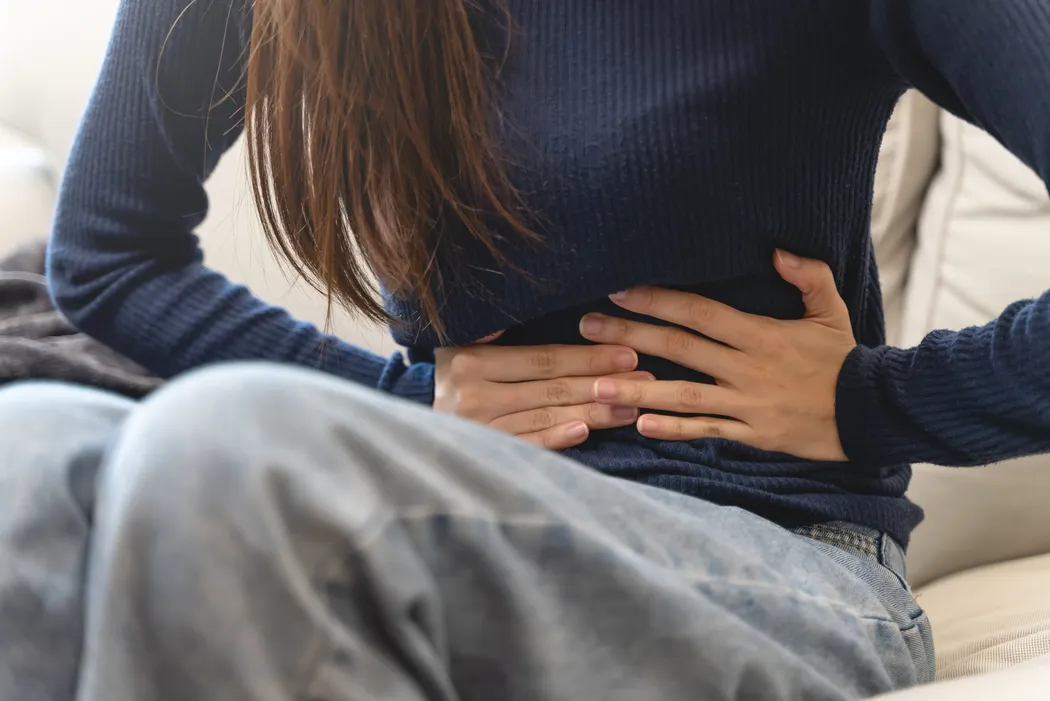
Common Causes of Lower Abdomen Pain by Trimester
First Trimester (Weeks 1 to 13)
Lower abdomen pain in early pregnancy usually has an innocent explanation. The most common causes include:
- Implantation cramping: Implantation occurs in very early pregnancy and may be associated with light spotting or mild cramping, although not everyone experiences these symptoms.
- Uterine growth: even in the first weeks, the uterus begins expanding, which can produce fleeting, sharp twinges.
- Gas and bloating: progesterone slows digestion, trapping gas and causing noticeable lower abdominal discomfort.
- Round Ligament Pain: This is more common in the second trimester and can cause sharp or pulling pain on one or both sides of the lower abdomen, particularly with sudden movement.
Second Trimester (Weeks 14 to 27)
Round ligament pain in pregnancy is the headline cause in this phase. The round ligaments run from the uterus to the groin and come under increasing tension as the belly grows. A sudden movement, a sneeze, or standing up too quickly can trigger a sharp, stabbing pain on one or both sides. It is harmless but can feel alarming in the moment.
Gas and constipation remain common. Braxton Hicks contractions may also occur during pregnancy and can feel like tightening across the abdomen rather than sharp pain. They generally become more noticeable as pregnancy progresses.
Third Trimester (Weeks 28 to 40)
Braxton Hicks contractions become more frequent and noticeable. Pelvic girdle pain, caused by the baby's weight pressing on ligaments and joints, is also common. Toward the end, the baby dropping into the pelvis creates a new pressure sensation low in the abdomen.
True labour contractions differ from Braxton Hicks: they become regular, stronger, and closer together over time and generally do not ease with rest or a change in activity.