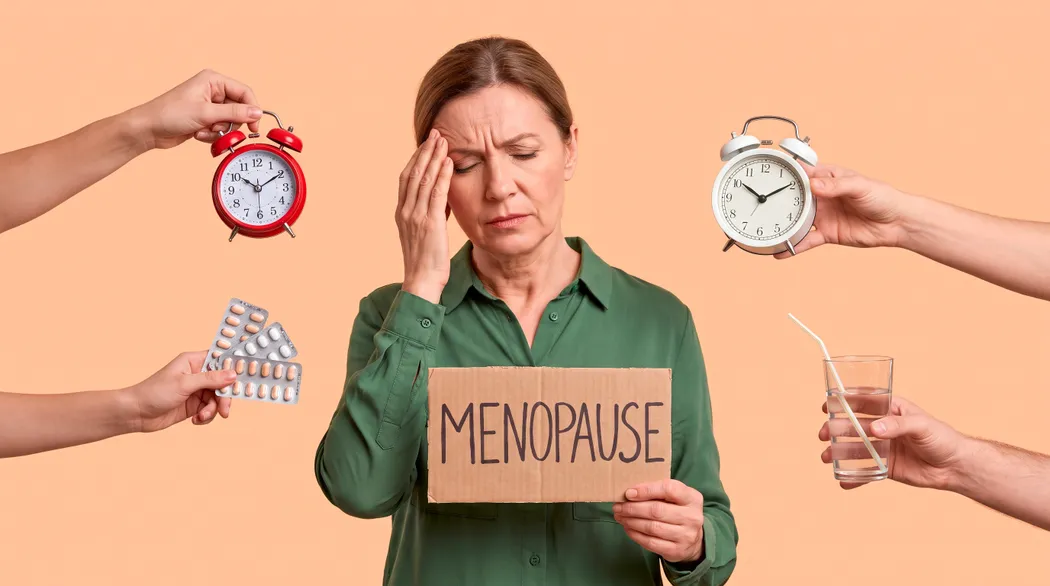
Evidence-Based Treatment Options for Menopause
The right menopause treatment depends on your symptoms, medical history, and personal preferences. Options fall into three broad categories.
Hormone Replacement Therapy
Hormone replacement therapy (HRT) remains the most effective treatment for moderate to severe menopause symptoms, particularly hot flashes and vaginal dryness. It works by replacing the estrogen and, where needed, progesterone that the ovaries no longer produce adequately.
Forms include:
- Combined HRT (estrogen plus progestogen) for women who have a uterus, to protect the uterine lining.
- Estrogen-only HRT for women who have had a hysterectomy.
- Local estrogen (cream, ring, or pessary) targeting vaginal symptoms only, with very limited systemic absorption.
HRT is available as tablets, patches, gels, or sprays. Your doctor will advise which suits your lifestyle and medical background.
Menopause hormone therapy risks are real and worth understanding. Research links combined HRT with longer use to a small increase in breast cancer risk, and oral tablets carry a slightly higher blood clot and stroke risk than patches or gels. For many healthy women under 60 who start HRT within 10 years of menopause, benefits often outweigh risks. Your doctor will help you weigh this individually.
Report adverse events such as unexpected bleeding, chest pain, or leg swelling to your healthcare provider or the relevant regulatory authority.
Non-Hormonal Medications
For women who cannot or prefer not to use hormones, several options have solid evidence:
- Certain antidepressants (SSRIs and SNRIs) reduce hot flash frequency and can also ease mood symptoms.
- Gabapentin, a nerve-pain medication, has shown benefit for hot flashes, particularly night-time ones.
- Clonidine, a blood pressure medicine, is sometimes used for hot flashes, though it is generally less effective than other choices.
- Ospemifene, a selective estrogen receptor modulator, addresses vaginal dryness without systemic estrogen.
These are prescription medications. Do not self-prescribe based on this article alone.
Natural Remedies for Menopause
Several plant-based approaches are used as natural remedies for menopause symptoms, though evidence quality varies:
- Phytoestrogens (found in soy foods and flaxseed) may modestly reduce hot flash frequency in some women.
- Black cohosh has some trial support for hot flashes, but results are mixed and long-term safety data are limited.
- Cognitive behavioural therapy (CBT) has good-quality evidence for improving hot flashes, sleep, and mood, and is often underused as an option.
Supplements are not regulated as rigorously as medicines. Always tell your doctor what you are taking, since some interact with prescription drugs.