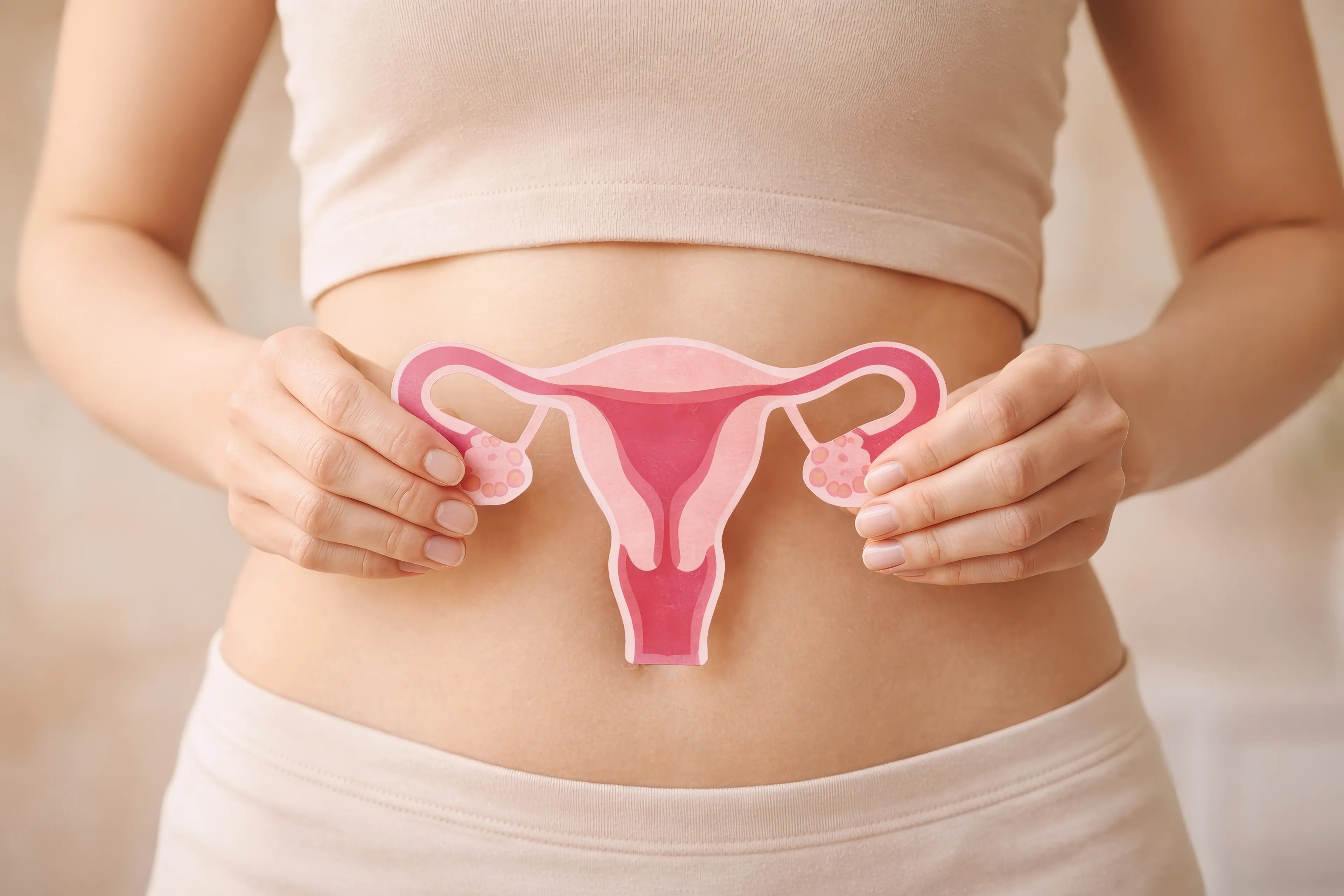
What Are the Four Phases of the Menstrual Cycle?
The menstrual cycle has four main phases, based on changes in reproductive hormones. The timing below uses a typical 28-day cycle as an example, but the actual timing varies between individuals and from one cycle to another.
Menstrual Phase
The menstrual phase begins on the first day of bleeding. The uterine lining is shed because pregnancy did not occur during the previous cycle.
Oestrogen and progesterone levels are relatively low at the beginning of menstruation. Bleeding commonly lasts around 2 to 7 days, although individual patterns vary.
Some people experience cramping, fatigue, bloating, headache or mood changes during this phase.
Follicular Phase
The follicular phase begins on day 1 and continues until ovulation. During this phase, follicle-stimulating hormone (FSH) stimulates follicles in the ovaries to develop. Usually, one follicle becomes dominant and continues developing as oestrogen levels rise.
Increasing oestrogen helps the uterine lining grow and prepares the reproductive system for a possible pregnancy.
The length of the follicular phase can vary, which is one reason ovulation does not necessarily occur on the same cycle day every month.
Ovulation
Ovulation occurs when a rise, or surge, in luteinising hormone (LH) triggers the dominant ovarian follicle to release an egg.
In a typical 28-day cycle, ovulation is often estimated to occur around day 14. However, ovulation can occur earlier or later because its timing varies between individuals and cycles. It is generally estimated to occur about 14 days before the next period rather than necessarily 14 days after the current period begins.
After ovulation, the egg can generally be fertilised for about 12 to 24 hours. Sperm can remain capable of fertilisation for several days under favourable conditions, which is why pregnancy can occur following intercourse before ovulation.
Some people notice brief one-sided pelvic discomfort around ovulation, known as mittelschmerz. Cervical mucus may also become clearer, wetter and more slippery as ovulation approaches.
Luteal Phase
After ovulation, the follicle that released the egg develops into the corpus luteum. It produces progesterone, which helps maintain the uterine lining in preparation for a possible pregnancy.
If pregnancy does not occur, the corpus luteum breaks down. Progesterone and oestrogen levels then fall, the uterine lining is shed and the next menstrual cycle begins.
The luteal phase is often less variable than the follicular phase, but its length can still vary between individuals.