logo
0

Milia on Newborn: Causes, Timeline & Skincare Guide

Learn what causes milia on newborns, how long they last, how to care for your baby's skin safely, and when to consult a paediatrician.

article image

Dr. J.T.Hema Prathima

Bringing a newborn home is overwhelming enough without noticing tiny white bumps scattered across your baby's nose, cheeks, or chin. Milia on newborns is one of the most common skin findings in the first weeks of life, and for most families it becomes a source of unnecessary worry. These bumps are completely benign, require no treatment, and disappear on their own. This guide explains what they are, what causes them, and how to care for your baby's skin safely while you wait.

What Is Milia on Newborns?

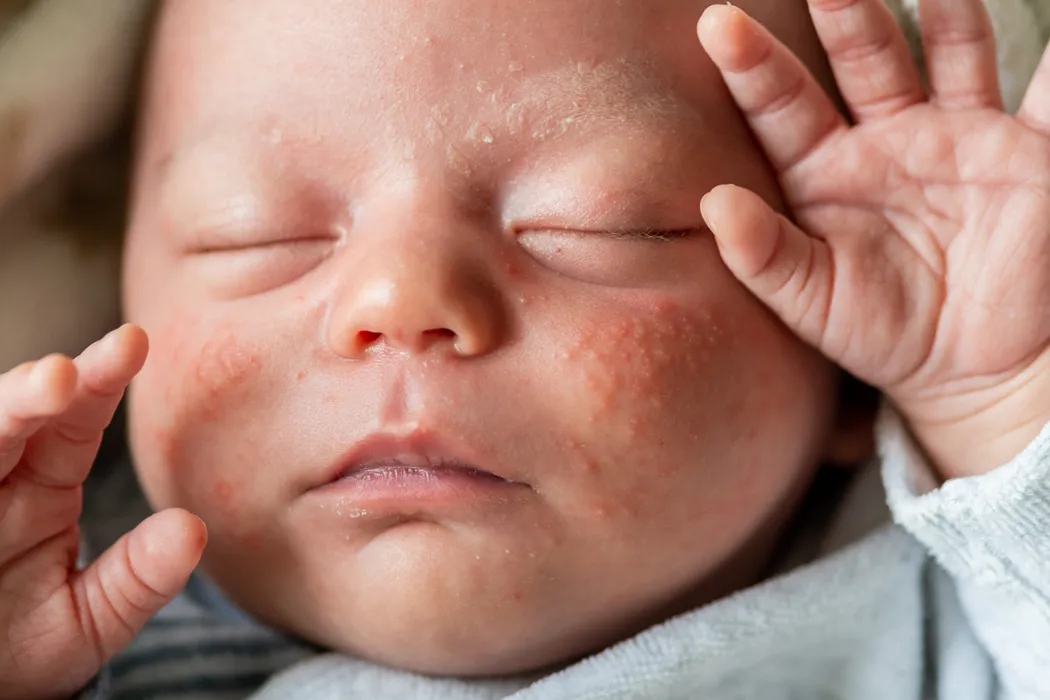
Milia are small, pearly-white or yellowish cysts that form when keratin, a protein naturally found in skin, becomes trapped just below the skin's surface. They typically appear as firm, dome-shaped bumps about 1 to 2 mm in size, most often on the nose, cheeks, forehead, and chin. They can occasionally appear on the gums or the roof of the mouth, where they are called Epstein's pearls.

Milia in newborns is a normal finding, not a disease or infection. Up to half of all newborns develop them. They are not painful, not itchy, and not a sign of any underlying illness. You have not done anything wrong, and your baby is not unwell.

What Causes Milia in Newborns?

The cause is simple anatomy. A newborn's skin glands are not yet fully mature, and tiny flakes of keratin can get trapped inside hair follicles or sweat glands before they have a chance to shed naturally. This forms a small cyst at the skin surface.

A few important points on milia in babies causes:

  • Milia have no connection to hygiene. A baby's skin can be perfectly clean and still develop them.
  • Maternal diet during pregnancy or breastfeeding does not cause milia.
  • They are not triggered by heat, allergens, or anything the baby has touched.
  • They are not contagious and cannot be passed between babies or between you and your child.

In older children and adults, milia can sometimes follow skin trauma or product use, but in newborns the cause is almost always this straightforward developmental process.

Milia vs Other Newborn Skin Conditions

Parents frequently confuse milia with baby acne or heat rash. The table below outlines the key differences.

FeatureMiliaBaby AcneHeat Rash (Miliaria)
AppearanceFirm, white or yellow, flat-topped cystsRed pimples, sometimes with whiteheadsTiny red or clear bumps in clusters
TextureHard, smoothInflamed, softBumpy, slightly rough
Common locationsNose, cheeks, forehead, chinCheeks, forehead, chinNeck, chest, skin folds
CauseTrapped keratinHormonal changes, skin floraBlocked sweat ducts from heat
DiscomfortNoneMildCan cause mild irritation
Resolves on its ownYes, 2 to 8 weeksYes, a few weeks to monthsYes, once skin cools

When comparing baby milia vs acne, the main clues are texture and redness. Milia feel hard and sit flat; baby acne looks inflamed and irritated. If you are unsure which your baby has, a quick video or in-person consultation with a paediatrician can settle it immediately.

Natural Resolution Timeline

How long does newborn milia last? Most cases clear within 2 to 4 weeks without any treatment. Some babies take a little longer, and resolution by 3 months is considered normal. No intervention speeds up the process.

There is no action you can take to make the bumps disappear faster. Trying to pop or squeeze them can cause micro-tears in delicate skin, introduce bacteria, and occasionally leave small scars. The only thing your baby's skin needs is time.

Safe Skincare Approach for Milia

The core principle of milia newborn treatment is doing less, not more. Here is what safe daily care looks like:

  • Wash your baby's face once daily: Wash your baby's face once daily with lukewarm water and a small amount of mild, fragrance-free baby cleanser.
  • Pat the skin dry gently: Pat the skin dry gently with a soft cloth. Rubbing creates friction that irritates newborn skin.
  • Leave the bumps entirely alone: Leave the bumps entirely alone. Do not squeeze, pick, scrub, or apply any product directly to them.
  • Keep the face dry: Keep the face dry between washes, especially in skin folds where moisture lingers.
  • Use newborn-specific products: Use only products specifically formulated for newborns if you use anything at all.

Caring for newborn skin generally follows the same "gentle and minimal" approach you will find in other areas of newborn care, such as the guidance in this newborn belly button care guide. The principle is the same: clean, dry, and leave it alone.

Contraindications and When to Avoid Self-Treatment

Certain products and practices can actively harm your baby's skin or delay natural resolution. Avoid all of the following:

  • Adult skincare products: Adult skincare products, including moisturisers, toners, or anything containing retinoids, salicylic acid, or benzoyl peroxide.
  • Home-remedy oils: Coconut oil, olive oil, or other home-remedy oils applied directly to the bumps. Oils can clog pores further and irritate the neonatal skin barrier.
  • Exfoliating materials: Exfoliating wipes, rough washcloths, or loofahs of any kind.
  • Traditional or herbal remedies: Traditional or herbal remedies applied to the face. Many contain ingredients too harsh for newborn skin.
  • Tape, adhesive patches, or manual extraction: Tape, adhesive patches, or any attempt at manual extraction.

There is no topical cream, ointment, or lotion that safely speeds up the resolution of white bumps on a baby’s face during the newborn period. Neonatal milia skincare is about protection, not active treatment.

When to See a Paediatrician?

Milia are harmless, but certain signs indicate something else may be happening. Contact your paediatrician if you notice:

  • Bumps that are spreading rapidly or changing in appearance over a short period
  • Pus, crusting, or yellow discharge from any bump
  • Redness, warmth, or swelling around the affected area
  • Your baby seems distressed, is feeding poorly, or has a fever alongside the skin changes
  • Bumps that persist beyond 3 months without any sign of improvement

Trust your instincts as a parent. A quick check with your doctor is always the right call when something feels off.

Conclusion

Milia are common, harmless newborn skin bumps caused by trapped keratin and usually disappear naturally without treatment. Most cases resolve within a few weeks, although some may take longer. The safest approach is gentle skincare: use lukewarm water and a mild, fragrance-free cleanser, pat the skin dry, and leave the bumps untouched. Avoid squeezing, scrubbing, extraction, oils, or adult skincare products, as these can irritate delicate skin and potentially cause infection or scarring. Consult a paediatrician if the bumps become red, swollen, crusted, discharge fluid, persist beyond three months, or are accompanied by fever or other concerning symptoms.

FAQS

Is milia contagious?

No. Milia are cysts formed by trapped keratin beneath your baby's own skin. They cannot spread from one baby to another or from a caregiver to a child.

Can breastfeeding cause milia?

No. Maternal diet and breastfeeding have no influence on whether a newborn develops milia. The condition is caused by immature skin glands, not by anything passed through breast milk.

Does milia leave scars?

Milia that resolve on their own rarely leave marks. Scarring is only a risk if the bumps are squeezed or picked at, which is why leaving them alone is the safest approach.

Can I use coconut oil on baby milia?

No. Coconut oil and other oils are not recommended for milia. They can clog pores further, disrupt the delicate newborn skin barrier, and potentially worsen or prolong the condition.

Is milia the same as whiteheads?

They look similar but are not the same. Whiteheads are caused by blocked oil glands and are associated with acne. Milia are keratin-filled cysts that sit below the skin surface and have no connection to oil production or acne.

Apollo 247 Floating Action Button