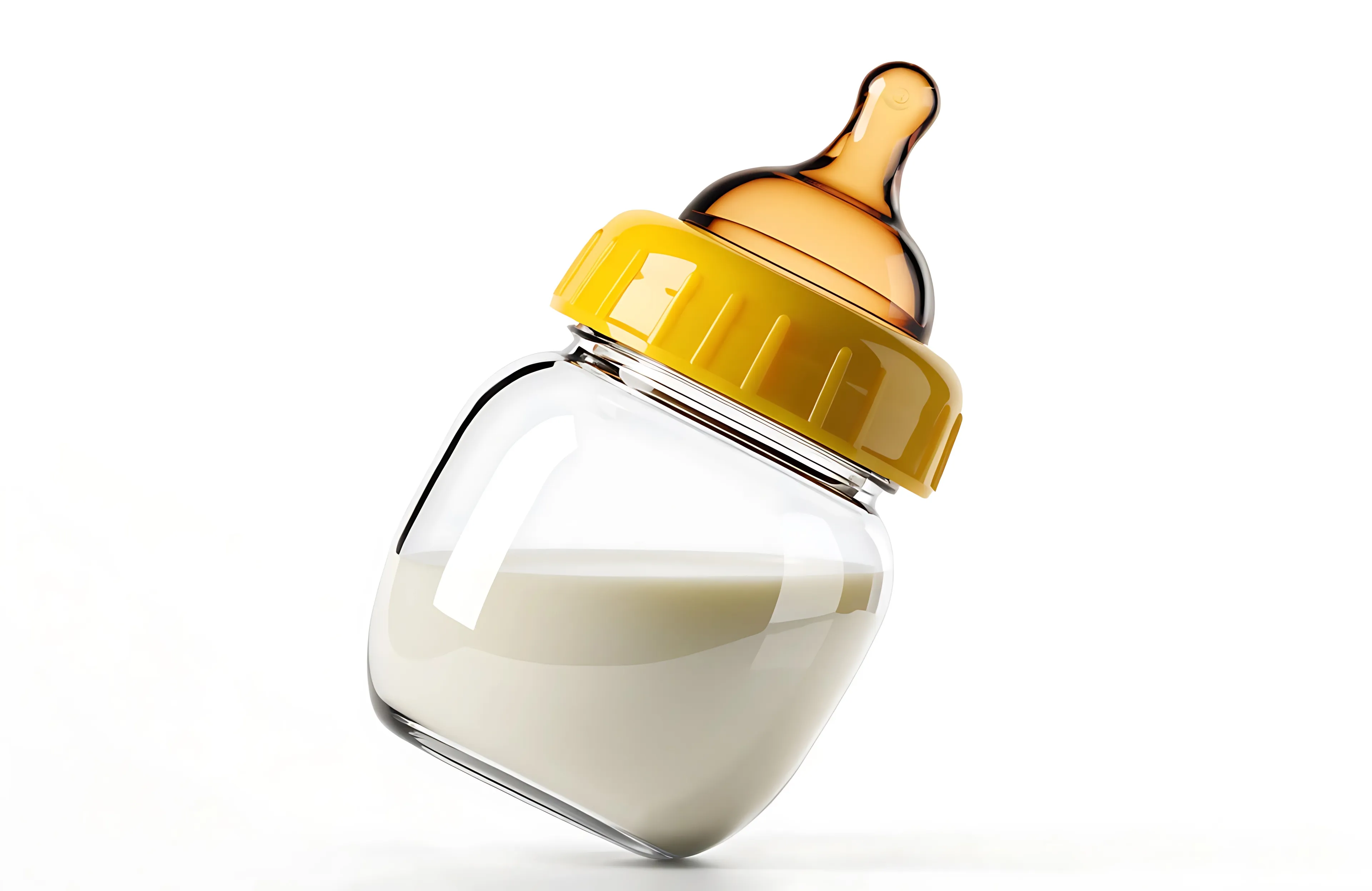
What to Look for in a Milk Bottle for a Newborn?
When choosing a milk bottle for your newborn, focus on comfort, safety and ease of cleaning. The bottle should be easy to handle, simple to clean and suitable for your baby's feeding needs.
Material: Glass or Plastic?
Glass and plastic bottles can both suit newborn feeding when made for infant use and handled according to the manufacturer's instructions.
Glass bottles are durable and less likely to scratch or become cloudy with repeated use. They are also heavier and can break if dropped.
Plastic bottles are lighter and easier to carry, which can be useful when travelling or when another caregiver is feeding your baby. Choose a bottle made from materials intended for infant feeding and check that it meets the relevant safety requirements.
Whichever material you choose, check the bottle regularly. Replace it if it becomes cracked, badly scratched, damaged or difficult to clean properly.
Wide-Neck vs Standard-Neck
Bottle shape is largely a matter of personal preference. A wide-neck bottle may be easier to fill and clean, while a standard-neck bottle may be easier to use with other bottles and teats from the same range.
Choose one that is easy to assemble, clean and sterilise, and make sure replacement teats and other parts are readily available.
Nipple Flow Rate for Newborns
The teat flow should let your baby feed comfortably, without milk flowing too quickly or too slowly. Newborns usually start with a slow-flow teat, although the age recommendations on teat packaging are only a guide.
Watch your baby during feeds rather than changing to a faster teat simply because your baby has reached a particular age.
A flow that is too fast may cause coughing, choking, gulping or milk leaking from your baby's mouth. A flow that is too slow may cause your baby to suck very hard, become frustrated or take an unusually long time to feed.
If your baby feeds comfortably, you usually don't need to move to a faster teat. If you change the teat, keep watching how your baby responds during feeds.
Anti-Colic Features
Some bottles have valves or venting systems designed to reduce the amount of air that enters the teat during feeding. These features may help some babies, but no bottle can prevent colic or feeding-related discomfort in every baby.
Anti-colic bottles may have several additional parts, so you need to take them apart and clean them carefully. Before choosing one, make sure you are comfortable cleaning all of its components.
A simple bottle that is easy to clean and sterilise may be just as practical as one with a more complicated design.