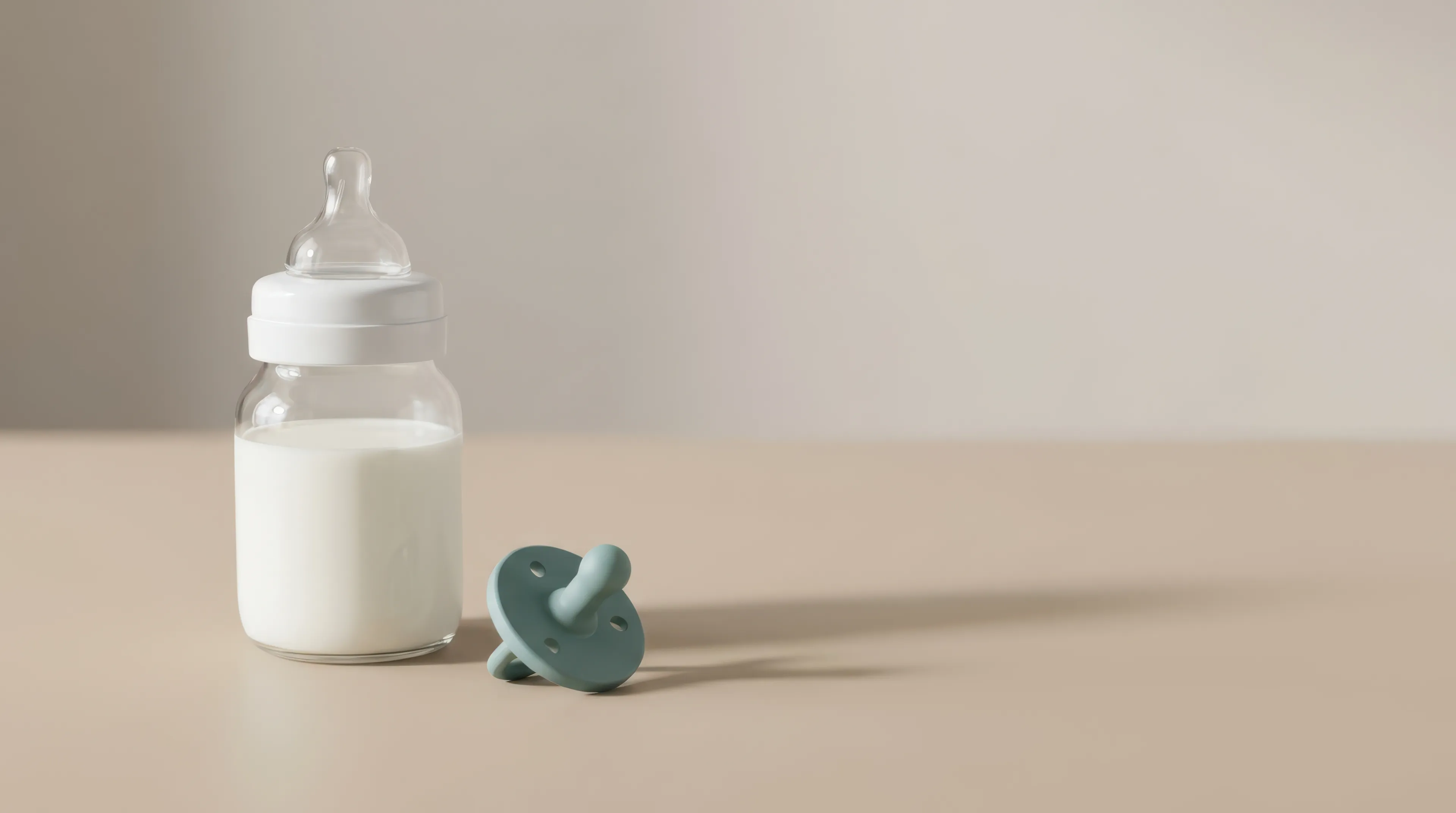
Milk Bottle for Newborn Babies: A Complete Buyer's Guide
Learn how to choose a milk bottle for newborn babies, including bottle materials, nipple flow, sterilisation, feeding tips, and common problems.
Dr.Vasantha Sree
Choosing the right milk bottle for your newborn can feel surprisingly complicated. With dozens of shapes, materials, and nipple types available, a small decision carries real consequences for your baby's comfort, feeding rhythm, and digestion. This guide offers practical, medically grounded advice so you can feed your baby with confidence from day one.
How to Choose the Best Bottle for Your Newborn Baby?
Newborns commonly feed every 2 to 3 hours, although feeding patterns vary between babies, so the baby feeding bottle for newborn use needs to fit your baby's needs as well as your lifestyle.
Size: Start with a small bottle, around 60 ml to 120 ml. In the first week, bottle-fed newborns may take around 30 ml to 60 ml per feed after the first few days, with amounts gradually increasing as they grow. A smaller bottle can help avoid over-pouring and reduce pressure to encourage a baby to finish more than they need.
Neck width: Wide-neck bottles accept a broader nipple base, and some parents find this can ease the transition between breast and bottle. Narrow-neck bottles are lighter and easier for small hands to hold during supported feeds, though compatible nipples can be harder to find.
Anti-colic venting: Many newborns gulp air along with milk, leading to gas and crying. Bottles with built-in venting systems, such as a valve at the nipple base or a vented straw inside, reduce air swallowed during feeds. If your baby seems gassy or uncomfortable after most feeds, an anti-colic design is worth prioritising.
No bottle can be guaranteed to prevent colic, and persistent symptoms should be discussed with a paediatrician.
Bottle Materials Compared: Glass, Plastic, and Silicone
The glass vs plastic baby bottle question is one of the first decisions parents face. Each material has real trade-offs.
Material
Safety
Durability
BPA-Free
Approx. Cost (India)
Glass
Suitable for infant feeding; tolerates high heat when used as directed
Heavy; can break if dropped
Not applicable
Higher upfront
Plastic (PP/PPSU)
Safe when food-grade and BPA-free certified
Lightweight; scratches over time
Yes, if marked BPA-free
Most affordable
Silicone
Flexible and resistant to breakage
Durable; soft and flexible
Not applicable
Mid to high range
Glass bottles are durable and can tolerate repeated cleaning and heat exposure, but they are heavier and can break if dropped. Choose a bottle made for infant feeding and follow the manufacturer's cleaning and sterilisation instructions.
Plastic bottles are safe provided they carry a BPA-free certification. Look for bottles made from food-contact-grade materials and check the manufacturer's information to confirm that the bottle is suitable for infant feeding and free from BPA where applicable. Avoid cracked or scratched plastic bottles, as damaged surfaces are harder to clean thoroughly.
Silicone is flexible and resistant to breakage. Choose silicone bottles specifically designed for infant feeding and follow the manufacturer's care instructions. Some parents find volume markings harder to read on opaque silicone walls.
Whichever material you choose for your baby feeding bottle for newborn use, replace it at the first sign of cloudiness, cracks, or discolouration.
The nipple is where many parents go wrong. A nipple flow rate for newborns that is too fast overwhelms them; too slow causes exhausting feeds and excessive air swallowing.
Flow rates by stage:
Slow-flow nipple: A slow-flow nipple is commonly used for newborns, but flow rates and level numbers vary between manufacturers. Follow the manufacturer's guidance and your baby's feeding cues.
Medium-flow nipple: Medium-flow nipples may be appropriate as babies grow, but the timing varies by manufacturer and by the baby's feeding ability. Move to a faster flow only when your baby shows signs that the current flow is too slow.
Faster-flow nipple: Faster-flow nipples may be suitable as babies grow, but flow levels and timing vary by manufacturer and by the baby's feeding ability. Follow the manufacturer's guidance and your baby's feeding cues.
Always check the manufacturer's age guidance, but treat it as a starting point. If milk dribbles down the chin, the flow is too fast. If the baby falls asleep mid-feed from exhaustion, it may be too slow.
Nipple shape:
Round (traditional) nipples work for most babies.
Orthodontic nipples have a flatter base designed to support the natural resting position of the jaw and palate.
Neither shape is universally better. Choose what your baby latches onto comfortably, without clicking, gagging, or pulling away.
Consider a different flow only if your baby consistently shows signs that the current flow is too slow or too fast. Follow the manufacturer's guidance and your baby's feeding cues rather than changing flow solely based on age or feeding time.
How to Sterilise Baby Bottles Safely
Clean bottles, nipples, caps, rings, and other feeding parts after every use. Sanitising is particularly important at least once daily for babies younger than 2 months, babies born prematurely, or babies with weakened immune systems. Follow the manufacturer's instructions and local healthcare guidance.
Common sterilisation methods:
Boiling: Submerge disassembled feeding parts completely in water and boil according to the manufacturer's instructions. Different health authorities recommend different boiling times, so follow the instructions applicable to your sterilisation method and equipment.
Electric steam steriliser: Place the disassembled parts inside and follow the steriliser manufacturer's instructions for the cycle time and drying process. Convenient for multiple daily rounds.
Cold-water (chemical) sterilisation: For cold-water chemical sterilisation, prepare the solution and soak the disassembled parts for the time specified by the sterilising-product manufacturer. No heat required; follow the product's instructions precisely.
Always wash bottles with hot soapy water before sterilising. Sterilisation is not a substitute for washing.
Continue cleaning feeding equipment thoroughly after every feed and follow your healthcare provider's and the manufacturer's guidance on whether and how often additional sanitising or sterilisation is needed. If your baby was born preterm or has an underlying health condition, follow your doctor's specific advice on frequency.
Transitioning Between Breastfeeding and Bottle Feeding
Introducing a bottle to a breastfed baby requires patience. Rushing often leads to nipple confusion or outright refusal. These bottle feeding transition tips can help.
A stepwise approach:
Discuss feeding approach: If you plan to combine breastfeeding and bottle feeding, discuss the timing and approach with a lactation consultant or paediatrician, particularly if establishing breastfeeding is a concern.
Choose the right time: Offer the bottle when your baby is calm and slightly hungry, not during a hunger crisis.
Try another caregiver: Having someone other than the breastfeeding parent offer the first bottle may help some babies accept it more easily.
Use a slow-flow nipple: Consider a slow-flow nipple that allows the baby to control the pace of feeding.
Try paced bottle feeding: Hold the bottle relatively horizontal and allow the baby to draw the milk at their own pace rather than letting it flow freely. This can help the baby regulate the pace and amount of milk taken during a feed.
Paced bottle feeding allows the baby to regulate the pace of feeding and may be useful when combining breastfeeding and bottle feeding.
For broader guidance on newborn care basics beyond feeding, including umbilical cord care and hygiene, this newborn care resource provides additional information.
Common Bottle-Feeding Problems and When to Consult a Doctor
Most bottle-feeding hiccups are normal, but some need attention.
Gas and spit-up: A little spit-up after feeds is common. Burp your baby halfway through the feed and again at the end. If your baby has frequent or forceful vomiting, appears to be in significant discomfort, has feeding difficulties, or is not gaining weight as expected, speak to your paediatrician.
Bottle refusal: A baby may refuse a bottle due to flow rate, nipple shape, or milk temperature. Try a different nipple shape or warm the milk slightly. Persistent refusal warrants a conversation with your doctor or a lactation consultant.
Contraindications and Safety Precautions
Certain medical conditions, including some metabolic disorders or cleft palate, may require specialised teats or feeding equipment. Your paediatrician or a feeding specialist should guide decisions in these cases. Do not use bottles or nipples that are cracked, sticky, or discoloured. Report adverse events, such as allergic reactions to bottle materials or formula, to your healthcare provider or the relevant regulatory authority.
Conclusion
Choosing the right milk bottle for a newborn depends on the baby's feeding needs, bottle material, nipple flow, ease of cleaning, and sterilisation requirements. Glass, food-grade plastic, and silicone bottles can all be suitable when used correctly. Choose an appropriate nipple flow, clean and sterilise bottles as recommended, and watch your baby's feeding cues. If your baby has persistent feeding difficulties, poor weight gain, or a medical condition requiring specialised feeding equipment, consult your paediatrician or feeding specialist.
FAQS
How many milk bottles do I need for a newborn baby feeding routine?
The number of bottles you need depends on how often your baby feeds, how frequently you want to wash bottles, and whether you are combining breast and bottle feeding. If you are exclusively bottle feeding, aim for the higher end so you always have a clean bottle ready. If combining breast and bottle, 2 to 3 bottles may be enough to start.
What is the safest material for a baby feeding bottle for newborns?
Glass, food-grade BPA-free plastic (PP or PPSU), and silicone can all be suitable for infant feeding when used correctly and replaced when damaged. Choose a bottle specifically designed for infant feeding and follow the manufacturer's safety and care instructions.
How often should milk bottle newborn parents replace nipples and bottles?
Inspect nipples regularly and replace them immediately if they become cracked, torn, sticky, damaged, or otherwise show signs of deterioration. Follow the manufacturer's replacement guidance for routine replacement. Replace bottles when they become cracked, scratched, cloudy, discoloured, or otherwise damaged, and follow the manufacturer's guidance on routine replacement.
Can I reuse boiled water for sterilising baby bottles?
Use clean, safe water and follow the sterilisation method and water requirements specified by the equipment manufacturer and local guidance. Do not rely on standing water for sterilisation. Boil a fresh pot before each sterilisation session.
Is it safe to microwave-sterilise baby bottles?
Microwave steam steriliser bags and units designed for bottles are safe when used as directed. Never place bottles directly in a microwave without a proper sterilising unit, and always check that your bottle material is labelled microwave-safe.