logo
0

Mosquito Repellent for Newborn: Safe Options Guide

Learn what's safe for newborn mosquito protection, including mosquito nets, repellents, DEET, natural options, physical barriers, and safety tips.

article image

Dr.Kamran

Choosing a mosquito repellent for your newborn is one of the more stressful decisions new parents face, especially during monsoon season when mosquito-borne illnesses like dengue and malaria are common across India. Newborn skin absorbs substances far more readily than adult skin, so what seems like a harmless lotion can carry real risk for a baby under two months old. This guide walks you through which products to avoid, which physical barriers actually work, and how to protect your baby without putting their health at risk.

Why Newborn Skin Needs Special Mosquito Protection

A newborn's skin is thinner, more permeable, and has a less developed surface barrier than older children or adults. Anything applied topically, whether a chemical repellent or a plant-based oil, gets absorbed into the bloodstream at a much higher rate.

A newborn's liver and kidneys are also still maturing. Their detoxification systems cannot clear certain chemicals as efficiently, so compounds that an older child processes quickly can accumulate to concerning levels in a young baby. Their immune responses are still developing, making them more prone to skin reactions and systemic effects.

This combination of high absorption, limited detox capacity, and delicate immunity is precisely why safe mosquito repellent for babies is not the same product as the one sitting in your cupboard for adult use. For a broader look at newborn skin and hygiene care basics, the Apollo Pharmacy resource centre has practical guidance for new parents.

Are Chemical Mosquito Repellents Safe for Newborns?

The short answer is no, not for babies under two months of age.

  • DEET (N,N-diethyl-meta-toluamide) is one of the most widely used chemical mosquito repellents worldwide.
  • Chemical mosquito repellents are generally avoided in babies younger than 2 months.
  • From 2 months of age, low-concentration DEET products may be considered, but parents should follow the product label and seek advice from a paediatrician.
  • DEET should not be applied excessively or repeatedly to a baby's skin, as young skin may absorb chemicals more readily.
  • Picaridin may be an alternative to DEET for older children, but it should also be avoided in very young infants unless specifically advised by a healthcare professional.
  • IR3535 and other synthetic mosquito-repellent ingredients should be used according to age restrictions and product instructions.
  • For babies younger than 2 months, physical protection such as mosquito nets, clothing that covers the skin, and properly screened sleeping areas is preferred.

Safer Alternatives: Nets, Patches, and Physical Barriers

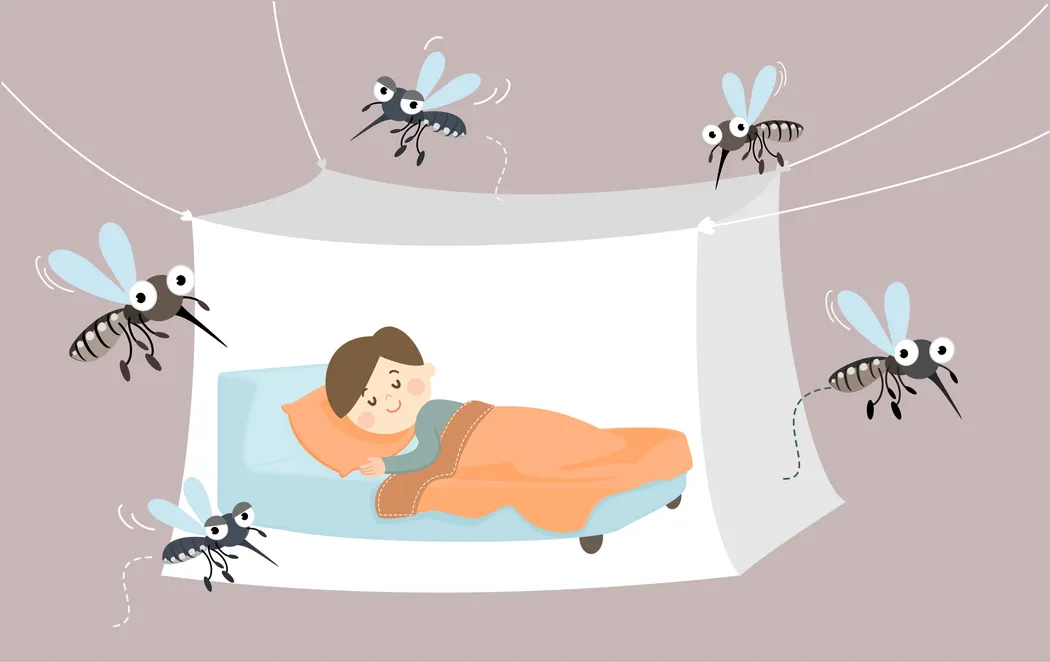
For newborns under two months, physical barriers are the gold standard for baby mosquito bite protection. When weighing mosquito net vs repellent for newborns, nets win clearly in this age group because they carry zero chemical exposure risk.

  • Use a properly fitted mosquito net: A properly fitted mosquito net over the crib or bassinet is the single most effective and safest option. Choose a net with fine mesh, ideally 120 holes per square inch or more, sitting taut over the sleeping area without touching the baby's face.
  • Consider insecticide-treated nets: Insecticide-treated nets add an extra layer of protection indoors. Make sure the baby has no direct contact with the net fabric itself.
  • Install window and door screens: Window and door screens reduce indoor mosquito entry significantly, particularly during evening and early morning hours when mosquitoes are most active.
  • Dress your baby appropriately: Dress your baby in lightweight long-sleeved clothing and socks during peak mosquito hours. Loose cotton works well in India's heat.
  • Use a fan or air conditioner: Running a fan creates airflow that makes it harder for mosquitoes to land, and keeping the room cool with an air conditioner helps too.

Natural and Baby-Formulated Repellent Options: Finding the Best Choice for Newborn Skin

  • Natural mosquito repellents are not automatically safer for newborns simply because they contain plant-derived ingredients.
  • Citronella oil may cause skin irritation or contact sensitisation when applied directly to a newborn's skin, and its safety in very young infants has not been well established.
  • Citronella patches or bands placed on clothing or a stroller canopy may avoid direct skin contact, but their effectiveness against mosquito bites is limited.
  • Eucalyptus-based products, including those containing oil of lemon eucalyptus, should not be used in children younger than 3 years.
  • Neem oil and other traditional mosquito-repellent remedies may have mosquito-deterrent properties, but their safety in newborns has not been adequately established.
  • Some natural oils and traditional remedies may cause skin irritation or allergic reactions.
  • Always check the product label and consult your child's paediatrician before using any mosquito repellent on or around a newborn.
  • Do not assume that a product labelled "natural" or "herbal" is automatically safe for newborns.

Contraindications and When to Avoid Repellents Entirely

Certain situations make topical repellents completely inappropriate, regardless of the product:

  • Age under two months: no topical chemical or concentrated plant-based repellent should be used.
  • Eczema or any existing skin condition: a compromised skin barrier dramatically increases absorption and the risk of a severe reaction.
  • Broken or irritated skin: including nappy rash, scratches, or any skin abrasion. For guidance on treating skin irritation or bite reactions, the Apollo Pharmacy wound care guide is a useful reference.
  • Known allergy to any ingredient: always check the full ingredient list and discuss with your doctor.
  • Fever or illness: when a baby is unwell, their skin barrier and metabolic function may be further compromised.

Report adverse events to your healthcare provider or the relevant regulatory authority.

How to Apply Repellent Safely (If Approved by a Doctor)

If your baby is older than two months and your paediatrician has approved a specific low-concentration repellent, follow this sequence carefully.

First, squeeze or spray the repellent onto your own hands, never directly onto the baby's skin. Then apply it in a thin, even layer to exposed skin areas such as the arms and legs.

Avoid these areas completely:

  • Face, especially around the eyes, nose, and mouth
  • Hands, since babies put their hands in their mouths frequently
  • Any broken, irritated, or rash-affected skin
  • Under clothing or in skin folds where the product can concentrate

Once your baby is back indoors or the exposure risk has passed, wash the repellent off with mild soap and water. Never apply more than the recommended amount, and do not reapply unless directed by your doctor.

Conclusion

For newborns, especially those under two months, physical mosquito protection is the safest approach. A properly fitted mosquito net, window screens, protective clothing, and appropriate room airflow can help reduce mosquito exposure without applying chemicals to delicate skin. Topical repellents such as DEET, picaridin, and plant-based oils should not be used on very young infants unless specifically recommended by a paediatrician. Avoid repellents on broken or irritated skin, and keep mosquito coils and other smoke-producing products away from the baby's environment. Always seek medical guidance before using a repellent on a young infant.

FAQS

Can newborns use mosquito repellent?

No. Babies under two months should not have any topical chemical repellent applied to their skin. Use physical barriers such as mosquito nets, screens, and protective clothing instead.

What is the safest mosquito repellent for babies?

For newborns under two months, there is no safe topical repellent. For babies older than two months, a low-concentration DEET product (around 10 percent) or a paediatrician-recommended alternative may be used cautiously, but only after medical clearance and following safe application steps.

Is mosquito repellent cream safe for infants?

Repellent creams are not appropriate for babies under two months. For older infants, use only formulations specifically designed for children, at the lowest effective concentration, and only on a pediatrician's advice.

Can I use mosquito coils near a newborn?

No. Mosquito coils produce smoke that contains harmful particulates and chemicals. Even brief exposure can irritate a newborn's respiratory tract. Keep coils, incense, and similar burning products well away from the baby's space.

What natural remedies keep mosquitoes away from babies?

A fine-mesh mosquito net over the crib is the most reliable natural approach. Citronella patches on clothing or the stroller (not on skin) may offer some deterrence, though evidence is limited. Avoid applying essential oils directly to newborn skin without medical guidance.

Apollo 247 Floating Action Button