logo
0

Mosquito Repellent for Newborns: A Safety Guide for Parents

Learn about mosquito protection for newborns, including safer preventive measures, repellent options, precautions and ways to reduce mosquito exposure at home.

article image

Dr.Yusuf

Choosing the right mosquito repellent for a newborn is one of those decisions that feels simple until you read the label. Mosquito bites are more than an itchy nuisance for tiny babies; they can transmit serious infections like dengue, malaria, and chikungunya, which circulate widely across India. Yet the products designed to repel insects can pose chemical risks of their own when used on a baby under 12 months. This guide walks you through what is safe, what to avoid, and what actually works.

Why Newborns Need Special Mosquito Protection?

A newborn's skin is thinner and far more permeable than adult skin. Chemicals applied to the surface are absorbed into the bloodstream at a much higher rate, and a newborn's liver lacks the enzyme maturity to break down many synthetic compounds efficiently. This means a concentration of repellent that poses little risk for a toddler can accumulate to much higher relative levels in a small baby.

Newborns also spend time outdoors in arms, prams, and open verandas, especially in the early weeks when families make visits. The combination of high chemical absorption, immature detoxification pathways, and frequent exposure means parents need a different strategy compared to older children. For broader guidance on keeping your newborn safe, see our newborn care basics guide.

Mosquito Repellents to Avoid for Babies Under 2 Months

Babies under 2 months have delicate skin and may be more sensitive to mosquito-repellent products. Knowing which repellents and methods to avoid can help protect your newborn from unnecessary exposure while reducing the risk of mosquito bites.

Is DEET Safe for Newborns?

DEET safety for newborns is a firm no. DEET (N,N-diethyl-meta-toluamide) is the most effective synthetic repellent available, but the American Academy of Pediatrics advises it should not be used on infants younger than 2 months at all, and products above 30% concentration should be avoided in children of any age. Indian paediatric guidance aligns with this caution.

The concern goes beyond skin absorption. DEET can affect the nervous system in high doses, and there are documented cases of neurological effects in young children following inappropriate use. Even at low concentrations, the risk in babies under 2 months clearly outweighs any benefit when safer options exist.

Other high-concentration synthetics, including permethrin-based sprays intended for clothing rather than skin, must also be kept away from infants. Never apply any adult-formulation repellent to a baby's skin, to clothing worn close to the face, or to their hands.

Safer Product Options for Infants (Physical and Barrier Methods)

The safest mosquito protection for a newborn does not come in a bottle. Physical barriers are the first-line recommendation from paediatricians worldwide, and they work reliably with zero chemical exposure.

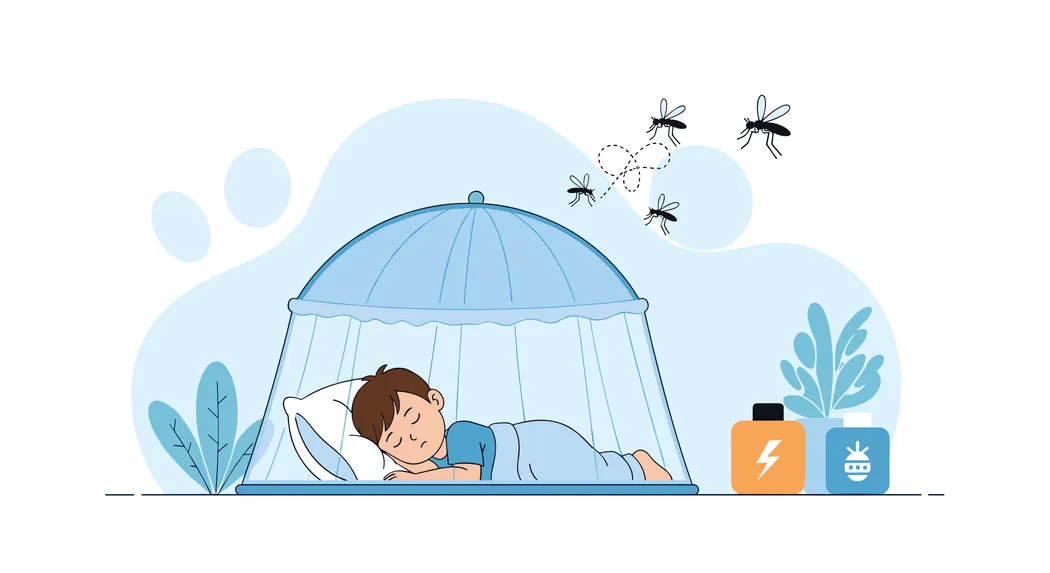
A well-fitted mosquito net for babies draped over a cot or pram is the single most reliable option, particularly at night. Choose a fine-mesh net, check it regularly for holes, tuck it securely under the mattress, and never leave it draped loosely where a baby could pull it over their face.

Other physical measures worth prioritising:

  • Fit window and door screens throughout the house, especially in bedrooms.
  • Dress your baby in light, full-sleeved clothing and socks when going outdoors at dusk or dawn, which are peak mosquito activity times.
  • Run a fan in the room; mosquitoes are weak fliers, and air circulation disrupts their approach.
  • Remove standing water from planters, buckets, and coolers near the home.
  • Use a pram net or stroller cover when taking your baby outside.

For babies older than 2 months, a few topical products are considered lower-risk. Picaridin (also called icaridin) at 5 to 10% concentration is increasingly regarded as a safer alternative to DEET for older infants, though availability across India remains limited. Always confirm the product's minimum age labelling before use, and apply the smallest effective amount.

Natural and Low-Risk Repellent Alternatives

Many parents reach for "natural" options, assuming they are automatically safer. Some are reasonable; others carry their own cautions.

Citronella oil appears in candles, patches, and diluted sprays marketed for children. It has mild repellent properties, but its effect typically lasts under an hour, and its effectiveness in real outdoor conditions is modest. Crucially, citronella has not been rigorously studied in infants under 6 months, and concentrated forms can cause skin irritation.

Lemon eucalyptus oil and its refined form PMD are contraindicated in children under 3 years by most safety guidelines. Despite sounding gentle, they can irritate the eyes and skin and should not be used on infants at all.

Neem oil and tulsi-based formulations have traditional use but almost no paediatric safety data. If you do use any diluted botanical product on a baby older than 2 months, patch-test on a small skin area first and watch for redness or rash for 30 minutes before wider application.

When assessing natural mosquito repellent for infants, no plant-based option currently matches the combination of proven safety and reliable effectiveness that a well-fitted mosquito net provides.

Contraindications and When Not to Use Repellents

There are situations where no topical repellent, natural or synthetic, should be applied to a baby.

  • Do not apply any repellent to babies under 2 months of age.
  • Never apply to broken skin, rashes, cuts, or eczema-affected areas; absorption increases sharply on damaged skin.
  • Avoid the hands, fingers, and the area around the eyes and mouth.
  • Do not spray repellents in a poorly ventilated room; if using a spray near a baby, apply to your own hands first, then transfer to the child's skin.
  • If your baby has a known skin allergy or sensitivity, consult a paediatrician before using any topical product.

Regarding mosquito patches for infants: adhesive patches worn on clothing or the pram are widely sold and feel convenient, but evidence for their effectiveness is limited and the ingredients (often citronella or eucalyptus) carry the same caveats as topical versions. They are generally considered lower-risk than skin-applied products, but they are not a substitute for a mosquito net.

Report any adverse reactions such as skin redness, rash, swelling, or unusual behaviour after repellent use to your healthcare provider or the relevant regulatory authority promptly.

Treating Mosquito Bites on Newborns

Most mosquito bites cause a small, itchy welt that resolves on its own within a day or two. For basic care at home:

  • Gently clean the bite area with mild soap and water.
  • Apply a cool, damp cloth for a few minutes to reduce swelling and soothe irritation.
  • Keep the area clean and dry; avoid scratching (trim your baby's nails short to limit accidental scratching during sleep).
  • Do not apply calamine lotion, hydrocortisone cream, or antihistamine gels without paediatric advice for babies under 12 months.

For more detail on managing minor skin wounds, see our guide on treating minor skin wounds and bites.

  • See a paediatrician promptly if you notice any of the following after a bite:
  • Significant swelling that spreads beyond the bite site
  • Fever, especially in babies under 3 months
  • Signs of infection: increasing redness, warmth, pus, or a bite that worsens after 48 hours
  • Excessive crying or unusual drowsiness after repellent exposure

Conclusion

Protecting newborns from mosquito bites is important, but not all mosquito repellents are suitable for young babies. Physical barriers such as mosquito nets, full-length clothing and window screens can help reduce exposure. Keep the baby’s sleeping area free from mosquitoes and follow product-specific age and safety instructions if using a repellent. For newborns, consult a paediatrician before using chemical mosquito repellents directly on or around the baby.
FAQS

Can I use mosquito repellent on my newborn?

Not safely if your baby is under 2 months old. For this age group, physical barriers like mosquito nets and protective clothing are the only recommended options.

What is the best mosquito repellent for babies under 1 year?

A fine-mesh mosquito net for babies remains the safest and most effective choice throughout the first year. For babies over 2 months, a paediatrician can advise on low-concentration topical options suited to their age and health.

Are mosquito patches for infants safe?

Mosquito patches for infants are generally considered lower-risk than skin-applied repellents because they are not applied directly to skin, but their effectiveness is not well established, and they are not a replacement for a properly fitted mosquito net.

Is citronella safe for babies?

Citronella in diluted form is sometimes used for babies older than 6 months, but it has limited paediatric safety data and short-lasting repellent action. It should not be used on newborns or near the face and never in concentrated form.

How can I protect my baby from mosquitoes at night?

Use a properly fitted, hole-free mosquito net for babies over the cot, keep windows screened, and run a fan in the room. These measures together offer reliable, chemical-free protection through the night.

Apollo 247 Floating Action Button