logo
0

Newborn Diaper Guide: Change Frequency & Best Practices

Learn how often to change a newborn's diaper, how to change it safely, choose the right diaper, prevent rash, and follow essential care tips.

article image

Dr.Mayank

Bringing a newborn home means entering a world of feeding schedules, sleep deprivation, and a surprising number of diaper changes. Getting new born diaper care right from the start protects delicate skin, helps you track your baby's health, and builds confidence during those early weeks. This guide walks through everything practical: how often to change, what size to pick, how to clean properly, and how to handle rash before it becomes a bigger problem.

How Often Should You Change a Newborn Diaper?

A general benchmark is 8 to 12 diaper changes every 24 hours. This sounds like a lot, but a newborn feeds frequently, and wet or soiled diapers follow quickly.

Rather than watching the clock, tie changes to your baby's feeding pattern. After most feeds, check whether the diaper is wet or dirty. A soiled diaper should always be changed promptly to prevent skin breakdown. A wet-only diaper can wait a short while if your baby is settled and the skin looks fine, but never leave it longer than 2 to 3 hours.

Should you wake a sleeping baby to change? Not for a wet diaper alone. Sleep is precious for newborns and parents alike. If there is a bowel movement, however, the acidity of stool can irritate skin quickly, so a gentle change is worth it even if it briefly wakes the baby. Most newborns signal discomfort anyway.

A useful health note: counting wet diapers helps you confirm your baby is feeding well. After the first few days, you should expect at least 6 wet diapers per day. If counts drop, contact your paediatrician.

Choosing the Right Newborn Diaper Size and Type

Weight-Based Sizing

Newborn diaper size is based on your baby's weight, not age. Most newborn-labelled diapers fit babies up to around 5 kg. Once your baby consistently exceeds that range, move up a size. Signs that a diaper is too small include red marks on the thighs or waist, frequent leaks, and difficulty fastening the tabs without force. If the tabs overlap past centre, the diaper may be too large.

Many parents find it practical to stock mostly Size 1 diapers before birth and keep only a small pack of newborn size on hand, since some babies skip that size entirely.

Cloth vs Disposable Diapers for Newborns

Both options are safe when used correctly.

  • Disposable diapers: Disposable diapers are convenient, widely available, and designed to draw moisture away from the baby's skin. They can be particularly practical during the newborn stage when diaper changes are frequent.
  • Cloth diapers: Cloth diapers are reusable and can help reduce household waste. Modern options often have adjustable snap closures that can accommodate your growing baby, but they generally need more frequent changing because they hold less moisture.
  • Combination use: Some parents use disposable diapers during the newborn stage and switch to cloth diapers later, while others combine both types depending on their needs and circumstances.

There is no single right answer. Choose what fits your lifestyle, your baby's skin tolerance, and your practical capacity to manage laundry in the newborn period.

Step-by-Step Newborn Diaper Changing Technique

Having everything within arm's reach before you start matters. Never leave a baby unattended on a changing surface.

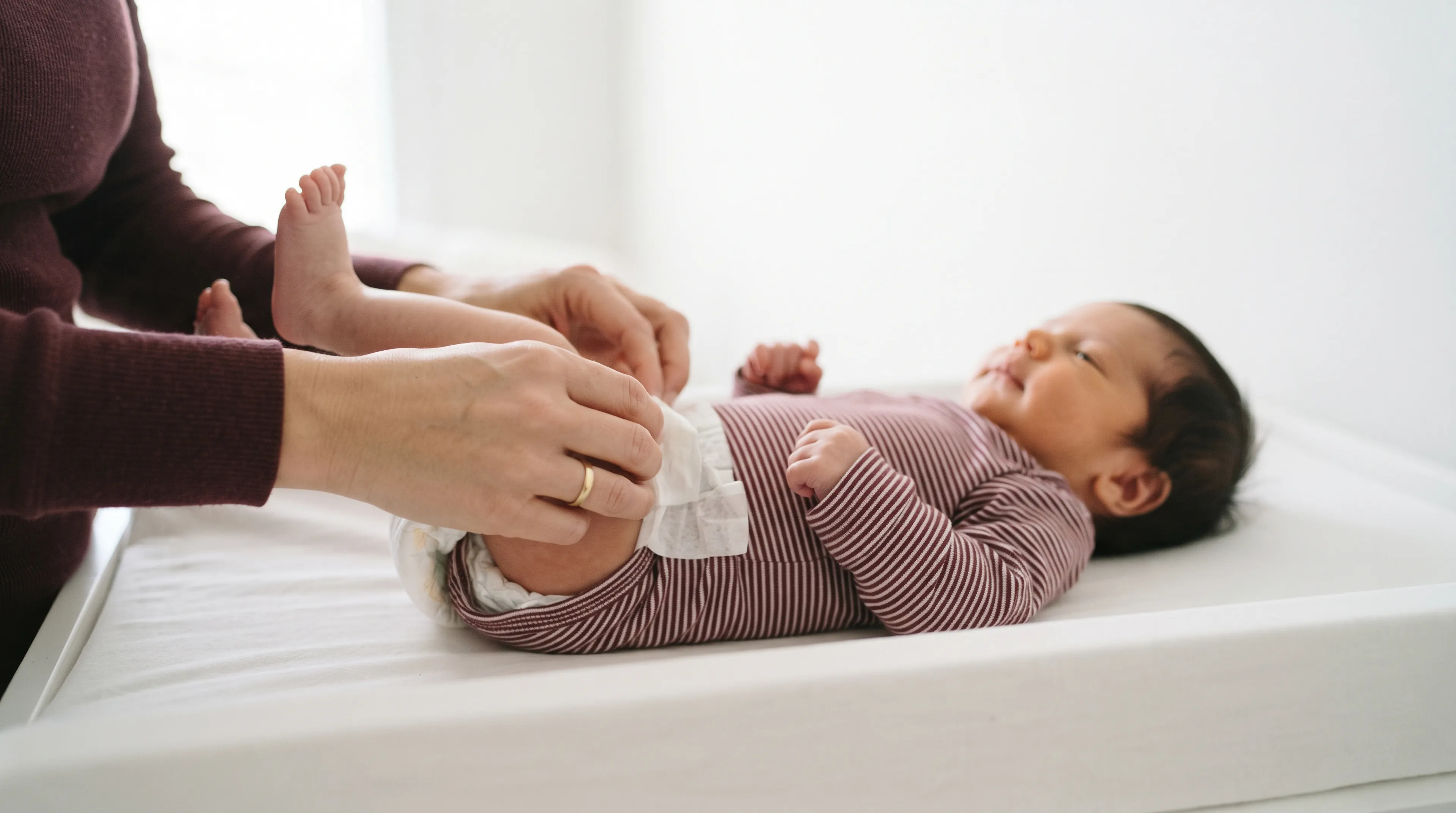
  • Position your baby: Place your baby on a clean, flat surface with a changing mat or soft cloth underneath. Keep one hand on your baby throughout the change.
  • Open the soiled diaper: Unfasten the dirty diaper but keep it underneath your baby. Use the front panel to gently remove the bulk of the stool, then fold the dirty side inward.
  • Lift and remove: Gently hold both ankles, lift your baby's bottom slightly, and slide the soiled diaper out.
  • Clean the skin: Use an unscented wipe or damp cotton wool to clean the diaper area, always wiping from front to back. For girls, this helps reduce the spread of bacteria toward the urinary opening. For boys, gently point the penis downward before fastening the clean diaper to help prevent leaks.
  • Dry the skin: Allow the skin to air-dry for about 30 to 60 seconds, or gently pat it dry rather than rubbing. Apply barrier cream if needed.
  • Protect the umbilical cord: If the umbilical cord stump is still attached, fold the front of the diaper below the stump or use a newborn diaper with a cord notch. For more guidance, see how to clean around the umbilical cord during diaper changes.
  • Fasten the clean diaper: Slide the clean diaper underneath your baby, bring the front panel up between the legs, and fasten the tabs evenly. Make sure the diaper fits comfortably without being too tight.

Preventing and Treating Newborn Diaper Rash

Newborn diaper rash is extremely common and usually preventable with consistent habits. Prevention comes down to a few key practices:

  • Change diapers promptly, especially after bowel movements.
  • Allow 5 to 10 minutes of air time at each change when possible.
  • Apply a thin layer of zinc oxide or petroleum-based barrier cream at every change to protect skin before irritation begins.
  • Use water or unscented wipes; fragranced products raise the risk of irritation.

When mild redness appears, increase air time, apply barrier cream generously, and it should improve within 2 to 3 days. If you notice raw, weeping skin or broken areas, follow guidance on caring for minor skin irritation or broken skin and consult your doctor if it does not improve quickly.

Bright red patches with satellite spots around the edges may suggest a yeast infection, which requires an antifungal treatment prescribed by your doctor. Do not use over-the-counter antifungal creams on a newborn without medical advice.

Contraindications and When to Avoid Certain Products

Some products commonly associated with baby care can actually harm newborn skin.

  • Avoid talc-based powders: Do not use talc-based powders near newborns, as inhaling fine particles may pose a respiratory risk.
  • Avoid irritating products: Avoid scented wipes, creams, and products containing alcohol or preservatives that may irritate sensitive skin or trigger reactions.
  • Protect broken skin: If your baby's skin is broken or raw, avoid introducing new products until it has healed. Introducing several products at once can also make it difficult to identify the cause of a reaction.
  • Skin conditions and allergies: Babies with eczema or a history of allergies may have more sensitive skin. Consult your paediatrician before trying new diaper-area products.

Report adverse events, including skin reactions to any diaper product, to your healthcare provider or the relevant regulatory authority.

When to Consult a Doctor

Most diaper rash clears up at home within a few days. Seek medical advice if you notice:

  • A rash that does not improve after 3 to 4 days of consistent home care.
  • Signs of a yeast infection: bright red, sharply bordered rash with satellite spots.
  • Blisters, open sores, or bleeding in the diaper area.
  • Fever alongside the rash.
  • Blood in stool or urine.
  • Fewer wet diapers than expected, which may indicate inadequate feeding or dehydration.

These signs of diaper rash in babies, especially when combined with fever or changes in feeding, warrant prompt paediatric review rather than further home management.

Conclusion

Newborn diaper care becomes easier with a consistent routine and a few simple precautions. Check diapers regularly, change soiled diapers promptly, and choose a size that fits comfortably without leaving marks or causing leaks. During each change, clean and dry your baby's skin gently, protect the umbilical cord stump while it heals, and use suitable barrier protection when needed. Avoid products that may irritate delicate skin, such as talc-based powders and heavily fragranced products. Most mild diaper rashes improve with good skin care, but persistent, severe, spreading, or infected-looking rashes should be assessed by a paediatrician.

FAQs

How many diapers does a newborn use per day?

Most newborns go through 8 to 12 diapers per day in the first few weeks. The count tends to decrease gradually as your baby grows and feeding intervals lengthen.

Is it normal for a newborn to have fewer wet diapers?

Fewer than 6 wet diapers per day after the first few days can signal that your baby is not getting enough milk. Contact your pediatrician promptly if you notice a consistent drop in wet diaper count.
Can I use baby powder on a newborn's diaper area?

No. Talc-based powders carry an inhalation risk for newborns and should be avoided entirely. Cornstarch-based powders are also not recommended, as they can encourage yeast growth in a moist diaper environment.

How long can a newborn stay in one diaper overnight?

A wet-only diaper can last through a sleep stretch of 3 to 4 hours, but a soiled diaper should be changed promptly regardless of the time. If your newborn sleeps longer, check the diaper before resettling and change if soiled.

What is the best diaper rash cream for newborns?

Zinc oxide barrier creams and plain petroleum-based ointments are the most widely recommended options for preventing and treating mild newborn diaper rash. Ask your paediatrician which product suits your baby's skin, especially if redness is persistent or worsening.

Apollo 247 Floating Action Button