logo
0

Newborn How Many Times Poop: A Practical Diaper Guide

How many times should a newborn poop? Learn about normal newborn poop frequency, color, texture, wet diapers, and when to consult a pediatrician.

article image

Dr. Kamran

Understanding newborn how many times poop questions is one of the first things new parents obsess over, and for good reason. Your baby's diaper tells you a lot about their health, feeding, and hydration. This guide covers everything from poop frequency and color to how often you should change diapers and when to call your doctor.

How Many Times Does a Newborn Poop in a Day?

Newborn stool frequency varies widely. Breastfed babies may have several bowel movements a day, sometimes after each feeding, while formula-fed babies often stool less frequently. There is no single normal number for every newborn.

Yes, that range is wide, and both ends can be completely normal. In the first week, almost every feed can trigger a bowel movement because breast milk activates a reflex in the gut.By around 3 to 6 weeks, some breastfed babies may begin having bowel movements less frequently—even once a week—and this can still be normal if stools remain soft and the baby is feeding well and gaining weight appropriately

Formula-fed babies tend to go less often but more predictably. Their stool is firmer and takes longer to move through the gut.

Is it normal for a newborn to poop after every feed?

Yes, especially in the first two to three weeks. That does not mean something is wrong. It means the digestive system is doing exactly what it should.

What Newborn Poop Should Look Like (Color and Texture)

Poop changes quickly in the first few days.

  • Days 1 to 2: Meconium, a thick, sticky stool that is usually dark green to black. It is the first stool passed by a newborn and normally occurs during the first few days after birth.
  • Days 3 to 4: Transitional stool, usually a khaki or army green color.
  • Normal Breastfed Stool: By around days 5–7, breastfed babies typically have loose, yellow stools that may contain small, seed-like particles, with frequency often increasing as milk production becomes established.
  • Day 5 onward (formula-fed): Pale yellow to tan, thicker, with a stronger smell.

Is green poop normal in newborns?

Occasionally, yes. A one-off green stool is usually not concerning. Consistently green, frothy stool in a breastfed baby can sometimes signal a foremilk-hindmilk imbalance, worth mentioning to your pediatrician.

Poop Colors That Need Immediate Attention

ColorWhat It May Mean
Bright redBlood in stool, needs same-day review
White or pale greyPossible liver issue, call doctor urgently
Black (after meconium phase)Could indicate bleeding, contact doctor

How Often Should You Change a Newborn's Diaper?

Newborn diaper changing frequency should follow your baby's output, not a fixed clock. A rough guide by age:

  • Week 1 to 2: Change after every feed or every 1 to 2 hours because poop is frequent and the skin is very sensitive.
  • Week 3 to 4: Every 2 to 3 hours, or immediately after a poop.
  • Month 2 onward: Every 3 to 4 hours, still immediately after bowel movements.

Should I change a diaper if it is only wet?

Yes, especially in the newborn phase. Change wet diapers regularly because prolonged moisture and contact with urine or stool can contribute to skin irritation and diaper rash.** A heavy wet diaper left too long is a common cause of diaper rash.

Check the diaper every time you feed, before naps, and whenever your baby seems unsettled.

How Long Can a Newborn Wear the Same Diaper?

During the day, aim to change diapers every 2 to 3 hours. Leaving a wet diaper on for longer increases moisture against the skin, which is the main trigger for diaper rash and, in some cases, fungal skin infection.

At night, change a diaper promptly if it contains stool. For a wet-only diaper, follow your baby's feeding and skin-care needs and change it if it becomes very wet, leaks, or your baby develops irritation. Most parents change before the last feed at night and again at the first morning feed.

Can a diaper be worn overnight?

Yes, with caveats. If the diaper contains stool, change it promptly regardless of the hour. Sitting in stool overnight significantly raises the risk of skin breakdown and infection. If your baby develops a rash or redness, switch to more frequent overnight changes.

How Many Diapers Does a Newborn Need Per Day?

Newborns need frequent diaper changes, but the exact number varies depending on feeding, urine output, bowel movements, and the individual baby. Plan for several diaper changes throughout the day and keep extras available for unexpected changes. For practical planning:

  • Daily: Stock 10 diapers as a working average.
  • Monthly: A newborn typically uses 250 to 300 diapers in the first month.
  • Months 2 to 3: Frequency often drops to 6 to 8 per day as bowel movements settle.

When you are buying ahead, one to two boxes of newborn-size diapers is usually enough for the first two to three weeks. Babies grow quickly, so avoid overstocking one size.

How many wet diapers should a newborn have? Wet diapers are a key hydration check. By around day 5 to 7, a breastfed newborn should generally have at least 6 wet diapers in 24 hours. Fewer wet diapers may indicate inadequate milk intake or dehydration and should be discussed promptly with a healthcare professional. Fewer than that can be a sign of dehydration in newborns that needs prompt medical attention.

When to Worry: Signs of Constipation or Diarrhea in Newborns

Call your pediatrician if you notice any of the following.

Signs of constipation:

  • Hard, pellet-like stools (softness matters more than frequency)
  • Significant straining with crying and an arched back, followed by hard stool
  • A formula-fed newborn who is having infrequent, hard, or dry stools, particularly if they are uncomfortable or feeding poorly, should be discussed with a pediatrician.
  • A breastfed baby can sometimes go several days or even about a week between bowel movements after the first month, provided the stool is soft and the baby is feeding and growing normally. If your baby is uncomfortable, has hard stools, feeds poorly, or is not gaining weight, contact your pediatrician.

Signs of diarrhea:

  • Stool that is very watery, extremely frequent, and has a foul smell
  • Blood or mucus in the stool
  • A sudden increase in the frequency or watery nature of stools compared with your baby's usual pattern, particularly when accompanied by poor feeding, vomiting, fever, blood or mucus in the stool, or fewer wet diapers.
  • Combined with fever, vomiting, or poor feeding

Signs of dehydration in newborn diapers:

Fewer than 6 wet diapers in 24 hours after day 5
Urine that appears dark or orange-tinted
Dry mouth, sunken fontanelle (soft spot on the head), or no tears when crying
These signs warrant a same-day call or visit to your doctor.

Contraindications and Precautions for Diaper Rash Products

Many parents reach for diaper rash cream at the first sign of redness. Zinc oxide and petrolatum are commonly used as barrier ingredients to protect diaper-area skin from moisture and irritation. Use products according to their label directions, and seek medical advice for broken, infected, or persistent rashes.

Do not use any cream or powder on:

  • Broken, blistered, or bleeding skin without medical advice
  • Skin that looks infected (spreading redness, pus, warmth, or odor)
  • A rash that has not improved after 2 to 3 days of home care

Avoid talcum or baby powder around newborns because inhaled powder particles can cause respiratory problems. The American Academy of Pediatrics advises against using baby powder, including talc-containing products, around infants. Cornstarch-based powders can also irritate the respiratory tract if inhaled, so loose powders are best avoided around infants.
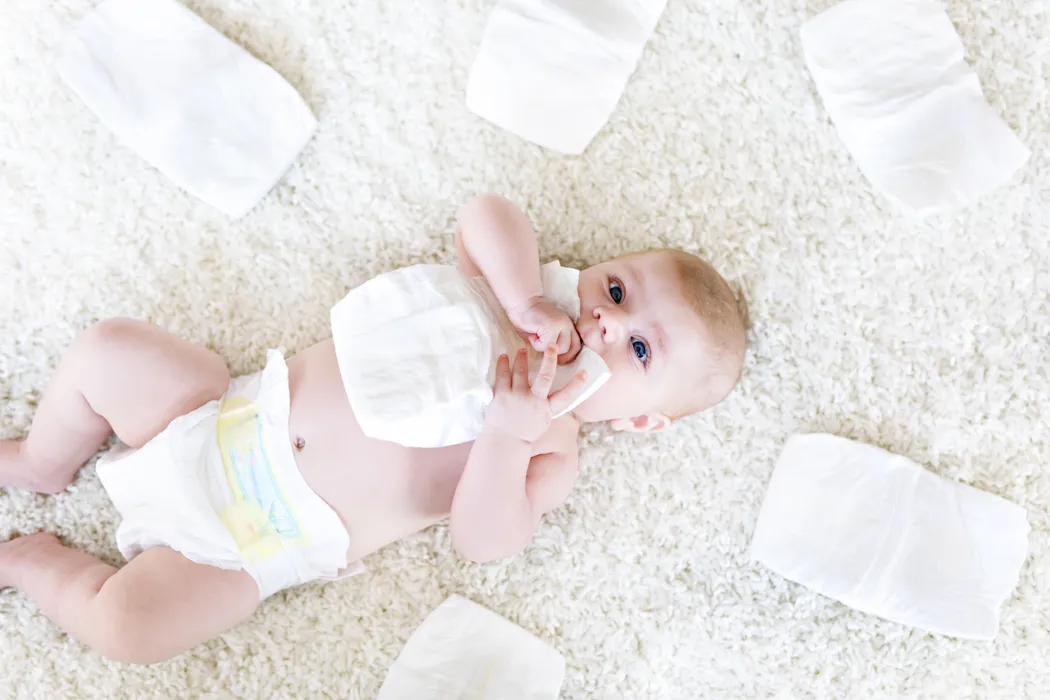
When should diaper rash be checked by a doctor?

See your doctor if the rash is spreading beyond the diaper area, is not improving after 48 to 72 hours of frequent changes and barrier cream, or looks like it may be infected. A bright red rash with distinct borders and small red spots or bumps around the main rash can be consistent with a yeast infection. Because different types of diaper rash can look similar, have a pediatrician confirm the diagnosis before starting an antifungal treatment.

Report adverse events to your healthcare provider or the relevant regulatory authority.

For additional guidance on caring for sensitive newborn skin and closely related concerns, see our newborn belly button care guide.

Conclusion

Newborn poop frequency can vary widely, so there is no single number that is normal for every baby. What matters is the overall pattern, including changes in stool color and texture, adequate wet diapers, feeding, and healthy growth. Breastfed babies may poop several times a day, while some may become less frequent as they get older. Contact your pediatrician if your baby has hard or unusually watery stools, blood in the stool, fewer wet diapers, poor feeding, vomiting, fever, or other signs of illness.

FAQS

Is it normal for a newborn to not poop for a day?

In the first two weeks, a day without stool can be unusual and worth monitoring. After week 3 to 4, some breastfed babies naturally go 1 to 2 days between bowel movements, which is normal if the stool remains soft when it comes.

Does a breastfed baby poop more than a formula-fed baby?

Generally yes, especially in the first few weeks. Breastfed babies often poop after every feed, while formula-fed babies tend to go once or twice a day with firmer stools.

Should I wake my baby to change a diaper at night?

If the diaper contains stool, yes, change it promptly. For a wet-only diaper at night, most pediatricians advise against waking a sleeping newborn unless the diaper is very heavy or rash is already present.

Why does my newborn strain to poop but the stool is soft?

Straining is common in newborns because they have not yet learned to coordinate the muscles needed for a bowel movement. As long as the stool is soft when it arrives, straining alone is not a sign of constipation.

How do I know if my baby has a diaper rash or infection?

A regular diaper rash looks pink, is confined to the diaper area, and improves with frequent changes and barrier cream within a day or two. An infected rash may spread, feel warm, look blistered or weepy, or not respond to standard care. A yeast rash is typically bright red with defined borders and small spots nearby. Any of these signs deserve a pediatrician's review.

Apollo 247 Floating Action Button