logo
0

How to Choose the Right Diaper Rash Cream for Your Newborn?

Pediatrician-reviewed guide to picking the best diaper rash cream for newborns — key ingredients, safe application, and prevention tips.

article image

Dr. Mayank

A red, inflamed patch in the diaper area is one of the first health concerns most parents face, and finding the right diaper rash cream for a newborn can feel surprisingly complicated. Newborn skin is thinner, more absorbent, and far more reactive than older baby skin, so ingredient choices matter far more than the packaging suggests. This guide covers what causes the rash, which baby rash cream ingredients actually work, how to apply cream correctly, and when to call a doctor.

What Causes Diaper Rash in Newborns?

Newborns wet their diapers frequently, and prolonged contact with urine or stool is the most common trigger. Moisture softens the skin's outer barrier, making it easier for friction from diaper edges to cause small tears and irritation.

Several other factors can compound the problem:

  • Stool contains digestive enzymes that are especially harsh on delicate skin, and newborns have frequent, loose stools
  • Synthetic fragrances or preservatives in wipes and creams can trigger contact dermatitis
  • Yeast (Candida) thrives in warm, moist folds, producing a bright red rash with satellite spots around the main patch
  • Changes in stool composition from formula introduction can worsen irritation

Understanding the cause helps you choose the right treatment and avoid products that make things worse.

Best Diaper Rash Cream Ingredients for Babies

Not all baby rash cream ingredients are equal. The best diaper rash creams for babies rely on a small number of well-studied compounds. Knowing what each one does makes it much easier to read a label confidently.

Zinc Oxide


Zinc oxide is the most widely recommended active ingredient in diaper rash creams. It forms a physical barrier over the skin, blocking moisture and stool from reaching irritated tissue, and it has mild anti-inflammatory properties. Most products contain zinc oxide at concentrations between 10% and 40%. Higher concentrations, around 40%, are typically used for more severe rashes. A zinc oxide diaper cream is generally the first choice recommended by paediatricians and is considered safe for newborns because it sits on the skin surface rather than being absorbed in significant amounts.

Petrolatum (White Soft Paraffin)

Petrolatum, listed on labels as white soft paraffin or petroleum jelly, is an occlusive agent that seals in moisture and protects against wetness. It is well-tolerated on very sensitive newborn skin and rarely causes reactions. Many of the best diaper rash creams for babies combine petrolatum with zinc oxide for layered protection.

Dimethicone

Dimethicone is a silicone-based ingredient that repels water and reduces friction. It appears in creams aimed at prevention as much as treatment, and it is safe for newborns when used as directed.

Baby Rash Cream Ingredients to Avoid

When reading labels, steer clear of:

  • Fragrances and parfum, which are common allergens
  • Parabens and formaldehyde-releasing preservatives
  • Boric acid, which is toxic if absorbed through broken skin
  • Talc in powder form due to inhalation risk
  • Essential oils, which can irritate newborn skin even in small amounts

For a broader look at caring for delicate newborn skin, see newborn skin and belly button care basics.

How to Apply Diaper Rash Cream Correctly?

Application technique is just as important as what you put on the skin. A thin smear does very little; a proper barrier layer actually works.

Follow these steps at each diaper change:

  • Remove the soiled diaper and dispose of it safely.
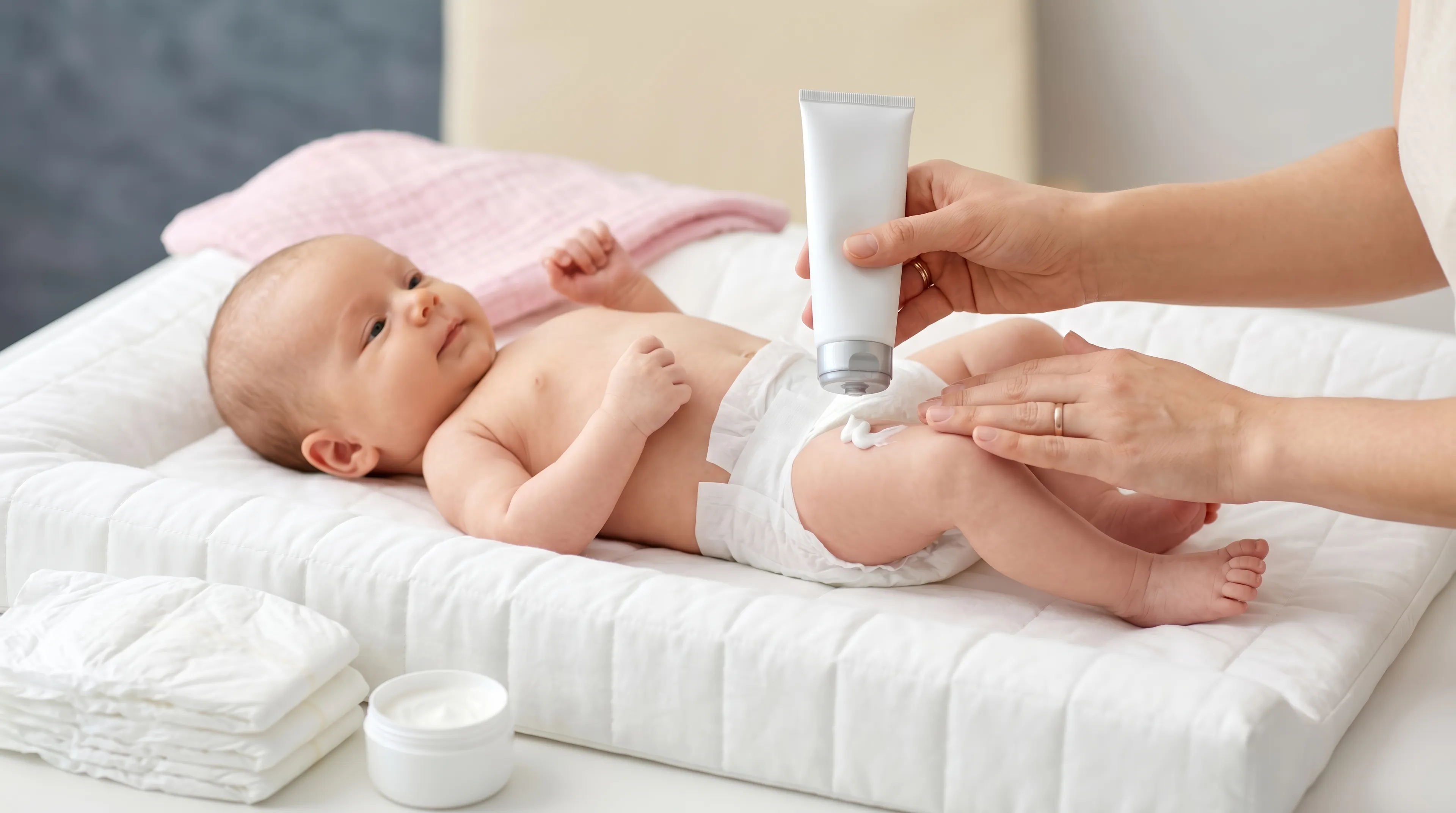
  • Clean the area gently with plain warm water or an unscented, alcohol-free wipe, always wiping front to back.
  • Pat the skin completely dry with a soft cloth. Rubbing worsens irritation.
  • Apply the cream in a thick, opaque layer, enough that you cannot see the skin beneath it. This is the functional barrier.
  • Fasten the fresh diaper loosely enough to allow a little air circulation.

Apply at every diaper change while the rash is active. Once the skin heals, a thin preventive layer at bedtime or during longer stretches is usually enough. Because the cream sits on top of the skin rather than soaking in, there is no harm in applying it preventively at every change.

Contraindications and When to Avoid Certain Creams

Some situations call for pausing the use of a standard diaper rash cream or seeking medical advice first.

  • If your baby has a known allergy to any listed ingredient, do not use the product. Check the full ingredient list, not just the actives.
  • Do not apply thick barrier creams to skin that is cracked, oozing, or bleeding without consulting a doctor first. Sealing moisture under a cream on broken skin can worsen infection. For broader guidance on skin injuries, see general wound care for minor skin irritation.
  • A rash that looks like a yeast infection (bright red, sharply defined border, satellite spots) will not clear with a zinc oxide diaper cream alone. An antifungal preparation recommended by a doctor is needed.
  • Do not use adult hydrocortisone or any steroid cream in the diaper area without a prescription. Skin folds significantly increase absorption and raise the risk of side effects.
  • Creams containing camphor, menthol, or salicylates are not appropriate for newborns.

Report adverse events to your healthcare provider or the relevant regulatory authority.

Preventing Diaper Rash: Daily Care Tips

Good daily habits reduce how often rashes develop in the first place. These diaper rash prevention tips are easy to build into a routine.

  • Change diapers frequently, ideally within 10 to 15 minutes of a soiling, and at least every two to three hours during the day
  • Give your baby 10 to 15 minutes of nappy-free time on a waterproof mat a few times a day; air exposure helps heal irritated skin faster
  • Choose breathable diapers with a soft inner lining and a good fit; diapers that are too tight increase friction
  • Use unscented, alcohol-free wipes or plain warm water at each change
  • Apply a thin preventive layer of zinc oxide diaper cream at bedtime, when long periods between changes are unavoidable

Consistent diaper rash prevention through these steps often reduces the need for treatment creams altogether.

When to See a Doctor

Most mild rashes clear within two to three days with a good newborn diaper rash treatment routine. Seek medical attention if:

  • The rash has not improved after three days of consistent treatment
  • You see blisters, open sores, or pus-filled spots
  • The rash is spreading beyond the diaper area
  • Your baby develops a fever alongside the rash
  • Satellite spots appear around the main rash, suggesting a yeast infection
  • Your newborn seems unusually distressed or is not feeding normally

These signs can indicate a bacterial or fungal infection that requires prescription treatment.

Conclusion

Choosing the right diaper rash cream for a newborn is mainly about protecting delicate skin from moisture, friction, and irritation while avoiding unnecessary or potentially irritating ingredients. Barrier ingredients such as zinc oxide and petrolatum can provide effective protection when used correctly, while fragrance-free and simple formulations may be preferable for sensitive newborn skin. Frequent diaper changes, gentle cleaning, thorough drying, and allowing some nappy-free time can further support healing and help prevent future rashes. However, persistent, worsening, spreading, or infected-looking rashes should not be treated with barrier cream alone. If the rash does not improve within a few days or your baby develops fever, blisters, open sores, or significant discomfort, consult a paediatrician for an appropriate diagnosis and treatment.

FAQS

Is diaper rash cream safe for daily use on newborns?

Yes. Barrier creams containing zinc oxide or petrolatum are designed for repeated daily use. Because they sit on the skin surface rather than being absorbed, they can be applied at every diaper change as both treatment and prevention without any known risk to newborns.

Can I use diaper rash cream on broken skin?

Standard thick barrier creams should not be applied to cracked, oozing, or bleeding skin without medical advice. Trapping bacteria under a thick layer can worsen an infection. Consult your paediatrician, who may recommend a different preparation suited to compromised skin.

How long does newborn diaper rash take to heal?

A mild rash typically improves within two to three days of consistent treatment with a good diaper rash cream and frequent diaper changes. A rash that shows no improvement after three days, or that is worsening, should be assessed by a doctor.

Is petroleum jelly a good alternative to diaper rash cream?

Petroleum jelly (petrolatum) is an effective moisture barrier and works well for mild rashes and prevention. It does not contain zinc oxide, so it may be less effective for moderate or severe rashes. It is a reasonable option when a dedicated diaper rash cream is unavailable.

Can diaper rash cream cause allergic reactions?

It is possible, though uncommon. Reactions are usually linked to fragrances, preservatives, or lanolin in the formula rather than the active ingredients. If you notice increased redness, swelling, or hives after applying a product, stop using it and speak with your paediatrician.

Apollo 247 Floating Action Button