logo
0

Newborn Grooming Kit: Nail, Bathing & Hygiene Essentials

Learn what to include in a newborn grooming kit, from nail clippers and bathing essentials to cord care and hygiene products, plus newborn safety tips.

article image

Dr. Mayank

Bringing a newborn home is joyful and a little overwhelming, especially when you realise how much care their tiny body needs every single day. A well-chosen newborn grooming kit takes the guesswork out of the early weeks, giving you the right tools for safe nail trimming, gentle bathing, and daily hygiene without resorting to improvised substitutes that can harm delicate skin. This guide walks you through everything you need and how to use it confidently.

What Should a Newborn Grooming Kit Include?

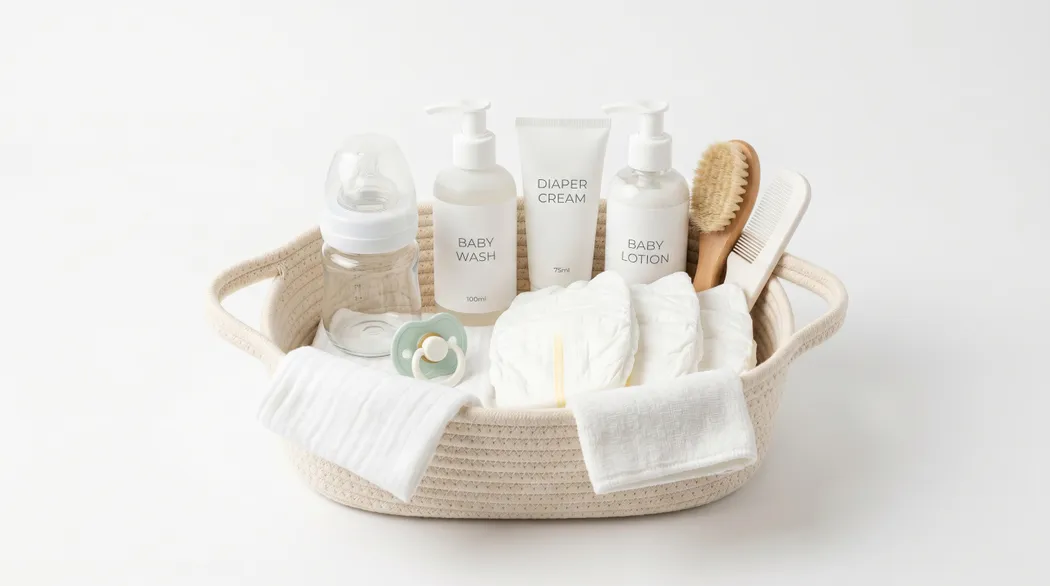
A good kit covers the baby hygiene essentials without overloading you with products your baby does not need yet. Here is what to look for:

  • A blunt-tip nail clipper or small curved scissors designed for newborns
  • A soft-bristle brush for the scalp, helpful for cradle cap too
  • A soft sponge or washcloth for bath time
  • A mild, pH-neutral liquid cleanser free from fragrance and harsh preservatives
  • A digital rectal or underarm thermometer
  • Cotton wool balls or unscented cotton pads for the eye area, cord stump, and general clean-ups
  • A fragrance-free barrier cream or ointment for the diaper area

Keep everything together in a clean pouch or case so any caregiver can find things quickly, especially at 2 a.m. Having a dedicated newborn grooming kit means you are not hunting through drawers while holding a wriggling baby.

Safe Nail Care Tools and Technique for Newborns

Newborn nails grow surprisingly fast and can scratch their face within days of birth. This makes nail care one of the first grooming tasks you will face, and it is understandably nerve-wracking.

Clipper or Scissors?

Both can be safe when they are designed specifically for newborns. Newborn nail scissors safety depends on choosing blunt-tip scissors, which allow fine control and reduce the risk of accidentally catching the skin. Nail clippers made for newborns have a small, curved head that follows the fingertip shape. Avoid standard adult clippers entirely; the blade is too wide for such a small nail bed.

Baby Nail Cutting Tips for Safe Trimming

These baby nail cutting tips can significantly reduce the chance of nicks:

  • Trim nails when your baby is in a deep sleep phase, ideally after a feed. They are less likely to startle and pull away.
  • Hold the finger pad gently back from the nail so you can see exactly what you are cutting.
  • Cut or snip in one smooth movement following the natural curve of the nail.
  • For very young newborns in the first one to two weeks, a fine emery board is often safer than any blade. File gently in one direction rather than sawing back and forth.
  • Good lighting matters more than you might expect. Use a bright lamp rather than relying on overhead room light.

If you do nick the skin, apply gentle pressure with a clean cotton pad. For guidance on treating an accidental nail-cutting cut, follow first-aid steps and watch for any sign of redness or swelling in the days after.

Newborn nail scissors safety ultimately comes down to one principle: work slowly, keep good light, and never rush.

Bathing Essentials: Products and Safety Precautions

Until the umbilical cord stump falls off and the navel has healed, sponge baths can help keep the area dry. The stump commonly separates within the first few weeks after birth, although timing varies between babies. Once the stump is gone and the navel is fully healed, you can move to a shallow tub bath. Knowing how to bathe a newborn safely is as much about the process as the products you choose.

How Often Should a Newborn Be Bathed?

Newborns generally do not need a daily bath. Bathing a few times a week is usually sufficient, with gentle cleaning of the face, neck folds, hands, and diaper area as needed between baths. On non-bath days, wipe the face, neck folds, hands, and diaper area with a damp cotton cloth.

Water Temperature and Product Choice

Baby skincare products for newborns should be as simple as possible:

  • Use comfortably warm, not hot, water for your baby's bath. Check the temperature before placing your baby in the bath and keep the water comfortably below scalding temperature.
  • Choose a single mild, fragrance-free, pH-balanced liquid cleanser. One well-formulated product is usually enough; separate shampoo and body wash are not necessary at this stage.
  • Never use soap or cleanser near the eyes. Plain warm water is sufficient for the face.
  • Pat the skin dry rather than rubbing, paying attention to folds under the chin, behind the ears, and in the groin where moisture collects.

Never leave your baby unattended in water, even for a moment. Keep one hand on them throughout the bath.

General Hygiene: Cord Care, Skin and Diaper Area

Newborn Umbilical Cord Care

Proper newborn umbilical cord care keeps the stump clean and promotes faster healing. Keep the cord stump dry and exposed to air as much as possible. Fold the front of the diaper down so it does not cover or rub the stump. Keep the umbilical cord stump clean and dry, and avoid applying substances such as oils, powders, or antiseptics unless specifically recommended by your healthcare professional. Fold the diaper below the stump to help prevent rubbing and contamination.
For a detailed step-by-step on how to care for a newborn's umbilical cord, including warning signs of infection to watch for, read our dedicated guide.

Diaper Area and Skin

Change diapers frequently to prevent prolonged moisture contact with the skin. At each change, clean the area with fragrance-free baby wipes or damp cotton wool, wiping front to back. Apply a thin layer of barrier cream if the skin looks even mildly pink. These steps, done consistently, prevent most diaper rashes before they start and are a core part of everyday baby hygiene essentials.

Contraindications and When to Avoid Certain Products

Not everything marketed for babies is appropriate for newborns. Some products can irritate or harm skin that is still developing its barrier function.

Products to Avoid

  • Adult Skincare Products: Avoid using adult cosmetics, lotions, or sunscreens on newborns unless specifically recommended by a healthcare professional. Choose products formulated for infants instead.
  • Talcum powder: Avoid using loose powders around newborns because airborne particles can be inhaled. If moisture protection is needed, consider an appropriate fragrance-free barrier product instead.
  • Fragranced products: Fragrance ingredients can irritate sensitive newborn skin or trigger contact dermatitis in susceptible babies. Fragrance-free products may be preferable for newborn skincare.
  • Alcohol-Based Antiseptic Wipes: Avoid using alcohol-containing antiseptic wipes on broken or sensitive newborn skin unless recommended by a healthcare professional.
  • Essential Oils: Do not apply concentrated essential oils directly to a newborn’s skin unless specifically advised by a healthcare professional.

General Safety Rules

  • Patch-test any new baby skincare product for newborns on a small area of the inner forearm and wait 24 hours before wider use.
  • If you notice a rash, persistent redness, swelling, or discharge anywhere on your baby's skin or around the nails, consult your paediatrician before continuing to use any product.
  • Report adverse events or unexpected skin reactions to your healthcare provider or the relevant regulatory authority. In India, you can report through the Pharmacovigilance Programme of India (PvPI).

Conclsuion

A newborn grooming kit does not need to contain dozens of products. A few age-appropriate essentials, such as a newborn nail file or clipper, soft washcloth, mild fragrance-free cleanser, thermometer, cotton pads, and suitable diaper-area barrier cream, can cover most routine care needs. Use each item gently and follow age and product instructions. Keep bathing brief, care for the umbilical cord stump according to healthcare guidance, and avoid loose powders, strongly fragranced products, and unnecessary skincare ingredients. If your baby develops signs of infection, persistent or spreading skin changes, or other concerning symptoms, contact your paediatrician.

FAQs

What is the best age to start using nail clippers on a newborn?

Most parents find it easier to start with a fine emery board in the first two weeks, then move to newborn-specific clippers once they feel more confident. There is no fixed age, but clippers designed for newborns can be used safely from birth with the right technique.

Can I use baby powder on a newborn?

Loose talcum powder is best avoided around newborns because airborne particles can be inhaled. For managing moisture in the diaper area, follow your healthcare professional's advice and consider an appropriate barrier cream. If you want to manage moisture in skin folds, a fragrance-free barrier cream is a safer choice.

How often should I trim a newborn's nails?

Newborn nails grow at different rates, so there is no fixed trimming schedule. Check your baby's nails regularly and trim or file them when they become long or develop sharp edges that could scratch the skin.

What soap is safe for a newborn's first bath?

Choose a mild, fragrance-free, pH-balanced liquid cleanser specifically formulated for newborns. Choose a mild, fragrance-free cleanser formulated for newborns or infants. Avoid harsh or strongly fragranced products, and keep cleanser away from the eyes. Follow the product's age and usage instructions.

When should I consult a doctor about newborn skin or nail issues?

See your paediatrician if you notice signs of infection around a nail, such as redness, swelling, or pus; persistent or spreading rashes; or any concerning changes around the umbilical stump. When in doubt, it is always better to get a professional opinion early.

Apollo 247 Floating Action Button