How to Track Your Baby's Growth Milestones Using a Newborn Weight Gain Chart?
Tracking growth is not just about the number on the scale. It is about the pattern over time, and a newborn weight gain chart is the most reliable tool for seeing that pattern clearly.
Paediatricians in India commonly use WHO Child Growth Standards, built on data from healthy, breastfed infants across multiple countries. The chart plots your baby's weight against age and shows percentile lines. A baby on the 25th percentile is not underweight; it simply means 75 percent of babies at that age weigh more. What matters is that your baby follows their own curve consistently rather than dropping across percentile lines.
How often to weigh your baby
- In the first two weeks, your doctor may want to check weight every 2 to 3 days if initial loss was significant.
- From two weeks to one month, a weekly or fortnightly clinic visit is typical.
- After the first month, monthly visits are usually enough for a thriving baby.
Home weighing tips
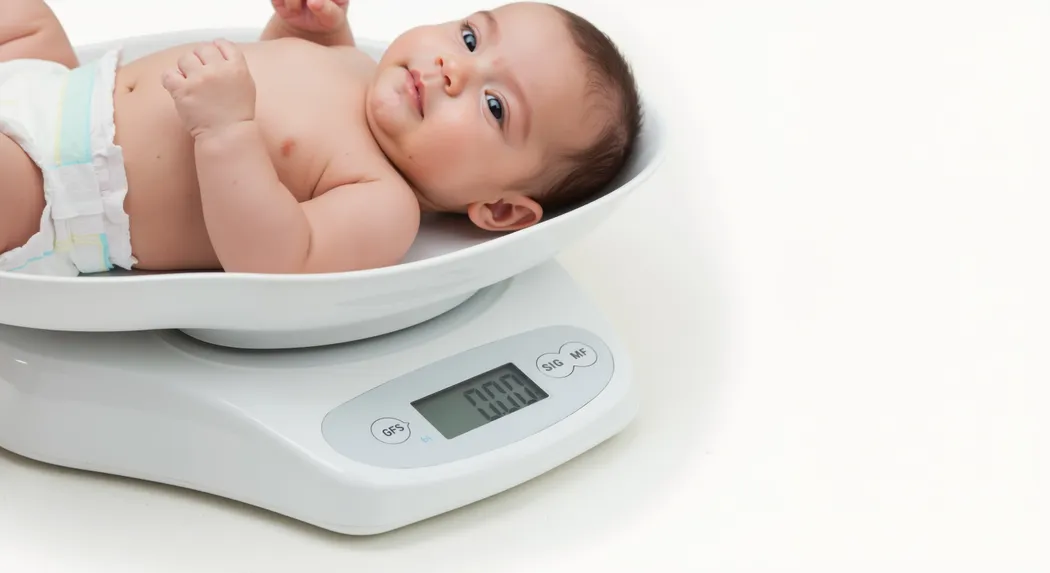
A digital baby scale accurate to 10 grams can help reassure anxious parents between clinic visits. Weigh at the same time each day, ideally before a feed and without clothes or a diaper. Home scales should supplement, not replace, clinic checkups, where a calibrated scale is used consistently for reliable comparison.
Alongside weight, your paediatrician will also track length and head circumference. This broader picture of newborn growth milestones matters just as much as weight alone. Learning other newborn care basics like umbilical cord hygiene is equally important during those first weeks at home.