logo
0

How Much Weight Should a Newborn Gain in a Month?

Learn how much weight a newborn should gain each month, normal weight loss after birth, growth tracking, healthy signs, and when to see a paediatrician.

article image

Dr.Nallapu Siri

Bringing a newborn home is one of life's most joyful and nerve-wracking experiences. One of the first things parents watch closely is the scale, and understanding how much weight a newborn should gain in a month can make the difference between unnecessary panic and genuine peace of mind. Weight gain is the clearest window into whether a baby is feeding well, staying hydrated, and growing as expected.

Normal Weight Loss After Birth (and Why It's Expected)

Almost every newborn loses weight in the first few days of life. This is completely normal and not a sign that something is wrong.

A baby arrives with extra fluid, and over the first 3 to 5 days, the body sheds this through urination, stool (including that dark, sticky meconium), and normal breathing. Most newborns lose between 5% and 10% of their birth weight during this window. A baby born at 3.2 kg, for example, might dip to around 2.9 kg before the scale starts climbing again.

The key reassurance: most babies regain their birth weight by day 10 to 14. By the two-week check-up, your paediatrician will confirm whether the numbers are heading in the right direction. If weight loss exceeds 10% of birth weight, or if the baby has not returned to birth weight by two weeks, that warrants a closer look. But in most cases, this early dip is simply part of the normal weight loss after birth.

Average Weight Gain Per Week and Per Month

Once feeding is established, growth picks up quickly.

How much does a newborn gain each week?

The average weight gain for a newborn per week in the first month is roughly 150 to 200 grams. Some babies put on a little less on quieter feeding days; others gain more during growth spurts. Both patterns are generally fine as long as the overall trend stays upward.

What is normal weight gain across the first month?

Across the full first month, most newborns gain somewhere between 600 and 900 grams above their birth weight. So a baby born at 3.0 kg might weigh close to 3.6 to 3.9 kg at the one-month visit. These figures align with World Health Organisation child growth standards, which serve as the global benchmark for healthy infant growth.

Birth weight is the starting point that matters most. A smaller baby and a larger baby can both be growing perfectly well even if their absolute weights look different on paper. What the newborn weight gain chart shows is a trend, not a fixed target number.

How to Track Your Newborn's Growth

Tracking growth does not require sophisticated equipment, but it does require consistency.

Using a newborn weight gain chart

Paediatricians plot weight, length, and head circumference on standardised WHO growth charts. These charts show percentile bands, and what matters most is that your baby follows a consistent curve over time, not that they sit at a particular percentile. A baby on the 15th percentile who stays on that curve is thriving. Watching baby growth milestones in the first month, including birth weight regain and steady weekly gains, gives your doctor a clear picture of overall health.

Check-up schedule in India

Most paediatric societies in India recommend check-ups at birth, at 2 weeks, and at 1 month during the newborn period. These visits are specifically designed to catch growth concerns early.

Weighing at home

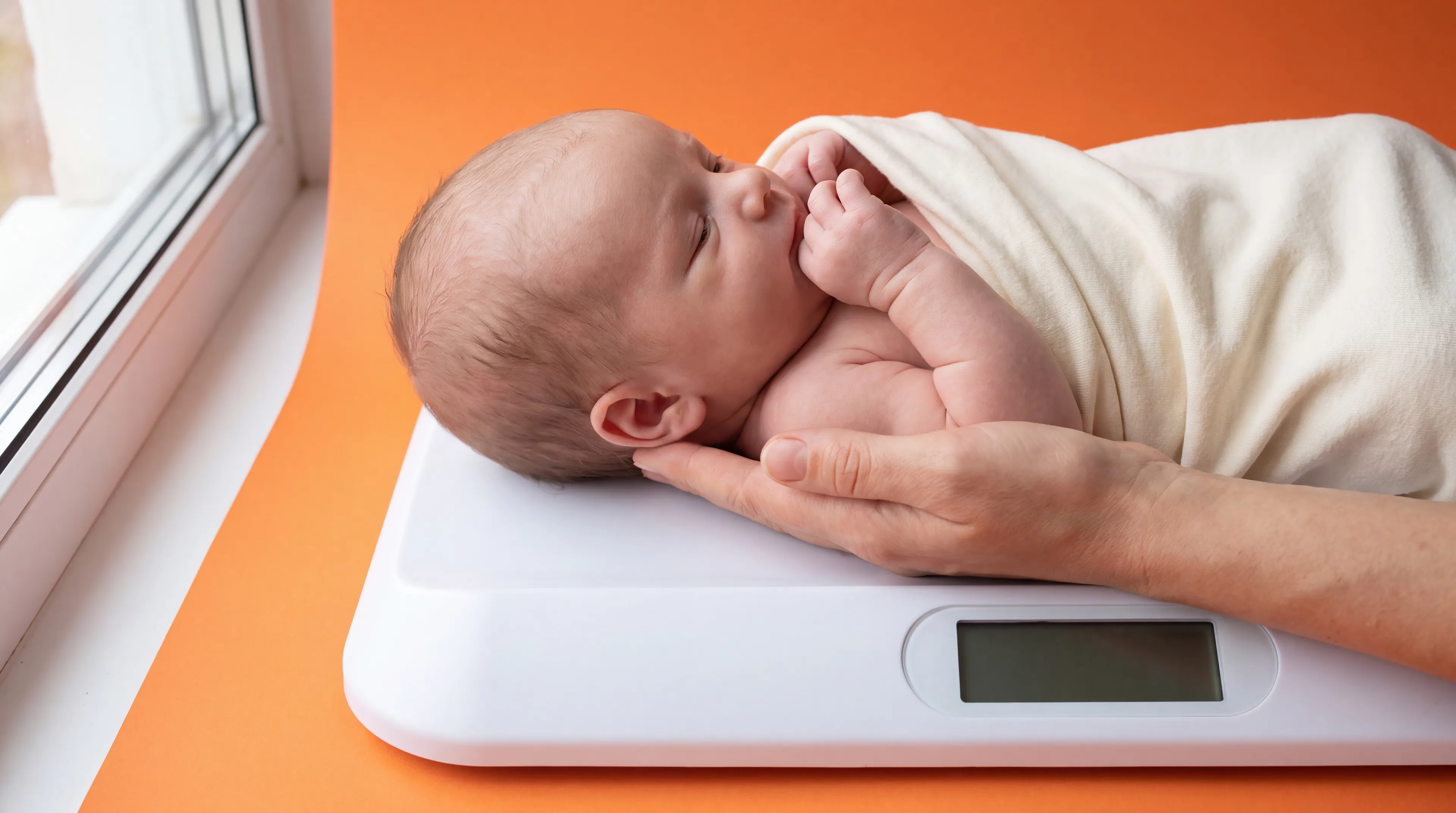
A good-quality baby scale can offer reassurance between visits. Always weigh at the same time of day, ideally before a feed, with the baby undressed, and use the same scale each time since different scales can read slightly differently. Share home measurements with your paediatrician so they can be interpreted in context.

For more guidance on keeping your baby comfortable in those early weeks, see these newborn care tips for the first weeks.

Signs of Healthy vs Poor Weight Gain

Numbers on a scale tell part of the story. The rest comes from watching your baby day to day.

Signs growth is on track

  • Your baby feeds actively, latches well or takes a full bottle feed, and seems satisfied after feeds.
  • At least 6 to 8 wet diapers per day after day 4 or 5 is a reliable sign of adequate intake.
  • Stools are transitioning from dark meconium to yellow, seedy, or mustard-colored.
  • Your baby is alert during wakeful periods, makes eye contact, and has good muscle tone.
  • Skin springs back quickly when gently pinched, indicating good hydration.

Red flags that warrant attention

  • Fewer than 6 wet diapers per day after the first week.
  • Persistent lethargy, difficulty waking for feeds, or very short feeding sessions.
  • A sunken fontanelle (the soft spot on top of the head), dry mouth, or dark, concentrated urine, all of which can signal dehydration.
  • Continued weight loss after day 5, or signs of a newborn not gaining weight by the two-week mark.

These signs, especially in combination, mean a paediatric review is needed promptly. They are not reasons to panic alone, but they should not be watched and waited on for long either.

When to Consult a Paediatrician

Trust your instincts, but also know the specific triggers that call for a same-day call to your doctor.

Reach out if:

  • Your newborn has not regained birth weight by 14 days of age.
  • Total weight gain in the first month is less than 500 grams.
  • Your baby feeds fewer than 8 times in 24 hours consistently and is not gaining well.
  • You notice any signs of dehydration mentioned above.
  • Breastfeeding is painful, the latch looks shallow, or your baby frequently pulls off and seems frustrated.
  • Formula preparation instructions are unclear, or the baby seems to tolerate feeds poorly.

Early intervention almost always makes a significant difference. A paediatrician can assess feeding technique, check for tongue-tie, evaluate milk supply, or identify any underlying health issue quickly.

Contraindications and Safety Considerations

A few important cautions for parents worried about slow weight gain:

Do not introduce formula, switch formula brands, or add any feeding supplements without speaking to a paediatrician first. While formula can be the right choice for many families, self-directed changes to a newborn's feeding plan can cause more problems than they solve. Similarly, do not use any over-the-counter products, herbal preparations, or gripe water as a substitute for proper feeding assessment.

If your baby has been prescribed any medication or is receiving treatment for a health condition, do not adjust doses or routines without medical guidance.

Report adverse events or unexpected reactions to any product or treatment to your healthcare provider or the relevant regulatory authority.

Conclusion

Most newborns lose some weight during the first few days and typically regain their birth weight by around 10–14 days. After feeding is established, steady weight gain is more important than reaching a specific number, with many babies gaining about 150–200 grams per week during the first month. Growth should be assessed using weight trends, feeding, wet diapers, stools, hydration, and overall alertness. Poor feeding, dehydration signs, continued weight loss, or failure to regain birth weight by two weeks should be evaluated promptly by a paediatrician.

FAQS

How much weight should a newborn gain in a month?

Most newborns gain between 600 and 900 grams in their first month of life, which works out to roughly 150 to 200 grams per week. This is the general benchmark based on WHO child growth standards, though individual variation is normal.

Is 500g weight gain in a month okay for a newborn?

Five hundred grams is at the lower edge of the expected range and should be discussed with your paediatrician. It may be perfectly fine depending on the baby's birth weight, feeding pattern, and overall health, but a professional assessment is worthwhile to rule out any feeding issues.

What causes slow weight gain in newborns?

Common causes include poor latch or milk transfer during breastfeeding, low milk supply, tongue-tie, frequent missed feeds, and occasionally an underlying health condition in the baby. A paediatrician or lactation consultant can identify the specific cause and recommend a plan.

Do breastfed babies gain weight slower than formula-fed babies?

In the early weeks, breastfed and formula-fed babies often gain at similar rates, but after the first month, breastfed babies may gain a little more slowly on average. Both patterns are considered normal, and growth charts account for this variation.

What is the ideal weight of a 1-month-old baby?

There is no single ideal number, since it depends on birth weight and the baby's individual growth curve. As a general guide, a full-term baby who weighed around 3.0 to 3.5 kg at birth might weigh approximately 3.6 to 4.4 kg at one month.

Apollo 247 Floating Action Button