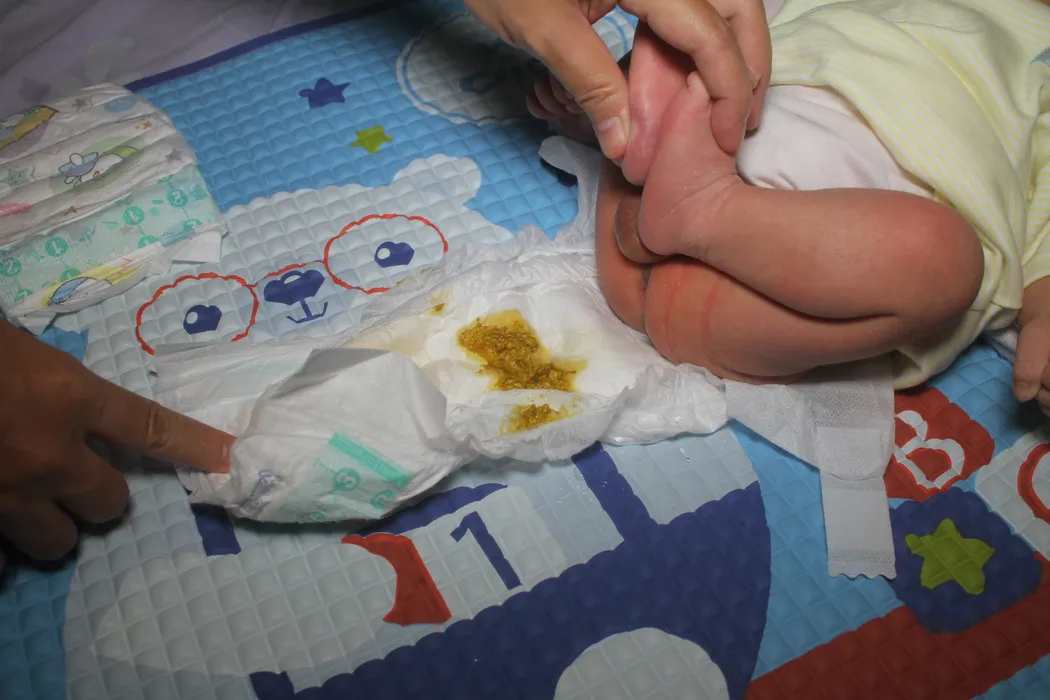
Learn how often newborns poop each day, normal bowel patterns for breastfed and formula-fed babies, stool changes, and warning signs.
Dr.Kamran
Tracking newborn how many times poop happens each day is one of the earliest health checks new parents find themselves doing, often before they even leave the hospital. Bowel movements are a surprisingly reliable indicator of feeding success, hydration, and gut health in those first fragile weeks. Knowing what counts as normal newborn poop frequency, and what warrants a call to your paediatrician, can spare a great deal of unnecessary anxiety.
How Many Times Does a Newborn Poop Per Day?
In the first 24 hours, most newborns pass one to two dark, tar-like meconium stools. By days two and three, frequency usually rises to two to four stools as feeding begins in earnest. From the end of the first week through week four, many babies pass stool after almost every feed. So if you are wondering how many times should a newborn poop a day, four to twelve dirty diapers within a 24-hour period during this phase is entirely within the normal range.
Pooping after every feed is not a sign of diarrhoea or an upset stomach. Newborns have a gastrocolic reflex, meaning a full stomach naturally triggers bowel movement. This is healthy.
A quick day-by-day guide:
Day 1: 1 to 2 dark meconium stools
Days 2 to 3: 2 to 4 stools as feeds increase
Days 4 to 7: stool lightens in color; frequency may rise to 4 or more per day
Weeks 1 to 4: 4 to 12 stools per day is common, depending on feeding type
Breastfed vs Formula-Fed Poop Patterns
The newborn how many times poop question has different answers depending on how a baby is fed, and both patterns are normal.
Breastfed babies tend to poop most often in the early weeks. Breast milk is absorbed very efficiently, and the gastrocolic reflex fires after nearly every feed. After four to six weeks, the breastfed baby poop schedule often shifts dramatically. Some babies go several days, or even a full week, between stools. As long as the stool is soft when it finally arrives, this is not constipation.
Formula-fed baby bowel movements follow a more predictable rhythm, typically one to four stools per day. Formula takes longer to digest, so stools are firmer, darker in colour, and have a stronger smell than breastfed stool.
Feature
Breastfed
Formula-Fed
Frequency (weeks 1 to 4)
4 to 12 per day
1 to 4 per day
Frequency (after 6 weeks)
Every few days possible
1 to 2 per day
Color
Mustard yellow
Tan to yellow-brown
Texture
Soft, seedy, loose
Thicker, paste-like
Smell
Mildly sour or sweet
Stronger, more noticeable
What Normal Newborn Poop Looks Like (Colour and Texture)
Normal newborn stool colour shifts considerably in the first two weeks.
Meconium (days 1 to 2): very dark green or black, thick and sticky
Transitional stool (days 3 to 4): greenish-brown as breast milk or formula replaces meconium
Mature breastfed stool (from around day 5): mustard yellow, often seedy or curd-like
Mature formula-fed stool: yellow-tan to light brown, thicker in consistency
Occasional green stools in a breastfed baby are usually fine, often linked to a higher proportion of foremilk or a gassy feed. Slightly orange or brown tinges are also normal variants.
Colours that should prompt a call to your doctor:
White, grey, or chalky stools, which can indicate a liver or bile duct issue
Bright red streaks or dark tarry stools after the meconium phase has ended
Very pale or clay-coloured stool at any point
When Poop Frequency Signals a Problem?
Most concerns about newborn not pooping enough turn out to be normal variation. Still, certain patterns deserve medical attention.
Contact your paediatrician if you see:
No stool for three or more days in a baby under six weeks, especially with fussiness, a hard abdomen, or poor feeding
Hard, pellet-like stools, a sign of true constipation
Blood in the stool, whether bright red or dark and tarry (after the meconium phase)
White or chalky stools at any point
Watery, very frequent stools with a foul odor, which can signal infection or diarrhea leading to dehydration
Is three days without a stool normal? For breastfed babies older than four to six weeks who are comfortable, feeding well, and pass soft stool when it finally arrives, yes, it can be. For babies under six weeks, or formula-fed babies at any age, three days without a stool warrants a paediatrician call rather than a wait-and-see approach.
Contraindications and Safety Precautions
Never give a newborn laxatives, suppositories, enemas, gripe water, fruit juice, sugar water, or herbal remedies without explicit guidance from your paediatrician. The newborn gut is immature, and interventions that seem harmless can cause serious electrolyte disturbances or bowel injury. Specific interventions to avoid without medical advice:
Over-the-counter laxatives or stool softeners of any kind
Glycerine suppositories used routinely rather than on medical advice
Rectal thermometer stimulation as a regular constipation remedy
Diluting formula to loosen stools, which disrupts nutrition balance
When in doubt, hold off and speak to your doctor before trying anything at home. Report adverse events to your healthcare provider or the relevant regulatory authority.
Poop frequency matters most when it is read alongside other signs. Contact your paediatrician promptly if your newborn shows any of the following along with a change in stool pattern:
Fewer than six wet diapers in 24 hours after day five of life
Sunken fontanelle (the soft spot on top of the head)
Dry mouth, lips, or eyes
Persistent or forceful vomiting, particularly if it looks green
Poor weight gain or noticeable weight loss
Fever above 38 degrees Celsius in any baby under three months
Extreme irritability or a high-pitched, weak cry
You may also find it useful to read our newborn belly button care guide for other common newborn hygiene concerns in the early weeks.
Conclusion
Newborn poop frequency can vary widely during the first weeks, particularly according to the baby's age and feeding method. Breastfed babies may poop several times a day initially, while some may naturally have less frequent bowel movements after the first month. Formula-fed babies generally have firmer and more predictable stools. Frequency should always be considered alongside stool colour and consistency, feeding, wet nappies, and your baby's overall behaviour. Contact your paediatrician if your baby has hard stools, blood or pale stools, persistent vomiting, signs of dehydration, or a significant change in their usual bowel pattern.
FAQS
How many times should a newborn poop in 24 hours?
In the first month, anywhere from four to twelve times per day is common for breastfed babies, and one to four times per day for formula-fed babies. The range is wide, and what matters more than hitting an exact number is that your baby is feeding well and gaining weight.
Is it normal for a newborn to go days without pooping?
For breastfed babies older than four to six weeks, yes, several days between stools can be perfectly normal as long as the stool is soft when it comes and the baby is comfortable. For younger babies or formula-fed babies, more than two to three days without stool warrants a call to your paediatrician.
Why does my newborn grunt and strain while pooping?
This is very common and usually reflects the effort of coordinating abdominal muscles that are not yet fully developed, not pain or constipation. If the stool that follows is soft, there is nothing to worry about. If the stool is hard or pellet-like, or your baby is distressed, mention it to your doctor.
What does green newborn poop mean?
In the first few days, green stool is normal meconium or transitional stool. Later, an occasional green stool in a breastfed baby often means the baby received more foremilk than hindmilk during a feed. Persistently green, frothy, or mucousy stools that occur alongside fussiness are worth mentioning to your paediatrician.
Does newborn poop frequency change after one month?
Yes, often quite noticeably. Many breastfed babies shift from multiple stools a day to once every few days around the four-to-six-week mark. Formula-fed babies tend to settle into a once-or-twice-daily pattern. Both are normal, provided stool consistency remains soft and your baby is gaining weight steadily.