logo
0

Organic Baby Nutrition: A Practical Guide for Parents

Learn what organic baby nutrition means, when to introduce complementary foods, how to choose organic formula and prepare homemade baby food safely.

article image

Dr. Mayank

Choosing nutritious foods for your baby is an important part of introducing complementary foods. For some families, organic baby nutrition is an appealing option because of how organic foods are produced and labelled. However, organic does not automatically mean more nutritious or safer for every baby.

This guide explains what organic means for infant foods, when to introduce complementary foods, how to choose organic infant formula and prepare homemade baby foods safely, and which foods should be avoided during infancy.

What Does 'Organic' Mean for Baby Nutrition?

Organic food is produced according to defined agricultural and processing standards that restrict certain synthetic inputs and require specific production and certification practices. In India, certified organic foods can be produced under recognised systems such as the National Programme for Organic Production (NPOP) and Participatory Guarantee System (PGS-India).

When buying certified organic food in India, look for the Jaivik Bharat logo and the relevant certification information on the packaging. Depending on the certification system, products may also carry the India Organic or PGS-India Organic mark.

Organic food does not necessarily contain more vitamins or minerals than conventionally produced food. Choosing organic may reduce exposure to certain pesticide residues, but the nutritional quality of your baby's overall diet remains more important than whether every food is organic.

For babies, focus on a varied diet that provides sufficient energy, protein, iron and other essential nutrients, along with safe preparation and age-appropriate textures.

When Can Babies Start Organic Solid Foods?

Complementary foods can generally be introduced around 6 months when your baby is developmentally ready. Starting complementary foods before 4 months is not recommended, whether the foods are organic or conventionally produced.

Signs that your baby may be ready include:

  • Sitting upright with good head and neck control.
  • Reaching for food, grasping it and bringing it towards their mouth.
  • Coordinating their eyes, hands and mouth while handling food.
  • Being able to swallow food rather than consistently pushing it out of their mouth.
  • Interest in food alone does not mean that your baby is ready for complementary foods. If your baby was born prematurely or has a medical, developmental or feeding condition, speak to your paediatrician about when and how to start.

You do not need to introduce every new food separately with a fixed 3 to 5 day waiting period. However, when introducing foods that may cause allergic reactions, offering them in safe, age-appropriate forms and introducing them one at a time can make it easier to identify a reaction.

Know More About Baby Food

How Can You Choose Certified Organic Baby Formula?

Breast milk is recommended as the main source of nutrition for most infants during the first 6 months. When infant formula is needed, the choice should be based on your baby's nutritional and medical needs rather than the word "organic" alone.

When choosing organic infant formula, consider the following:

  • Recognised certification: Look for appropriate organic certification marks rather than relying solely on the word "organic" in the product name.
  • Age-appropriate formulation: Choose a formula intended for your baby's age or stage.
  • Regulatory compliance: The formula should meet the infant formula requirements applicable in the country where it is sold.
  • Nutritional suitability: Check that the formula is appropriate for your baby's individual nutritional needs.
  • Ingredients: Consider the ingredient list, particularly if your baby has an allergy, intolerance or medical condition requiring a specialised formula.

Organic formula is not automatically better than standard infant formula. A baby who needs a specialised formula should not be switched to an organic standard formula simply because it is certified organic.

If your baby was born prematurely, has a metabolic condition, has poor growth or has been prescribed a therapeutic formula, speak to your paediatrician before changing formula.

What Are Some Simple Organic Baby Food Recipes?

Once your baby is ready for complementary foods, you can prepare simple foods at home using fresh organic ingredients if you choose. Organic ingredients are not essential for safe or nutritious homemade baby food.

The following options can be adapted to your baby's developmental stage and texture skills.

Sweet Potato Purée

Steam or boil sweet potato until it is completely soft. Mash or blend it to an appropriate consistency, adding a little breast milk, infant formula or safe water if needed.

Sweet potato provides carbohydrate, fibre and beta-carotene, which the body can convert to vitamin A.

Banana Mash


Mash a ripe banana thoroughly with a clean fork and serve immediately.

Banana is soft and easy to prepare, making it a convenient fruit for early complementary feeding.

Moong Dal Purée

Cook moong dal until completely soft. Mash or blend it with a little water to create a consistency your baby can manage.

Dal provides protein and contributes iron and other nutrients to a varied complementary diet.

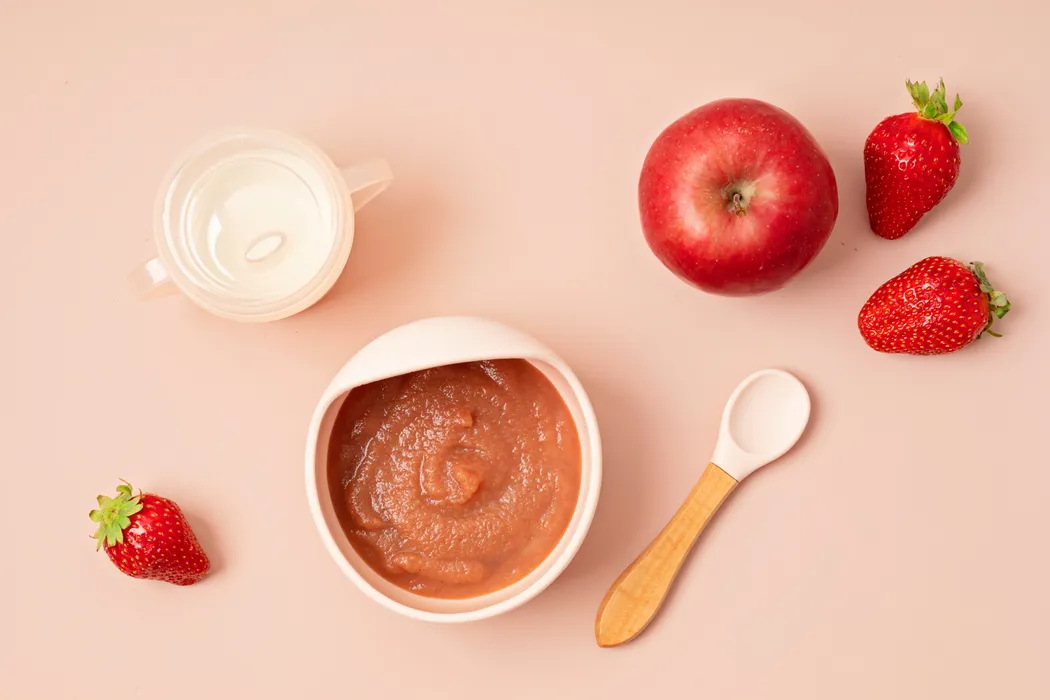
Steamed Apple Purée

Peel, core and chop an apple, then steam it until completely tender. Mash or blend it to a smooth or appropriately textured consistency.

As your baby's eating skills develop, gradually progress from smooth purées to thicker and lumpier textures rather than keeping foods puréed for too long.

How Should Homemade Baby Food Be Stored Safely?

Food safety is just as important as the quality of the ingredients. Wash your hands, utensils and preparation surfaces thoroughly before preparing food. Use clean, food-safe storage containers and refrigerate prepared food promptly.

Prepare only the amount your baby is likely to eat when possible. Food that has been served to your baby should not be returned to the refrigerator for later use.

If you freeze homemade baby food, divide it into suitable portions, use clean freezer-safe containers and thaw it safely in the refrigerator or using an appropriate reheating method. Reheat food thoroughly and allow it to cool to a safe temperature before feeding.

Do not leave prepared baby food at room temperature for prolonged periods. When in doubt about whether stored food is safe, discard it.

What Foods Should Babies Avoid?

Organic or not, some foods are unsuitable or unsafe for babies at particular ages. The following precautions are important:

  • Honey: Do not give honey to babies under 12 months because of the risk of infant botulism.
  • Cow's milk as a main drink: Do not use cow's milk as the main drink before 12 months. Small amounts of cow's milk can generally be used in cooking from around 6 months.
  • Whole nuts and other choking hazards: Never give whole nuts to babies. Avoid hard, round, sticky or large pieces of food that can block the airway.
  • Added salt: Babies do not need added salt, and salty foods should be avoided.
  • Added sugars: Avoid foods and drinks with added sugars. Babies do not need them as part of a healthy diet.
  • Unpasteurised foods and drinks: Avoid unpasteurised milk, dairy products and juices because they may contain harmful bacteria.
  • High-mercury fish: Avoid fish known to contain high levels of mercury and choose safer fish varieties instead.
  • Fruit juice: Fruit juice is not recommended for babies under 12 months.

Food should also be prepared in an age-appropriate texture and offered while your baby is sitting upright and supervised.

When Should You Speak to a Paediatrician?

Most healthy babies can begin complementary foods around 6 months, but some may need individual guidance.

Speak to your paediatrician before changing your baby's formula or diet if your baby was born prematurely, has a known food allergy, has difficulty swallowing, is not gaining weight as expected or has been prescribed a specialised or therapeutic formula.

You should also seek medical advice if your baby develops persistent vomiting, diarrhoea, blood in the stools, poor feeding or other concerning symptoms after a new food is introduced.

If your baby develops difficulty breathing, significant swelling of the face, lips or throat or another severe allergic reaction, seek emergency medical care immediately.

Conclusion

Organic foods can be part of a healthy diet for babies, but choosing organic is a personal preference rather than a requirement for good infant nutrition. The priorities are a varied and nutrient-rich diet, safe food preparation, appropriate textures and continued breast milk or infant formula as appropriate for your baby's age and needs.

Whether you choose organic or conventional foods, introduce complementary foods around 6 months when your baby is developmentally ready and avoid foods that are unsafe for infants. If your baby has specific nutritional, allergy or medical needs, speak to your paediatrician for individual guidance.

FAQS

Is organic baby formula better than regular formula?

Not necessarily. Organic infant formula follows additional organic production and certification requirements, but being organic does not automatically make a formula nutritionally superior. The most appropriate formula depends on your baby's age, nutritional needs and any medical conditions.

How can I tell if baby food is genuinely organic?

Look for recognised organic certification information on the packaging rather than relying only on the word "organic" in the product name. In India, certified organic foods may carry the Jaivik Bharat logo along with relevant certification marks and information.

Can I make organic baby food at home safely?

Yes. You can prepare homemade baby food using organic ingredients if you choose. Wash ingredients and utensils thoroughly, cook foods to an appropriate texture, avoid unsafe ingredients and store prepared food safely. Organic ingredients do not remove the need for good food hygiene.

What nutrients should organic baby food provide?

omplementary foods should provide a variety of nutrients, particularly iron, protein, energy and other vitamins and minerals. Include iron-rich foods such as meat, fish, eggs, beans and lentils alongside vegetables, fruits, grains and other suitable foods. Breast milk or infant formula remains an important part of feeding while complementary foods are introduced.

Are organic baby food recipes safe for babies with food allergies?

Organic ingredients are not automatically safer for babies with food allergies. Foods that may cause allergic reactions should be introduced in safe, age-appropriate forms. If your baby has severe eczema, an existing food allergy or another condition that may increase the risk of a serious allergic reaction, speak to your paediatrician before introducing specific foods.

Apollo 247 Floating Action Button