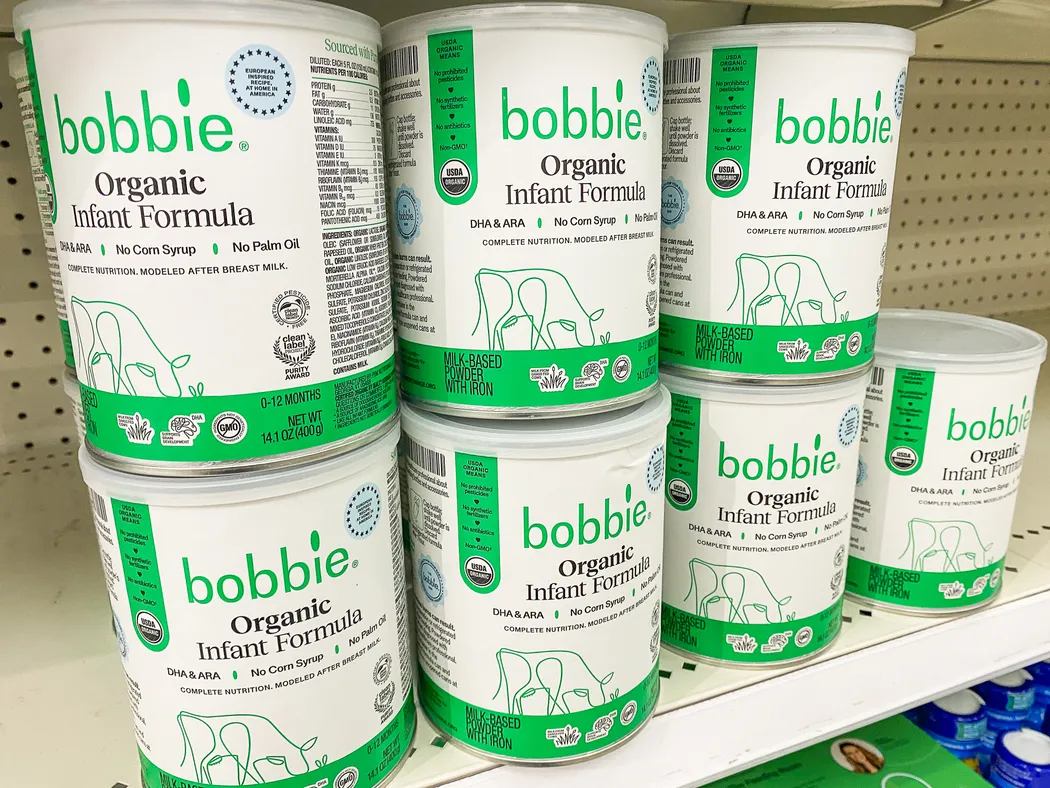
Learn what organic infant formula means, how certification works, how organic and conventional formulas compare, and what to consider when choosing one for your baby.
Choosing an infant formula is a personal decision. Parents may consider nutrition, ingredients, tolerability, cost and how a formula is produced. Organic infant formula is one option for families who prefer ingredients produced according to recognised organic farming and processing standards.
However, an organic label does not by itself mean that a formula is nutritionally superior to a conventional infant formula. Infant formulas must meet applicable nutritional and safety requirements, while organic certification primarily relates to how qualifying agricultural ingredients are produced, processed and labelled.
Understanding what organic certification means, how organic and conventional formulas differ, and when a specialised formula may be needed can help parents make an informed choice.
Organic infant formula contains agricultural ingredients produced and processed according to the requirements of a recognised organic certification system.
Depending on the certification standard, organic production may restrict or prohibit certain synthetic pesticides, fertilisers, genetically modified ingredients and other substances used in conventional agriculture. Requirements vary between certification systems and countries.
It is also important to distinguish between a formula that contains some organic ingredients and a finished product that is certified organic. A recognised certification mark and relevant certification information provide greater assurance that the product meets the applicable organic standard.
Organic certification does not mean that every ingredient must necessarily be organic or that the formula contains no additives. The ingredients and processing aids permitted depend on the applicable certification requirements.
Which Organic Certifications Should You Look For?
Organic standards differ by country and certification system. Parents may encounter certifications such as USDA Organic, the European Union organic logo and India Organic.
USDA Organic
USDA organic labelling is based on defined production and handling standards. A product labelled “organic” generally contains at least 95% organically produced ingredients, excluding salt and water, with the remaining ingredients meeting applicable USDA requirements.
EU Organic
The European Union organic logo may be used on certified products containing at least 95% organic ingredients of agricultural origin, subject to the requirements of the EU organic framework. Certified products also provide information identifying the relevant control body and the origin of agricultural raw materials.
Organic Products in India
In India, organic certification and infant-formula safety requirements are separate considerations. Parents purchasing organic formula should look for appropriate certification information and ensure that the product is properly labelled for the Indian market.
When assessing an organic formula, consider:
Whether it carries a recognised organic certification mark
Whether the relevant certification or control body is identified, where applicable
The complete ingredient and allergen information
Whether the product is appropriately labelled and permitted for sale in the market where it is being purchased
A product described as “made with organic ingredients” is not necessarily equivalent to a fully certified organic product.
Is Organic Formula More Nutritious Than Regular Formula?
Not necessarily. Organic certification primarily concerns how qualifying ingredients are produced and processed. It does not, by itself, establish that a formula provides better nutrition or health outcomes.
Both organic and conventional infant formulas are formulated to meet applicable nutritional requirements. Their nutritional profiles can vary according to the protein source, carbohydrate source, fat blend, vitamins, minerals and other permitted ingredients.
Nutritional Feature
Organic Formula
Conventional Formula
Protein
Must meet applicable infant-formula requirements
Must meet applicable infant-formula requirements
Iron
Provided according to applicable nutritional requirements
Provided according to applicable nutritional requirements
Vitamins and minerals
Formulated according to applicable requirements and permitted ingredients
Formulated according to applicable requirements
DHA and other fatty acids
May be included depending on the formulation
May be included depending on the formulation
Ingredient sourcing
Qualifying agricultural ingredients may be organically produced, depending on certification
Agricultural ingredients are not required to be organically produced
Organic certification
Must comply with the applicable organic standard
Not required
There is no established evidence that choosing an organic infant formula instead of a nutritionally comparable conventional formula results in better growth, development or overall health.
For parents comparing formulas, the baby's age, nutritional and medical needs, formula composition, safety, availability and affordability are important considerations. Organic certification may be a personal preference, but it should not be treated as a guarantee of superior nutrition.
What Is the Environmental Impact of Organic Formula?
Organic farming standards can restrict the use of certain synthetic agricultural inputs, but the environmental impact of organic formula cannot be determined from its organic certification alone.
Environmental effects vary according to factors such as the agricultural system, crops or livestock involved, location, processing methods, packaging and transportation. Organic production may have environmental advantages in some areas and trade-offs in others.
Manufacturing, packaging and transportation can also contribute to the overall environmental footprint of an infant formula.
Families who consider environmental sustainability when choosing formula may therefore wish to consider the product's broader production and supply chain rather than relying on the organic label alone.
When Should You Avoid Standard Organic Formula?
Organic certification does not make a formula appropriate for babies who require specialised medical nutrition.
Speak with a paediatrician before choosing a formula if your baby has:
A confirmed or suspected cow's milk protein allergy
A confirmed soy allergy
A metabolic disorder such as galactosaemia, phenylketonuria or maple syrup urine disease
Prematurity or low birth weight
Significant feeding difficulties or poor growth
Another condition for which a specialised formula has been recommended
Babies with these conditions may require a specific therapeutic or preterm formula rather than a standard organic formula. The appropriate choice depends on the underlying condition.
Do not switch to an organic formula simply because your baby has symptoms such as vomiting, diarrhoea, excessive crying, constipation or poor weight gain. These symptoms can have many possible causes and may need medical assessment before a formula change is made.
Report adverse events, including suspected allergic reactions or other significant problems associated with a formula, to your healthcare provider or the relevant regulatory authority.
How Can You Choose an Organic Infant Formula?
When choosing an infant formula, consider more than its organic certification:
Choose a formula appropriate for your baby's age and developmental stage.
Check whether the formula is cow's-milk-based, soy-based or uses another protein source.
Review the carbohydrate sources and overall nutritional composition.
Check important nutrients such as protein, fat, iron, calcium and vitamins.
Read the complete ingredient list and allergen information, particularly if your baby has a known food allergy.
Remember that organic certification does not make a formula hypoallergenic.
Consider practical factors such as cost, availability and preparation requirements.
If your baby has an allergy, intolerance, metabolic condition, poor growth or another medical concern, ask a paediatrician which formula is appropriate.
Choose a formula that meets the applicable safety and nutritional requirements for the market where it is sold.
How Is Organic Formula Different From Breast Milk?
Breast milk and infant formula are not nutritionally identical.
Exclusive breastfeeding is recommended for approximately the first 6 months when possible and appropriate, followed by the introduction of complementary foods while breastfeeding continues.
Breast milk contains antibodies, immune cells and other bioactive components that infant formula does not replicate. Infant formula is designed to provide the nutrients needed by infants who are not exclusively breastfed.
Organic certification does not make infant formula equivalent to breast milk. For families who use formula, choosing an organic product can be a personal preference, provided the formula is appropriate for the baby's age and nutritional needs.
Conclusion
Organic infant formula can be an option for families who prefer products made according to recognised organic production standards. However, organic certification primarily describes how qualifying ingredients are produced and processed; it does not by itself mean that a formula is nutritionally superior to a comparable conventional formula.
When choosing an infant formula, consider your baby's age, nutritional and medical needs, the formula's ingredients and allergen information, as well as its safety, availability and cost. If your baby has an allergy, medical condition, poor growth or feeding difficulties, consult a paediatrician before changing formula.
FAQS
Is organic infant formula safe for newborns?
An infant formula that complies with applicable safety and nutritional requirements can be used for healthy, full-term infants when formula feeding is appropriate. Organic certification itself does not determine whether a formula is suitable for an individual baby. Babies who were premature, have a medical condition, have poor growth or require specialised nutrition should be assessed by a paediatrician.
Does organic infant formula cost more than regular formula?
Organic formula often costs more than conventional formula, although the difference varies by brand, formulation, pack size and country. Families may wish to consider the ongoing cost and availability of a formula alongside its ingredients and certification.
Can organic infant formula cause allergies?
Yes. Organic formula can cause an allergic reaction if it contains an allergenic protein such as cow's milk or soy protein and the baby is allergic to that protein. Organic certification does not make a formula hypoallergenic. If your baby develops symptoms that may indicate an allergic reaction, seek medical advice rather than changing formulas without guidance.
How is organic infant formula different from breast milk?
Organic infant formula is nutritionally different from breast milk. Breast milk contains antibodies, immune cells and other bioactive components that formula does not replicate. Organic formula is an alternative source of infant nutrition for families who use formula feeding; “organic” primarily describes how qualifying ingredients are produced and processed.
What ingredients are restricted in organic infant formula?
Organic standards restrict or prohibit certain agricultural inputs and regulate which ingredients and processing aids may be used, but the exact requirements vary by certification system. Depending on the applicable standard, restrictions may include certain synthetic pesticides, fertilisers and genetically modified ingredients. Parents should check the certification information and complete ingredient list for the specific formula rather than assuming that every organic formula has the same composition.