logo
0

Diaper Changing Station: Caddy Organization Guide

 Learn how to organise a diaper changing station with a caddy, including essential supplies, storage ideas, safety tips, and easy cleaning routines.

article image

Dr.Mayank

Bringing a newborn home is wonderful and exhausting in equal measure, and a disorganized changing area can turn a two-minute routine into a stressful scramble. A diaper caddy keeps every essential within arm's reach, making each change faster, calmer, and safer. For new parents setting up their nursery, understanding how to use a diaper caddy well is one of the most practical steps you can take before baby arrives.

What Is a Diaper Caddy and Why You Need One?

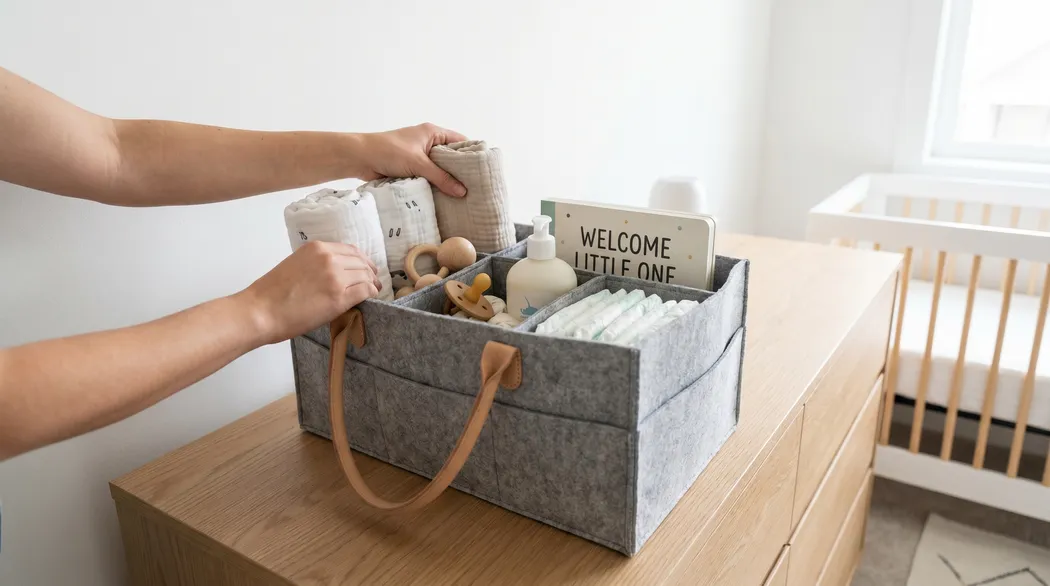
A diaper caddy is a portable container, usually a basket or tote, that holds all your diaper-changing supplies in one organized spot. Instead of hunting through drawers for wipes or running to another room for cream, everything you need is right there.

Beyond convenience, a caddy supports hygiene. Supplies stored together in a dedicated container are less likely to be contaminated by other household items. The caddy also discourages leaving your baby unattended on the changing surface while you search for something, which is a leading cause of changing-table falls.

Types of Diaper Caddies to Choose From

Choosing the right style depends on your home layout and how you prefer to change your baby.

  • Basket-style caddy: An open-top and roomy option that provides easy access to supplies, although items may shift around because it usually has few or no internal dividers.
  • Compartment caddy: A diaper caddy organiser with built-in compartments keeps diapers, wipes, creams, and other supplies neatly separated, making it useful for a fixed changing station.
  • Portable tote caddy: A lightweight option with handles that can be carried easily between rooms. It holds fewer supplies but is useful when you do not have a dedicated changing area.
  • Cart-style caddy: A wheeled caddy provides ample storage and can double as nursery furniture, although it is less convenient to move between rooms frequently.
     

    TypePortabilityStorage CapacityBest For
    BasketHighMediumGeneral home use
    Compartmentalized organizerMediumHighFixed changing table
    Portable toteVery highLowOn-the-go or small flats
    Cart-styleNoneVery highDedicated nursery space

Essentials to Stock in Your Diaper Caddy

A well-stocked diaper caddy means changes stay smooth no matter when they happen. Here is what belongs inside as part of your diaper caddy essentials:

  • Diapers in the current size, with a few of the next size up as backup
  • Fragrance-free baby wipes, or cotton wool and warm water for newborns with sensitive skin
  • Diaper rash barrier cream, typically zinc oxide based
  • Small disposal bags for soiled diapers if a nappy bin is not nearby
  • A changing mat or liner if your caddy sits on a surface that is hard to wipe clean
  • A spare outfit and a muslin cloth for unexpected messes
  • A small hand sanitizer for moments when a sink is not within reach

Keep the caddy filled to about 70 to 80 per cent capacity. Overfilling makes it hard to grab what you need quickly.

Setting Up an Efficient Changing Station Layout

Knowing how to organize a diaper station is partly about placement. Position your caddy on, or directly beside, the changing surface so you never need to stretch more than one arm's length to reach it. Practical locations include:

  • On the shelf of a changing table
  • On a low dresser or chest of drawers next to the crib
  • On a coffee table beside the sofa, which is where many parents change newborns during the early weeks

Safety is non-negotiable in any baby changing station setup. Always keep one hand on your baby while reaching into the caddy. Never leave an infant unattended on an elevated surface, even for a few seconds. If the phone rings, pick the baby up first.

Good nursery organization tips also mean positioning the caddy at a comfortable adult height, not just where it looks neat. Bending repeatedly over a low surface adds up to real back strain across hundreds of daily changes.

Storage and Organization Tips for Multiple Rooms

Most families change their baby in more than one room, and a single caddy that travels everywhere tends to get left somewhere inconvenient. A better approach is a duplicate mini-caddy on each floor or in each room where changes commonly happen, typically the nursery and the main living area.

For multi-caddy setups:

  • Label compartments with simple markers or sticky labels so any caregiver can find items quickly.
  • Designate one caddy as your primary and restock it first when supplies run low.
  • Do a quick visual check each morning. For a newborn, a day's supply is roughly eight to twelve diapers, so restocking before you drop below that prevents mid-change shortages.
  • Keep a minimal portable diaper caddy, basically a tote with just diapers, wipes, and a small cream sachet, packed separately for outings.

Hygiene and Safety Precautions Around the Changing Area

A clean changing area protects your baby's skin and your own health. After every change:

  • Clean the changing surface: Wipe the changing mat or surface with a baby-safe disinfectant or a damp cloth and mild soap. Allow it to dry before the next use.
  • Wash your hands: Wash your hands thoroughly with soap and water for at least 20 seconds. Hand sanitiser can be used when a sink is not nearby, but soap and water are preferred.
  • Dispose of soiled diapers: Dispose of dirty diapers promptly in a sealed bin or disposal bag to help contain odours and reduce the spread of germs.
  • Wash cloth liners: Launder cloth liners and fabric inserts regularly, ideally at least twice a week, or more often if they become soiled.

For newborns in the first few weeks, read Apollo's guidance on newborn hygiene and belly button care basics, particularly while the umbilical stump is still healing. If your baby develops a minor skin irritation from friction or a wipe, Apollo's advice on treating minor skin cuts and wounds at home offers straightforward steps for gentle care.

When to Consult a Paediatrician About Diaper Rash or Skin Issues

Mild diaper rash, appearing as slight redness in the nappy area, usually clears within two to three days with a barrier cream and more frequent changes. You should contact your paediatrician if:

  • The rash is bright red, blistered, or spreading beyond the nappy area
  • There are raised spots, pus-filled bumps, or the skin is broken
  • The rash has not improved after three days of home care
  • Your baby seems unusually uncomfortable, is crying more than normal, or has a fever alongside the rash

Who should avoid standard OTC diaper rash creams?

Babies with a known allergy to any ingredient in a barrier cream, including zinc oxide or lanolin, should not use that product. If you are unsure which cream is appropriate, ask your paediatrician or pharmacist before applying anything to broken or severely inflamed skin.

Report any adverse reactions to diaper rash creams or other baby skincare products to your healthcare provider or the relevant regulatory authority. In India, adverse events may be reported to the Central Drugs Standard Control Organisation (CDSCO) via the PvPI (Pharmacovigilance Programme of India) portal or through your treating doctor. Apollo Pharmacy patients may also report concerns directly through Apollo's customer care channels.

Conclusion

Organising a diaper changing station with a well-stocked diaper caddy can make daily nappy changes more convenient, efficient, and hygienic. Choose a caddy based on your available space, storage needs, and whether you want to move it between rooms. Keep frequently used items such as diapers, wipes, barrier cream, and disposal bags within easy reach, but away from your baby's grasp. Clean the changing surface regularly, dispose of soiled diapers promptly, and always keep one hand on your baby during changes. A simple, organised setup can make newborn care easier while helping maintain a safe changing routine.

FAQS

What is the best material for a diaper caddy?

Wipeable materials like coated fabric, silicone, or waterproof-lined canvas are the most practical because they can be cleaned quickly after a spill. Wicker or natural fabric baskets look attractive but are harder to disinfect and may absorb odors over time.

How often should I restock a diaper caddy?

Check the caddy each morning and top it up before it drops below one day's supply. For a newborn, that typically means keeping at least eight to twelve diapers and a full pack of wipes on hand at all times.

Can I use a diaper caddy for travel?

Yes. A handled portable diaper caddy works well for short trips. Pack only the essentials: a day's worth of diapers, wipes, one cream sachet, and a disposal bag to keep things light and easy to carry through airports or during family visits.
What size diaper caddy do I need for a newborn?

A medium-sized caddy holding roughly ten to fifteen nappies plus a small supply of wipes and cream is sufficient for most home setups. Newborns go through more diapers per day than older babies, so prioritize depth over a narrow, decorative design.

How do I clean a diaper caddy?

Wipe coated or silicone caddies with a damp cloth and mild soap after any visible soiling, and do a full wipe-down weekly. Fabric caddies with removable liners should be washed in the machine on a gentle cycle. Check the manufacturer's care label before using heat or strong cleaners.

Apollo 247 Floating Action Button