logo
0

Ovulation Time: How to Track Your Fertile Window Accurately?

Learn how to calculate ovulation time, identify fertile days, track cervical mucus and BBT, use ovulation predictor kits, and improve fertility tracking.

article image

Dr.Bhanu Prakash

Understanding your ovulation time is one of the most practical steps you can take when trying to conceive. Ovulation is the moment a mature egg is released from the ovary, and it sits at the heart of the menstrual cycle and ovulation tracking. Miss this window and conception is unlikely that month. Identify it accurately, and you give yourself the best possible chance.

What Is Ovulation and Why Timing Matters?

Ovulation is a brief but crucial event. One of your ovaries releases a mature egg, which then travels down the fallopian tube toward the uterus. The egg can only be fertilised for roughly 12 to 24 hours after release. Sperm, however, can survive in the reproductive tract for up to five days, which is why the fertile window stretches across roughly six days total, ending on the day of ovulation itself.

Your cycle has three main phases: the follicular phase (from the first day of your period until ovulation), ovulation itself, and the luteal phase (after ovulation until your next period). Knowing where you are in this sequence helps you plan timing accurately.

How to Calculate Your Ovulation Time?

The most widely used method for calculating ovulation days is the calendar approach. Ovulation typically occurs about 14 days before your next expected period, not necessarily 14 days after your last one. That difference matters if your cycle is longer or shorter than 28 days.

Here is a simple way to estimate it:

  • Count the total length of your cycle (from day 1 of one period to day 1 of the next).
  • Subtract 14 from that number.
  • The result is the approximate day of ovulation, counted from the first day of your current period.

For example, a 30-day cycle suggests ovulation around day 16. A 26-day cycle suggests around day 12.

This formula assumes a fairly consistent luteal phase. If your cycles vary by more than a few days each month, the calendar method alone is unreliable. Tracking over several months improves accuracy, but irregular-cycle situations call for additional tools or medical support.

Cervical Mucus Changes as an Ovulation Sign

Cervical mucus during ovulation is one of the most informative natural signs your body produces, and it changes predictably across your cycle.

PhaseWhat Mucus Typically Looks LikeFertility Status
Just after periodLittle or no dischargeLeast fertile
Pre-ovulatoryThick, white, stickyLow fertility
Approaching ovulationCreamy, lotion-likeModerate fertility
At ovulationClear, stretchy, like raw egg whitePeak fertility
After ovulationThick or absent againFertility drops

The egg-white stage is your clearest signal. If you can stretch the mucus between two fingers without it breaking, you are likely at or very close to peak ovulation time. This consistency helps sperm survive and travel more easily, making it a reliable, no-cost indicator.

Other Physical Signs of Ovulation

Several body signals can confirm what your mucus observations suggest.

Basal body temperature (BBT): Your resting temperature rises slightly (around 0.2 to 0.5 degrees Celsius) after ovulation, driven by the hormone progesterone. The rise itself confirms ovulation has already occurred, so BBT charting is most useful when you track patterns over multiple months.

The signs of ovulation also include:

  • A mild, one-sided pelvic pain or cramping known as mittelschmerz, felt around the time the egg is released.
  • Slight breast tenderness or sensitivity, caused by hormonal shifts
  • Increased libido, which many women notice naturally around their fertile days
  • A slight increase in basal body temperature the day after ovulation

These signs vary between individuals. Some women feel ovulation clearly; others have no noticeable symptoms at all.

Reliable Tools to Predict Ovulation

Physical signs are valuable, but combining them with a reliable tool improves accuracy.

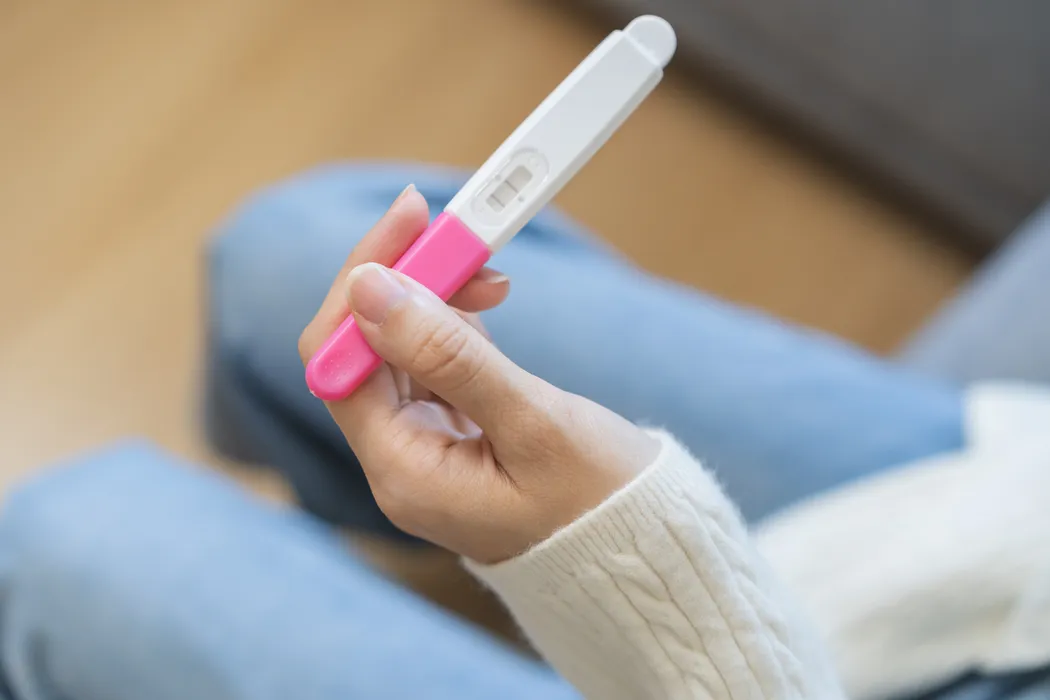
  • Ovulation predictor kits (OPKs): These urine-based test strips detect the surge in luteinising hormone (LH) that triggers egg release. A positive result typically means ovulation will occur within 24 to 36 hours. OPKs are one of the most accessible and reasonably accurate methods for timing intercourse. They work best when used alongside mucus observation, as some women have LH surges without ovulating (particularly in PCOS).
  • BBT charting: Recording your temperature every morning before getting out of bed, at the same time each day, produces a chart that shows your ovulation pattern over time. Apps can log this data and highlight trends. The limitation is that it confirms past ovulation rather than predicting it.
  • Fertility apps and ovulation calculators: An ovulation calculator estimates your fertile window based on the cycle dates you enter. Apps that also allow you to log mucus changes and BBT data are considerably more useful than those based on dates alone. No app replaces observation, but they are a good organisational aid.

A combined approach, using an OPK, tracking cervical mucus, and logging your cycle, gives you the most complete picture.

When to Consult a Doctor?

Tracking is a useful starting point, but it is not a substitute for medical care in every situation. Consider speaking with a gynaecologist if:

  • Your cycles are consistently shorter than 21 days or longer than 35 days.
  • You cannot identify any signs of ovulation after tracking for two to three months.
  • You have been trying to conceive for 12 months without success (or six months if you are over 35).
  • You have a known condition such as PCOS, thyroid disease, or endometriosis that may affect ovulation.

Early investigation is far better than waiting. A simple blood test or ultrasound can confirm whether ovulation is occurring regularly.

Contraindications and Precautions

Tracking your fertile window is safe and appropriate for most women, but there are situations where relying on it alone is not advisable.

Women with polycystic ovary syndrome (PCOS) often have elevated LH levels throughout their cycle, which can cause OPKs to read as falsely positive. Thyroid disorders, hyperprolactinaemia, and certain medications can also disrupt the hormonal patterns that ovulation tracking depends on. If any of these apply to you, please work with a doctor rather than self-managing.

Cycle tracking does not protect against sexually transmitted infections and should not be used as the sole method of contraception without proper guidance.

Report any unexpected physical symptoms, unusual discharge, or side effects of any supplements or medications you are using to your healthcare provider or the relevant regulatory authority.

Conclusion

Knowing your ovulation time can help you identify your fertile window and improve your chances of conceiving. Tracking cycle dates, cervical mucus, basal body temperature, and using ovulation predictor kits can provide a clearer picture of when ovulation is likely to occur. If your cycles are irregular or you cannot identify ovulation over several months, consult a healthcare professional for further evaluation.
FAQS

How many days after a period does ovulation occur?

For a typical 28-day cycle, ovulation usually happens around day 14, roughly two weeks after the first day of your period. The exact timing shifts with cycle length, so counting 14 days back from your expected next period is a more reliable estimate.

Can you feel when you are ovulating?

Some women notice a brief, one-sided cramp (mittelschmerz), breast tenderness, or increased discharge around ovulation time. Others feel nothing at all, which is completely normal.

What is the best time to conceive after ovulation?

Conception is most likely in the 12 to 24 hours immediately after ovulation, when the egg is still viable. Because sperm survive longer than the egg, having intercourse in the two to three days before ovulation is often equally or more effective.

Does ovulation happen at the same time every month?

Not always. Stress, illness, significant changes in weight, and sleep disruption can all shift ovulation earlier or later in a given cycle. Tracking over several months gives you a personal pattern rather than relying on a fixed date.

Can you ovulate without cervical mucus?

Cervical mucus can be minimal or hard to detect in some women, but ovulation can still occur. Hormonal factors, certain antihistamines, and low oestrogen levels can reduce mucus production. If you notice no mucus changes at all, an OPK or a consultation with your doctor can help confirm whether ovulation is happening.

Apollo 247 Floating Action Button