logo
0

Pampers Diapers: A Stage-by-Stage Guide for Every Baby

Learn about Pampers diapers by baby’s growth stage, including newborn sizes, pants vs. tape diapers, key features, fit, and skin-care tips.

article image

Dr.Yusuf

Choosing the right diaper is one of the first repeated decisions a new parent makes, and Pampers is among the most widely stocked brands across Indian pharmacies and baby stores. With several collections designed for different ages, weights, and activity levels, understanding which Pampers product suits your baby's current stage can make daily care simpler and more comfortable for both of you.

Pampers Diaper Range: An Overview

Pampers offers a few core collections, each aimed at a specific stage or need.

  • Pampers New Baby / Newborn: Designed for the earliest weeks of life. They typically feature an umbilical cord notch and a wetness indicator strip that changes colour when wet.
  • Pampers Active Baby Tape Diapers: Follow the classic tape-style fit suited for younger infants who are not yet moving around much. Adjustable side tapes let you customise the fit around the waist.
  • Pampers Pants: Pull-up style diapers made for babies who are starting to move, crawl, or stand. They slide on like underwear, making changes faster during active periods.

Each collection spans a range of sizes based on baby weight, so the right product depends on how much your baby currently weighs, not just their age in months.

Choosing Diapers by Baby's Growth Stage

Newborns (roughly up to 5 kg)

Newborn-size diapers are cut smaller and often include features to protect the healing umbilical cord stump. The fit around the legs matters at this stage. Gaps around the legs or waist can contribute to leaks. If you notice marks on your baby's skin after removing a diaper, the size may already be too small.

Pampers diapers for newborn babies are typically labelled NB or S, covering the lower weight bands. Because babies grow at different rates, they may move to the next diaper size as their weight and fit change.

Infants (approximately 5 to 11 kg)

Tape diapers remain practical during this stage because the fit can be adjusted as the baby grows. Pampers sizes M and L cover overlapping weight ranges within this stage.

Signs the current size is too small include red marks around the thighs or waist, a diaper that sags before it is fully wet, or repeated leaks at the leg edges.

Toddlers and Active Babies

Once a baby starts pulling up, cruising along furniture, or attempting to walk, pants-style diapers become much easier to manage. They go on and off quickly and fit snugly without the need to fasten tapes while the baby is moving. When in doubt, size up rather than squeeze your baby into a smaller diaper.

Pampers Pants vs Tape Diapers: Which Should You Choose?

This is one of the most common questions parents ask, and the honest answer is that both styles work well at different stages.

FeatureTape DiapersPants
Best suited forNewborns and younger infantsCrawling, standing, or walking babies
Fit adjustmentAdjustable sticky tabsElasticated waistband, pull-on fit
Ease of changeBetter for lying-still babiesFaster for active or standing babies
Wetness indicatorUsually present in smaller sizesLess common in larger sizes

Tape diapers give parents more control over fit during the early months. Pants make changes quicker and less disruptive once your baby starts moving. Many parents switch from tape diapers to pants as their baby becomes more active and starts crawling, standing, or walking.

Key Pampers Diaper Features to Look For

Knowing how to choose baby diapers comes down to a few practical features.

  • Absorbency: A well-designed diaper should absorb liquid effectively and help keep the skin dry.
  • Wetness indicator: The colour-changing strip can help new parents see when a change may be needed without waking a sleeping baby.
  • Breathability: The outer layer can help reduce heat and moisture build-up, which may help reduce the chance of rashes.
  • Soft waistbands and leg cuffs: These can reduce friction on delicate skin, particularly at the thighs where marks may appear.

The best diaper size for your baby is the one that matches your baby's current weight band and does not gap or dig in at the edges.

Newborn Skin and Diaper Care Tips

Newborn skin is thinner and more sensitive than older baby skin, so a few consistent habits make a real difference.

  • Change diapers: Change diapers frequently, whenever your baby wets or soils the diaper, and promptly after a bowel movement.
  • Clean gently: Clean the area gently with a soft cloth or fragrance-free wipe, wiping front to back.
  • Air-dry the skin: Allow the skin to air-dry briefly before putting on a fresh diaper.
  • Use barrier cream: Apply a thin layer of barrier cream if redness appears, to protect skin from prolonged moisture contact.
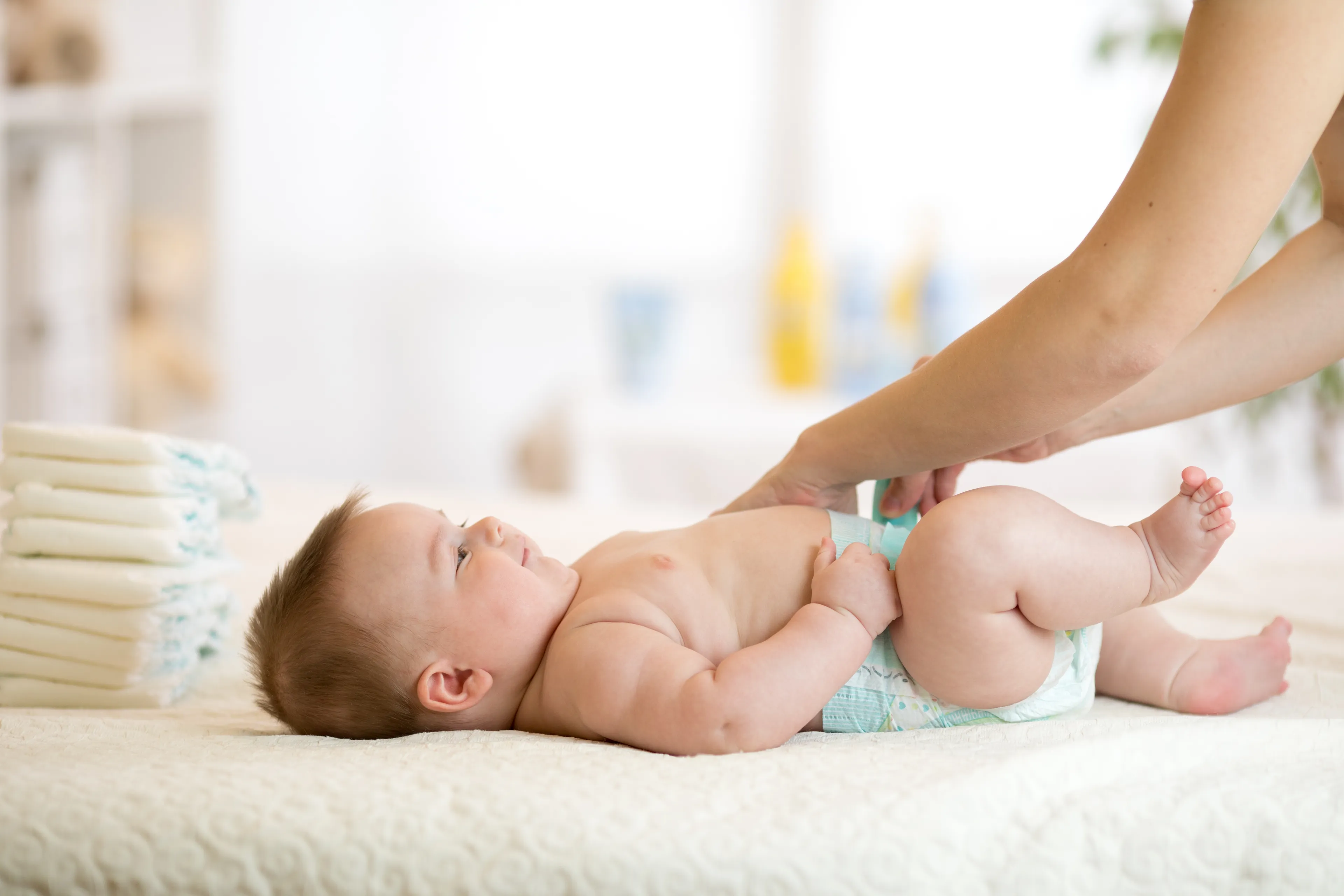
  • Avoid tight fastening: Avoid fastening the diaper too tightly, especially around the cord stump in the first weeks.

For broader guidance on caring for a new baby, including how to manage the umbilical cord stump safely, visit newborn hygiene and belly button care tips on the Apollo Pharmacy blog.

When to Consult a Doctor About Diaper Rash or Skin Issues

Mild redness may improve with more frequent diaper changes and appropriate barrier cream, but persistent or worsening redness may need medical assessment. Some situations do need medical attention.

See a paediatrician if:

  • Bright red or blistered rash: The rash is bright red, raised, blistered, or has distinct borders suggesting a fungal infection.
  • Raw or open skin: Raw patches or open sores are present.
  • No improvement: The rash does not improve within two to three days of home care.
  • Fever: Your baby develops a fever alongside the rash.
  • Pus or yellow crust: You notice pus or a yellow crust, which can indicate a bacterial infection.

This article provides general information only and is not a substitute for professional medical advice. Always consult a qualified paediatrician for diagnosis or treatment of your baby's skin conditions. Report any adverse skin reactions to your healthcare provider or the relevant regulatory authority.

Who should not delay seeking care: Parents of premature babies or infants with known skin conditions should consult a paediatrician at the first sign of a rash rather than waiting for home care to work.

Conclusion

Choosing the right Pampers diaper depends on your baby's weight, developmental stage, activity level, and individual fit. Newborns may benefit from smaller sizes and features such as an umbilical cord notch, while tape diapers and pants offer different benefits as babies become more active. Check the fit regularly, change diapers frequently, and watch for signs of skin irritation to help keep your baby comfortable.

FAQs

How often should I change my baby's diaper?

Newborns need frequent diaper changes. Change the diaper whenever your baby wets or soils it, and promptly after a bowel movement. Leaving a wet or soiled diaper on for long periods can contribute to diaper rash.

What is the difference between diaper pants and tape diapers?

Tape diapers fasten at the sides with adjustable tabs, making them ideal for younger infants lying still during changes. Pants pull on like underwear, which is faster and easier once your baby becomes active.

How do I know if a diaper size is too small?

Red marks on the thighs or around the waist after removal are the clearest sign. Frequent leaks or a diaper that does not fully cover the bottom also suggest it is time to move up a size.

Are Pampers diapers suitable for sensitive skin?

Pampers diapers are generally formulated to be gentle on baby skin, but every baby is different. If you notice persistent redness or irritation, consult a paediatrician to rule out an allergy or infection before switching products.

How many diapers does a newborn use per day?

Newborns may need around 10 to 12 diaper changes a day in the early days. This number usually decreases as babies grow.

Apollo 247 Floating Action Button