logo
0

Period Cycle Phases: A Complete Breakdown

Learn about the four phases of the menstrual cycle, including menstruation, follicular phase, ovulation, luteal phase, hormones, symptoms, and cycle changes.

article image

Dr.Bhanu Prakash

Understanding your period cycle phases is about more than marking a date on a calendar. These phases govern your hormones, energy, mood, and fertility throughout the month. If you have been tracking your cycle or worrying about irregular patterns, knowing what each phase does and when it should happen gives you a foundation for recognising what is normal for your body and when to ask a doctor for help.

What Are the 4 Phases of the Menstrual Cycle?

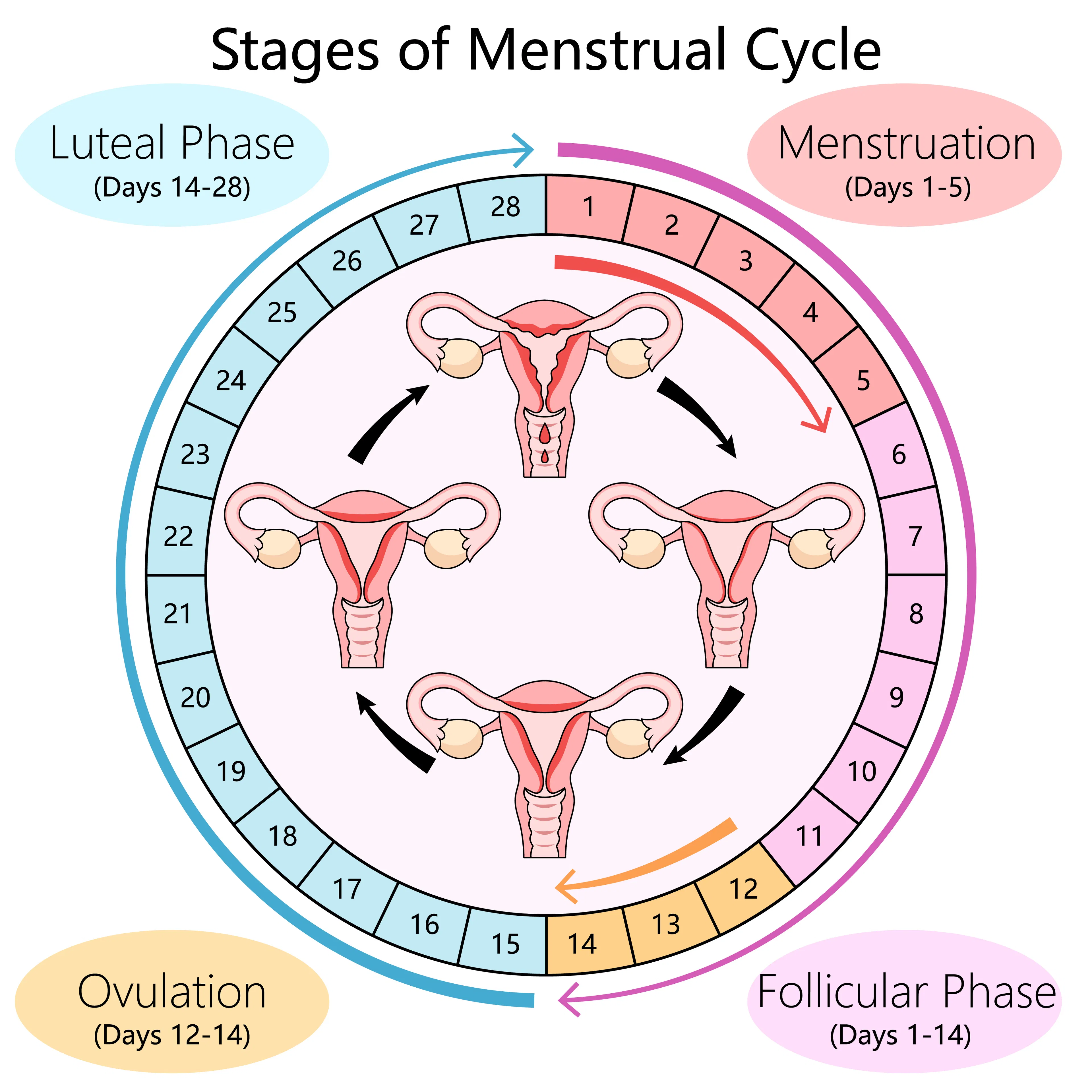
The menstrual cycle is counted from the first day of one period to the first day of the next. Four distinct phases unfold in sequence, each driven by shifting hormone levels. The day ranges below are based on a reference cycle of 28 days; your own timing will shift if your menstrual cycle length is shorter or longer.

PhaseTypical Day RangeKey Event
MenstrualDays 1 to 5Uterine lining sheds
FollicularDays 1 to 13Follicles mature in the ovaries
OvulationAround day 14Egg is released
LutealDays 15 to 28Progesterone rises to prepare for possible pregnancy

Menstrual phase: Bleeding begins when oestrogen and progesterone drop after an unfertilised cycle. The uterus sheds its lining over roughly 2 to 7 days.

Follicular phase: This overlaps with menstruation and runs until ovulation. Follicle-stimulating hormone (FSH) prompts several ovarian follicles to grow. One becomes dominant and produces rising oestrogen, rebuilding the uterine lining.

Ovulation: A surge in luteinising hormone (LH) triggers the dominant follicle to release its egg. The egg survives 12 to 24 hours after release. This is the only fertile moment in the cycle.

Luteal phase: The empty follicle becomes the corpus luteum and secretes progesterone. The follicular and luteal phase together span most of the cycle. If no pregnancy occurs, progesterone falls, and the cycle restarts.

A typical menstrual cycle length ranges from 21 to 35 days, so your phase timing may look different from the table above. That variation is normal.

How Long Should a Period Last?

Normal period duration is generally 2 to 7 days. Most people bleed for 4 to 5 days, with the heaviest flow on days 1 and 2.

A 2-day period can be perfectly normal if it reflects your consistent pattern and the flow is adequate. It warrants attention when it represents a sudden change, which can point to low oestrogen, thyroid dysfunction, or an effect of an intrauterine device.

When to Seek Care

Speak to a gynaecologist if any of the following apply:

  • Bleeding lasts longer than 7 days
  • You soak through a pad or tampon every hour for several consecutive hours
  • You pass clots larger than a 50-paise coin regularly
  • You have had no period for 90 or more days outside of pregnancy
  • Your usual cycle length or flow has changed noticeably and without clear reason

Report adverse events such as unusually heavy bleeding or pain not controlled by standard measures to your healthcare provider or the relevant regulatory authority.v

When Does Ovulation Happen?

Ovulation timing in a 28-day cycle falls around day 14 on average, but that figure shifts with your personal cycle length. A 35-day cycle means ovulation closer to day 21; a 21-day cycle may mean ovulation as early as day 7.

The fertile window covers the 5 days before ovulation plus the day of ovulation itself. Sperm can survive in the reproductive tract for up to 5 days, which is why intercourse earlier in the window can still result in conception.

Signs You May Be Ovulating

Tracking two or more of these together gives a more reliable read on ovulation timing than any single sign:

  • Cervical mucus becomes clear, slippery, and stretchy, similar to raw egg white
  • Basal body temperature rises slightly, roughly 0.2 to 0.5 degrees Celsius above your personal baseline
  • Mild one-sided pelvic pain, sometimes called mittelschmerz
  • A positive result on an over-the-counter LH surge test strip
  • Some people notice a brief increase in sex drive

What Causes Irregular Periods?

An irregular period means a cycle shorter than 21 days, longer than 35 days, or one that varies by more than 7 to 9 days from cycle to cycle. Occasional irregularity is common; a persistent pattern deserves a closer look.

Common Irregular Periods Causes

Polycystic ovary syndrome (PCOS) is among the most frequent causes in reproductive-age women. PCOS disrupts the hormonal signals needed for regular ovulation, resulting in infrequent or absent periods.

Thyroid disorders, both underactive and overactive, interfere with the hormones that regulate menstrual cycle phases, producing cycles that are too frequent, too sparse, or unusually heavy.

Stress raises cortisol, which can suppress the hormonal cascade required for ovulation. A difficult month can delay a period by days or even weeks.

Perimenopause, typically in the mid-to-late 40s, makes the follicular and luteal phase patterns unpredictable as ovarian reserve declines.

Other causes include significant weight changes, intensive exercise, certain medications, uterine fibroids, and endometriosis.

If irregular periods persist for three or more consecutive cycles, or come with unusual pain, heavy bleeding, or other symptoms, consult a gynaecologist.

Contraindications and Precautions

Self-managing menstrual symptoms without medical advice is not appropriate in certain situations. Seek prompt medical review if any of the following apply to you:

  • Suspected or confirmed pregnancy with abnormal bleeding
  • A diagnosed bleeding disorder or a history of blood clots
  • Current use of anticoagulant medications, which can worsen heavy menstrual blood loss
  • Sudden, severe pelvic pain alongside irregular bleeding, which may indicate a gynaecological emergency
  • Bleeding after menopause, which always needs investigation

Hormonal or other treatments for cycle regulation should only be started after a proper clinical assessment. Do not use cycle-regulating supplements or herbal preparations without discussing them with your doctor, particularly if you have a chronic condition or take regular medications.
Conclusion

The menstrual cycle consists of four overlapping phases: menstruation, the follicular phase, ovulation, and the luteal phase. Each phase is influenced by changing levels of hormones such as oestrogen, progesterone, follicle-stimulating hormone, and luteinising hormone, which regulate the development of ovarian follicles, release of an egg, and preparation of the uterine lining. Cycle length and the timing of ovulation can vary between individuals and may change with age, stress, illness, contraception, and other factors. Understanding these phases can help women recognise common changes in bleeding, cervical mucus, breast tenderness, mood, energy, and other symptoms throughout the cycle. However, significant changes in cycle pattern, very heavy bleeding, severe pain, bleeding between periods, or persistently irregular cycles should be discussed with a qualified healthcare professional.

FAQS

What is a normal menstrual cycle length?

A cycle anywhere from 21 to 35 days is considered within the normal range. The commonly cited 28-day figure is an average, not a standard every person should meet.

Can you get pregnant right after your period ends?

Yes, it is possible, particularly if your cycle is short. Ovulation can occur soon after your period ends, and sperm can survive for several days, so the fertile window may begin before you expect.

What is considered a late period?

A period is generally considered late if it has not arrived within 7 days of the expected date. No period for 90 days or more (when pregnancy has been ruled out) is called secondary amenorrhoea and needs medical evaluation.

Does stress delay ovulation?

Yes. Stress elevates cortisol, which can interfere with the hormonal signals that trigger ovulation. This shifts the timing of the entire cycle, delaying your period as a result.

How can I track my cycle phases accurately?

Use a combination of a period-tracking app for cycle dates, basal body temperature charting, and LH test strips to identify ovulation timing. Consistent daily recording over two to three months gives a clearer picture of your personal pattern.

Apollo 247 Floating Action Button