logo
0

Philips Avent Bottle Warmer: A Parent's Guide

Learn how to use a Philips Avent bottle warmer safely, including warming settings, breast milk and formula safety, cleaning, descaling, compatibility, and precautions.
 

article image

Dr. Kamran

Feeding a newborn is one of the most important parts of early parenthood, and getting the temperature right every time matters more than many parents expect. The Philips Avent bottle warmer takes the guesswork out of this routine by using a controlled water-bath method to heat milk evenly and safely. Whether you are breastfeeding and pumping, formula feeding, or combining both, understanding how this device works, how to use it correctly, and when to exercise caution can make a real difference to your baby's health and your peace of mind.

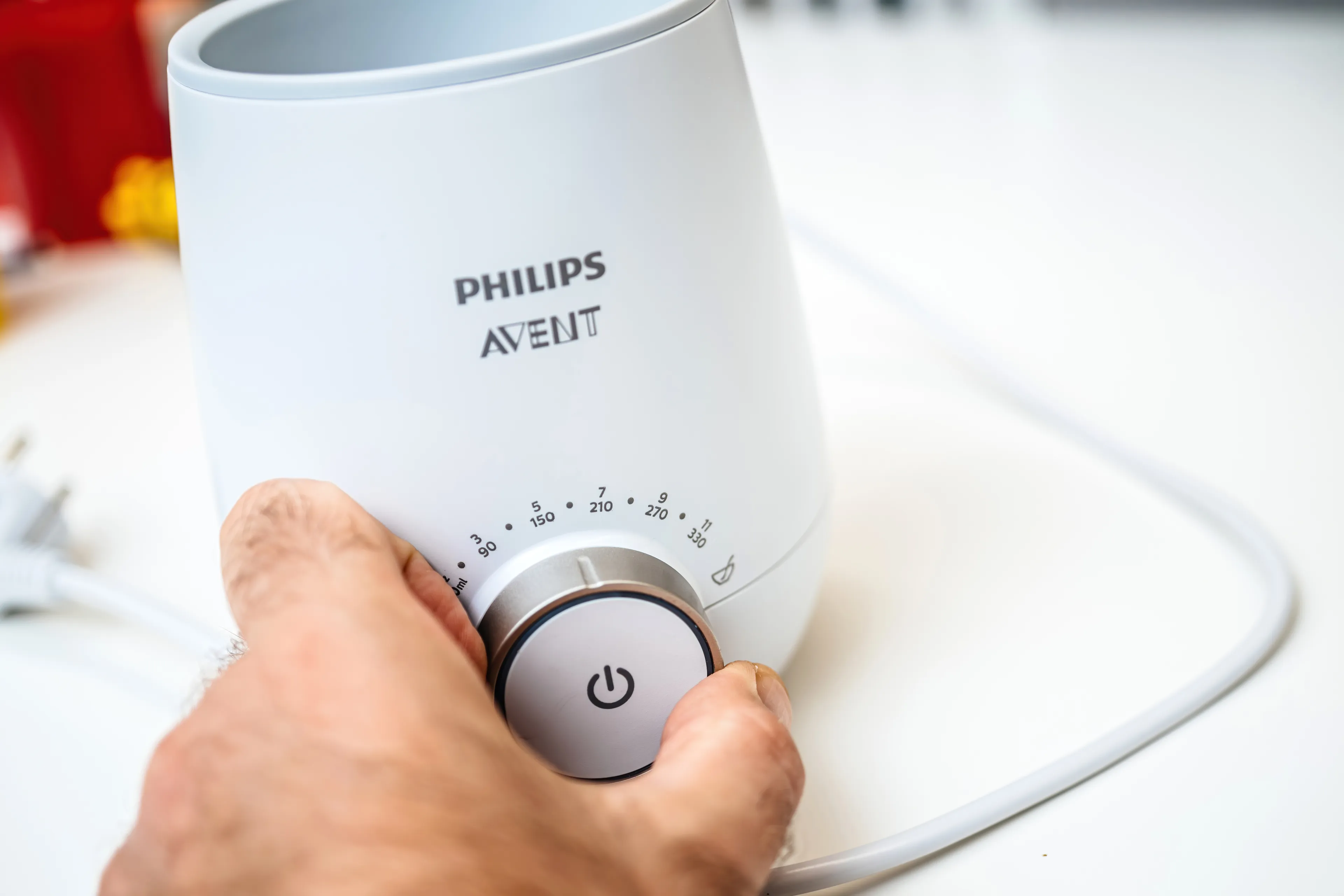
What Is a Philips Avent Bottle Warmer and How Does It Work

A Philips Avent bottle warmer uses warm water surrounding the bottle to raise milk temperature gradually and evenly. This water-bath approach mimics the gentleness of warming in a bowl of water, but with consistent, timer-controlled heat rather than guesswork.

Unlike a microwave, which heats liquid unevenly and can create dangerous hot spots, a bottle warmer circulates heat uniformly around the bottle. The milk at the bottom reaches the same temperature as the milk at the top before feeding begins.

For expressed breast milk, avoid overheating and never use a microwave because it can create hot spots that may burn your baby. A bottle warmer can provide a convenient way to warm milk gradually, but follow the instructions for your specific model and check the milk temperature before feeding.

Types of Philips Avent Bottle Warmers Available

Philips Avent offers more than one model, so knowing the differences before buying helps you choose what suits your routine.

  • Standard bottle warmers heat milk at a fixed rate. They are straightforward to operate and suit parents who want simplicity without extra controls.
  • Fast bottle warmers are designed to reduce warming time significantly, which matters during a 3 a.m. feed when a hungry baby will not wait long.
  • Digital or electronic models include a display showing warming time or mode selections, while basic models use a dial or timer knob. The core heating mechanism, a water bath, is the same across the range.

Compatibility varies by Philips Avent bottle-warmer model. Some models are compatible with all Philips Avent bottles and with most commercially available bottles and jars that fit within the appliance. Check the product page or manual for your specific model before using another brand of bottle or a milk bag. If you use a different bottle brand, check the internal diameter of the warmer before purchasing. Bottles that do not sit flush inside the heating chamber may not heat evenly.

When comparing baby bottle warmers in India, Philips Avent is one established option with multiple models available for different warming needs. Prices vary by model, retailer, promotions, and availability. Check the current price of the specific Philips Avent bottle warmer you are considering before purchasing.

Philips Avent Bottle Warmer Settings: What They Mean

Warming times vary by model, milk volume, starting temperature, and the type of bottle or container used. Because Philips Avent models have different controls and warming programs, use the warming guide supplied with your specific model rather than applying a universal time chart.

Milk Volume    Starting Temperature  Approximate Warming Time
Up to 150 ml   Room temperature  3–4 minutes
Up to 150 ml  Refrigerated  5–6 minutes
Up to 250 ml Room temperature  5–6 minutes
Up to 250 ml   Refrigerated 6.5–7.5 minutes

 Refer to the instruction leaflet included with your specific model, because settings differ slightly across product generations. The digital models display a countdown and may beep when warming is complete. Manual dial models require you to set the timer yourself based on the table in your manual.

Never guess the setting. Using a higher setting to save time is one of the most common causes of overheated milk.

Step-by-Step: How to Use a Bottle Warmer Safely

Following the correct sequence each time reduces the risk of overheating and wasted milk.

  1. Fill the water reservoir to the level marked for your bottle size. Too little water causes uneven heating; too much can overflow.
  2. Place the filled bottle or sealed bag of expressed milk into the warmer's chamber.
  3. Select the philips avent bottle warmer settings that match your bottle volume and milk starting temperature, using the guide in your product manual.
  4. Switch the warmer on and allow the full cycle to complete without interrupting it.
  5. Once the cycle ends, remove the bottle and shake it gently to distribute heat evenly.
  6. Before feeding, check that the milk is warm rather than hot. You can test a few drops on the inside of your wrist before giving the bottle to your baby. Milk should feel warm, not hot. If it feels uncomfortable on your skin, it is too hot for your baby's mouth.
  7. Feed immediately. Do not return warmed milk to the warmer for a second cycle.

Checking temperature on your wrist every time is one of the simplest baby milk warmer safety tips and one of the most important.

Safety Precautions and Contraindications

Every parent using any baby milk warmer should read this section carefully.

Overheating

Milk that is too hot can burn a baby's mouth and throat. Overheated breast milk also loses some of its beneficial properties. Never assume the warmer has set the correct temperature without testing it yourself.

Do not repeatedly rewarm milk

Avoid repeatedly warming and cooling the same bottle. Once your baby has started feeding, discard leftover breast milk or formula according to applicable storage and feeding guidance rather than returning it to the warmer.

Refrozen milk

Never refreeze breast milk that has been thawed and then warmed. Thaw only what you expect to use at a single feed.

Formula

Prepared infant formula should generally be used within 2 hours of preparation and within 1 hour after feeding begins. If prepared formula will not be used within 2 hours, refrigerate it promptly and use it within 24 hours. Discard any formula left in the bottle after a feeding. Follow the formula manufacturer's instructions if they are more restrictive.

Expressed breast milk

Follow current breast milk storage guidance based on how the milk was expressed, stored, thawed, and warmed. Once a bottle has been warmed, use it promptly rather than keeping it warm in the bottle warmer for an extended period. If your baby has started feeding, follow appropriate guidance for handling leftover milk.

Who should not use a bottle warmer without medical guidance:

  • Parents of premature, medically fragile, or hospitalized infants should follow the feeding and milk-handling instructions provided by their neonatal or pediatric care team. Device settings and feeding procedures may differ depending on the infant's medical needs.
  • If your baby has a diagnosed feeding difficulty or reflux condition, your paediatrician's advice on milk temperature takes priority over any default device setting.

Report adverse events, such as burns from overheated milk or device malfunction causing overheating, to your healthcare provider or the relevant regulatory authority.
Cleaning and Maintenance Tips

A clean warmer is as important as safe warming. Mineral or limescale deposits can build up inside the warmer, particularly when hard water is used. Regular cleaning and descaling can help maintain the appliance's performance.

Daily cleaning

After each use, empty any remaining water from the reservoir. Wipe the inside of the chamber with a damp, clean cloth. Do not immerse the electrical unit in water. The bottle basket or inner tray on most models is removable and can be rinsed under running water.

Descaling

Limescale buildup is common in areas with hard water, which includes many Indian cities. Descale the warmer according to the instructions for your specific model. Philips recommends vinegar or citric-acid-based descaling solutions for certain Avent bottle warmers, but the concentration and procedure vary by model. Do not use other descaling products unless the manufacturer specifically approves them. Fill the chamber with the solution, allow it to sit for the time your manual specifies, then rinse thoroughly with clean water before the next use. The frequency depends on how often you use the warmer and your local water hardness.

Good cleaning habits for your bottle warmer are part of broader that help protect your baby during the vulnerable early weeks.

Conclusion

A Philips Avent bottle warmer can make warming expressed breast milk or prepared formula more convenient, but safe milk handling remains essential. Use the instructions for your specific model, check the milk temperature before feeding, and avoid microwaving or repeatedly rewarming milk. Prepared formula and expressed breast milk should be handled according to their respective storage and feeding guidelines, and the warmer should never be used as a storage device. Regular cleaning and model-appropriate descaling can help maintain the appliance, while parents of premature or medically fragile infants should follow their healthcare team's feeding instructions.

FAQS

Is Philips Avent bottle warmer worth buying?

For parents who regularly warm expressed breast milk or prepared formula, a bottle warmer can make warming more convenient and controlled. It is preferable to a microwave because microwaves can heat milk unevenly and create hot spots. However, a bottle warmer is not essential; bottles can also be warmed using other safe methods recommended for infant feeding.

Can I warm formula and breast milk in the same warmer?

Yes, the same bottle warmer can generally be used to warm bottles containing breast milk or infant formula, provided the specific model is compatible with the bottle or container. Clean the warmer and any removable components according to the manufacturer's instructions, and use clean feeding equipment for each feed.

How long does a bottle warmer take?

Warming time depends on the bottle volume and starting milk temperature. A room-temperature bottle generally warms faster than one taken straight from the refrigerator. Check the guide in your product manual for the correct setting, and always verify temperature on your wrist before feeding.

Is it safe to leave milk in a bottle warmer?

Do not use a bottle warmer as a storage device. Warm milk should be used promptly, and the applicable storage and feeding time limits should be followed for breast milk or formula. For prepared formula, use it within 2 hours of preparation and within 1 hour after feeding begins, and discard leftovers after feeding.

What is the price range of Philips Avent bottle warmers in India?

Prices vary by model and retailer. Entry-level models are generally available from around Rs. 2,000, while digital models with additional features can cost Rs. 4,500 or more.

Apollo 247 Floating Action Button