Positive Blood Pregnancy Test: Accuracy & Next Steps
Learn what a positive blood pregnancy test means, how hCG levels are interpreted, when to test and what to do after a positive result.
Dr.Mayank
Finding out you might be pregnant can bring a rush of emotions. A positive blood pregnancy test means that human chorionic gonadotropin, or hCG, has been detected in your blood. Blood tests can detect relatively small amounts of hCG and may identify pregnancy before a urine test, although the timing of detection varies. Understanding what the result means, how it is interpreted and what to do next can help you approach the result with greater clarity.
What Does a Positive Blood Pregnancy Test Mean?
A blood pregnancy test detects hCG, a hormone produced by placental tissue after a fertilised egg attaches to the lining of the uterus. hCG levels generally rise rapidly during early pregnancy.
There are two types of hCG blood tests:
A qualitative hCG blood test checks whether hCG is present above the test's detection threshold. The result is generally reported as positive or negative.
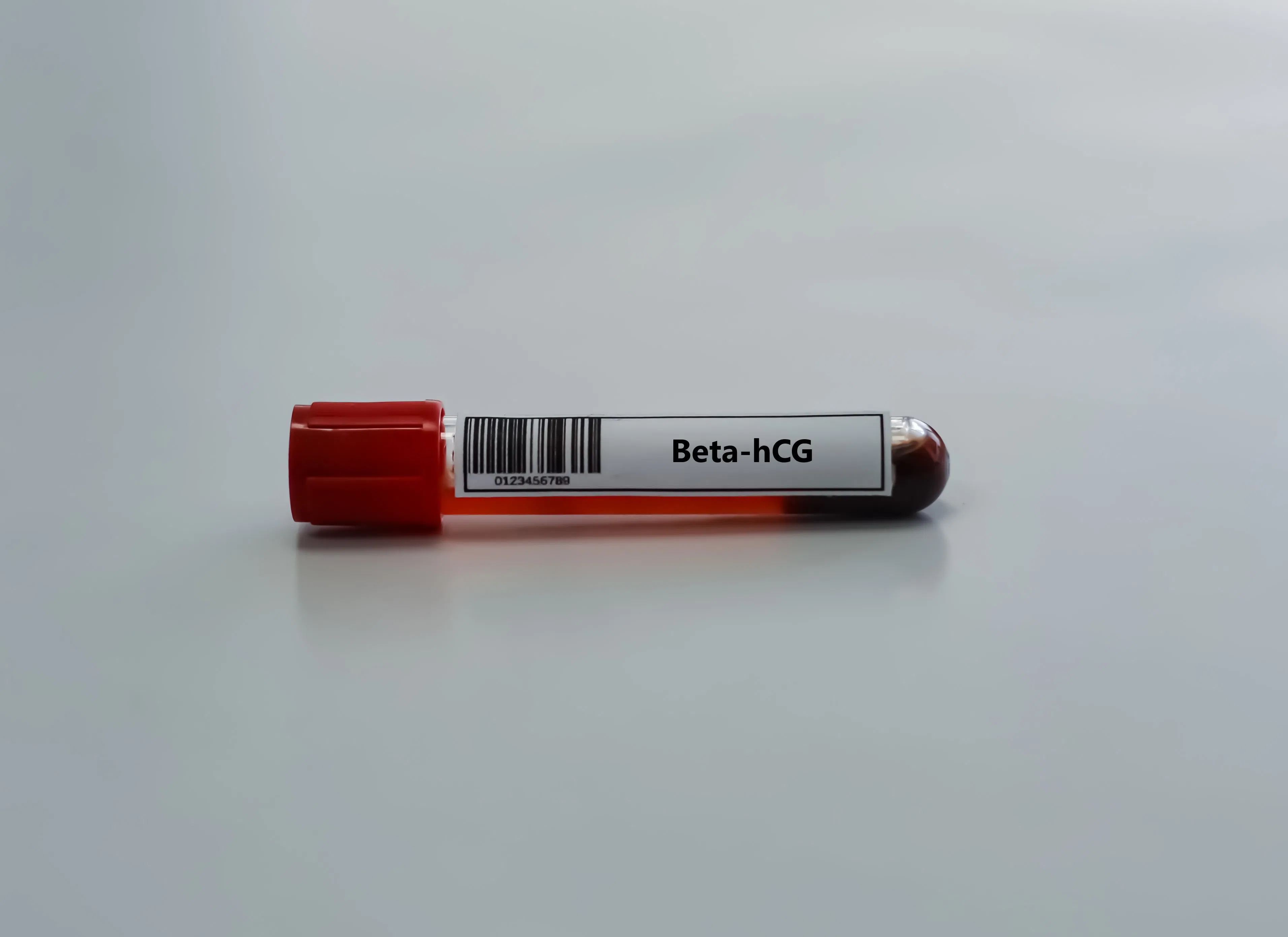
A quantitative hCG blood test, also called a beta-hCG test, measures the amount of hCG in the blood and reports a numerical result, usually in milli-international units per millilitre or mIU/mL.
A positive result means that hCG has been detected. In most circumstances, this indicates pregnancy, but a positive hCG result does not by itself establish where the pregnancy is located or whether it is progressing normally. If the result is unexpected or there are symptoms such as pain or bleeding, further assessment may be needed.
The choice between a blood and urine pregnancy test depends on when testing is being done and what information is required.
Test Type
What It Measures
Detection
Result Type
Qualitative blood test
Whether hCG is detected
Can detect relatively low hCG concentrations
Positive or negative
Quantitative hCG blood test
Exact hCG concentration
Can detect relatively low hCG concentrations
Numeric value
Home urine test
hCG in urine
Usually becomes more reliable around or after the expected period
Positive or negative
Blood tests can detect smaller amounts of hCG than many urine tests. However, the exact detection threshold depends on the assay used. The CDC notes that most FDA-approved qualitative urine pregnancy tests have a sensitivity of about 20–25 mIU/mL, although sensitivity and detection rates vary between tests and according to when testing is performed.
Some laboratory blood assays can detect hCG concentrations around 5 mIU/mL or lower, but this should not be presented as a universal threshold for every blood pregnancy test. The manufacturer's assay specifications and the laboratory's reference range determine the actual detection characteristics.
How Accurate Is a Blood Pregnancy Test?
Blood pregnancy tests are highly sensitive methods of detecting hCG, but there is no single accuracy percentage that applies to every blood pregnancy test. Performance depends on the assay, laboratory procedures and timing of testing.
A positive result is usually evidence of pregnancy when there is no other source of hCG. However, false-positive or otherwise misleading results can occur in some circumstances. ACOG notes that persistently elevated hCG may have several possible explanations and recommends systematic evaluation when the result does not fit the clinical situation.
Possible reasons for an unexpected positive hCG result include:
Fertility medicines containing hCG, such as some trigger injections used during assisted reproduction
Recent pregnancy, pregnancy loss or delivery, because hCG may remain detectable for some time
Gestational trophoblastic disease, including molar pregnancy
Certain tumours that can produce hCG
Laboratory assay interference, such as interference from heterophilic antibodies
A chemical pregnancy should not usually be described as a false-positive test. In a chemical pregnancy, hCG was genuinely produced because implantation occurred, but the pregnancy ended very early. If a positive result is followed by falling hCG levels or bleeding, your healthcare professional can determine whether this or another explanation is responsible.
When to Take a Blood Pregnancy Test for Accurate Results?
The timing of a pregnancy test affects how reliably it can detect hCG. hCG appears in maternal blood only after implantation, and the timing varies between pregnancies.
Research has detected rising serum hCG as early as about 8 days after ovulation in some pregnancies, while other studies have found detection later in the luteal phase. This means that 6–8 days after ovulation should not be presented as a universal time when a blood pregnancy test will reliably detect pregnancy.
For practical testing:
If you are tracking ovulation, testing around the expected period is generally more dependable than testing very soon after ovulation.
If you are not tracking ovulation, testing on or after the day your period is expected can provide a more reliable result.
If you are undergoing fertility treatment, follow the testing date provided by your fertility clinic because the timing depends on the treatment and any hCG-containing medication used.
Testing very early can produce a negative or low-level result even when pregnancy has occurred. If pregnancy remains suspected, your healthcare professional may recommend repeat testing based on your circumstances.
Understanding hCG Levels After a Positive Result
A quantitative hCG test provides a number, but that number needs to be interpreted in context. hCG levels vary considerably between pregnancies, and reference ranges differ between laboratories and assays.
For example, commonly cited reference ranges include the following:
Gestational Age
Approximate hCG Range (mIU/mL)
3 weeks
5–50
4 weeks
5–426
5 weeks
18–7,340
6 weeks
1,080–56,500
7–8 weeks
7,650–229,000
9–12 weeks
25,700–288,000
These figures are reference ranges rather than diagnostic cut-offs. Cleveland Clinic provides similar ranges and emphasises that individual hCG levels can vary substantially, while MedlinePlus also notes that reference ranges can differ between laboratories. Your own laboratory's reference range should therefore take priority when interpreting a result.
A single hCG measurement usually cannot determine whether an early pregnancy is progressing normally. When serial testing is clinically indicated, the expected rate of increase depends partly on the starting hCG concentration. For example, in viable intrauterine pregnancies with an initial hCG below 1,500 mIU/mL, an increase of at least 49% over 48 hours has been reported in 99% of cases. The corresponding minimum rises are about 40% for an initial level of 1,500–3,000 mIU/mL and 33% for levels above 3,000 mIU/mL.
Therefore, hCG should not be described as universally doubling every 48–72 hours. The rate of increase slows as hCG levels become higher and as pregnancy progresses.
Situations That Can Affect hCG Test Interpretation
Certain conditions, recent events and medications can make a positive hCG result more difficult to interpret.
Possible explanations for an unexpected or persistently elevated result include:
Recent pregnancy or pregnancy loss: hCG can remain detectable for some time after pregnancy ends.
Fertility treatment: medicines containing hCG can temporarily increase blood and urine hCG levels.
Gestational trophoblastic disease: conditions such as molar pregnancy can produce markedly elevated hCG levels.
Certain tumours: some gestational, ovarian, testicular and other tumours can produce hCG or hCG-related molecules.
Assay interference: substances such as heterophilic antibodies can interfere with some laboratory assays and produce misleading results.
ACOG recommends considering pregnancy first when serum hCG is elevated and then evaluating other possible explanations when the result remains unexplained. Depending on the circumstances, repeat hCG testing, urine testing, imaging or other investigations may be used.
If you are taking fertility medication, particularly a medicine containing hCG, tell your healthcare professional before interpreting a positive result. MedlinePlus also advises people taking fertility medicines to discuss a positive pregnancy test with their healthcare provider because these medicines can affect results.
What to Do After a Positive Blood Pregnancy Test?
A positive result is an important step, but it does not provide all the information needed to assess an early pregnancy.
Your next steps may include:
Arrange prenatal care: Contact a gynaecologist, obstetrician or other appropriate healthcare professional to discuss the result and determine the next step.
Review the hCG result: If a quantitative test was performed, your doctor may recommend repeat testing when clinically appropriate, particularly if the pregnancy is very early or there are symptoms such as pain or bleeding.
Plan an ultrasound when appropriate: Ultrasound can help determine the location and development of the pregnancy once it is far enough along to be visualised. The timing depends on the individual situation rather than a fixed week for everyone.
Take folic acid as advised: If pregnancy is confirmed or possible, discuss folic acid and other prenatal supplements with your healthcare professional.
Review medicines and health conditions: Tell your healthcare professional about prescription medicines, over-the-counter medicines, supplements and any existing health conditions so that they can advise whether anything needs to be changed.
Do not interpret one hCG number in isolation: A value that appears high or low compared with an online chart may still be appropriate for the individual pregnancy. Your doctor will consider the result alongside gestational age, symptoms and, when appropriate, ultrasound findings.
If you develop significant abdominal or pelvic pain, vaginal bleeding, dizziness, fainting or shoulder-tip pain during early pregnancy, seek prompt medical assessment because these symptoms can occur with ectopic pregnancy or other complications. A positive hCG test alone cannot confirm that a pregnancy is located inside the uterus.
Conclusion
A positive blood pregnancy test means that hCG has been detected, usually indicating pregnancy. A quantitative beta-hCG test can provide additional information about the amount of hCG present, but a single result cannot confirm how a pregnancy is progressing or where it is located. hCG levels vary widely, and the rate at which they change depends on the starting level and stage of pregnancy. Your healthcare professional may use repeat hCG testing, symptoms and ultrasound findings together to assess the pregnancy and determine the appropriate next steps.
FAQS
Can a blood pregnancy test be wrong?
Blood tests are highly sensitive, but an unexpected positive result can occur because of fertility medicines containing hCG, recent pregnancy, certain medical conditions or laboratory assay interference. If a result does not fit your circumstances, your healthcare professional may recommend repeat testing or other investigations.
How many days after a missed period should I get a blood test?
A blood test can detect pregnancy before a missed period, but testing around or after the expected period generally provides a more dependable result than testing very early. The exact timing depends on when ovulation and implantation occurred.
Is a quantitative or qualitative blood test better?
Neither is universally better. A qualitative test answers whether hCG is detected, while a quantitative test provides the actual hCG concentration. Quantitative testing can be useful when a healthcare professional needs to follow hCG over time or investigate an early pregnancy.
Does a low hCG level mean miscarriage?
Not necessarily. hCG levels vary widely between pregnancies, and a single low result does not by itself diagnose miscarriage. When clinically indicated, your healthcare professional may assess how the level changes over time and combine this information with symptoms and ultrasound findings.
Can medications affect blood pregnancy test results?
Fertility medicines containing hCG are an important cause of a positive pregnancy test when pregnancy has not occurred. Other medicines do not commonly cause false-positive pregnancy tests, but you should tell your healthcare professional about all medicines and supplements you take so the result can be interpreted appropriately.