Learn what a positive blood pregnancy test means, how hCG levels change, when testing is most accurate, and how to understand your results.
Dr.Bhanu Prakash
Waiting to know whether you are pregnant is one of the most anxious experiences many women go through. A positive blood pregnancy test gives far more information than a simple yes-or-no answer from a home strip: it measures the actual amount of pregnancy hormone in your blood, helping your doctor confirm the pregnancy and track its early progress. Understanding what the test measures, when to take it, and how to read the numbers can make those first uncertain days feel far less overwhelming.
What Is a Blood Pregnancy Test and How Does It Work?
A blood pregnancy test measures human chorionic gonadotropin (HCG), the hormone produced by the placenta after a fertilised egg implants in the uterine lining. As soon as implantation happens, HCG enters the bloodstream and rises rapidly.
There are two versions of the test, and the difference matters:
A qualitative HCG test detects whether HCG is present and reports a positive or negative result. It works similarly to a urine strip but is slightly more sensitive.
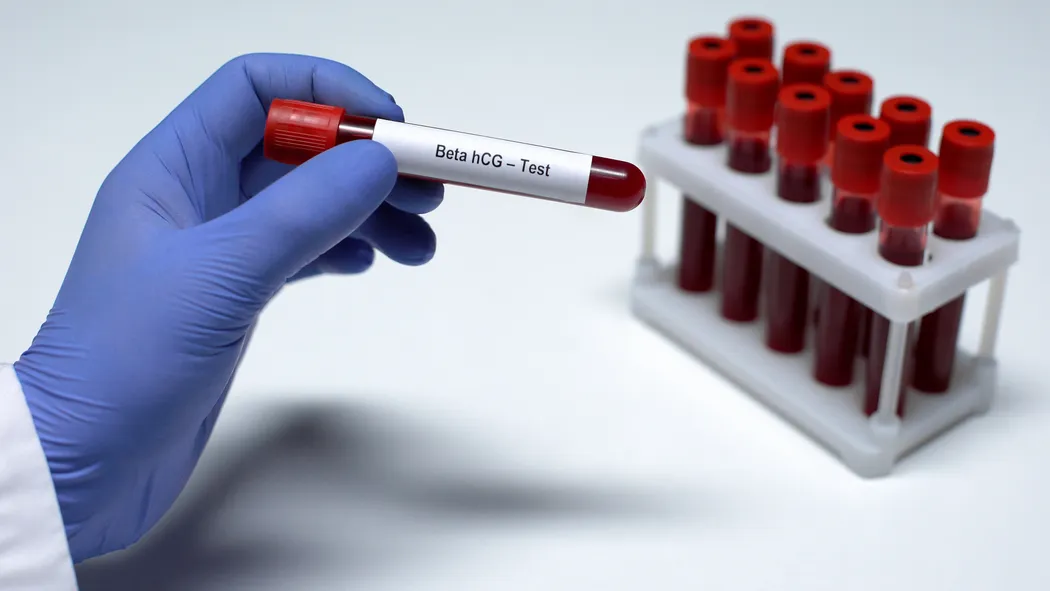
A quantitative HCG test, often called a beta HCG test, measures the exact concentration of HCG in mIU/mL. This is the version doctors use to track how a pregnancy is developing.
Understanding the quantitative vs qualitative HCG test distinction helps you know what your doctor has ordered. A urine test can only tell you the hormone is present; it cannot give you a number. Blood tests detect lower HCG concentrations, pick up a pregnancy earlier, and confirm how far along you are.
When to Take a Blood Pregnancy Test for Accurate Results?
HCG appears in the blood around 6 to 10 days after ovulation, roughly when implantation occurs. Most doctors recommend waiting until at least the first day of a missed period, typically 14 days after ovulation, before testing. At that point, HCG blood test levels are high enough to produce a reliable result.
Testing too early risks a falsely low or negative result simply because implantation has not yet occurred or HCG has not had time to build up.
Your doctor may order a blood pregnancy test earlier than a missed period if:
You are undergoing assisted reproduction or fertility treatment
You have had a previous ectopic pregnancy or miscarriage
You are experiencing symptoms such as pelvic pain or spotting that need prompt investigation
When in doubt, ask your gynaecologist or fertility specialist for the timing that suits your situation.
HCG Levels by Week: What a Positive Result Means
HCG levels vary enormously between individuals. A level as low as 5 mIU/mL can confirm pregnancy in a clinical setting, while levels in healthy pregnancies range from under 100 mIU/mL in the first week after the last menstrual period (LMP) to well over 200,000 mIU/mL at the peak around 10 to 12 weeks.
The table below shows approximate beta HCG levels by week, counted from the first day of the last menstrual period. Your result may sit outside these ranges and still be completely normal.
Gestational Week (from LMP)
Typical HCG Range (mIU/mL)
3 weeks
5 to 50
4 weeks
10 to 430
5 weeks
200 to 7,200
6 weeks
160 to 32,000
7 to 8 weeks
3,700 to 160,000
9 to 12 weeks
32,000 to 210,000
13 to 16 weeks
9,000 to 210,000
17 to 24 weeks
1,400 to 53,000
Because the ranges overlap and shift so widely, a single HCG result is rarely read in isolation. Your doctor is far more interested in whether your levels are doubling appropriately every 48 to 72 hours in early pregnancy than in any one absolute number.
Note: HCG levels can vary significantly between individuals and pregnancies. The values shown are general reference ranges and may differ depending on the laboratory, testing method, and exact stage of pregnancy. Your doctor should interpret HCG results based on the overall clinical picture and, when needed, changes in HCG levels over time.
Interpreting High or Low HCG Levels
Knowing how to read HCG test results means understanding that the number alone is rarely enough. Context, timing, and serial measurements all matter.
Low HCG Levels in Early Pregnancy
Low HCG levels in early pregnancy most commonly mean the gestational age has been miscalculated and the pregnancy is simply earlier than assumed. Other possibilities include:
An early pregnancy developing more slowly than average
A threatened or early miscarriage
An ectopic pregnancy, where the embryo has implanted outside the uterus
The concern is not a single low number but levels that are not doubling over serial measurements taken 48 hours apart. Never try to interpret trends on your own.
High HCG Levels
An unusually high HCG level may suggest:
A multiple pregnancy such as twins, because more placental tissue produces more hormone
Gestational dates that are further along than initially estimated
A molar pregnancy, a rare condition where abnormal placental tissue grows without a viable foetus
High levels are not automatically a sign of a healthier pregnancy, and very high results always need clinical review. The takeaway is that HCG blood test levels must be interpreted alongside an ultrasound and your full clinical picture.
Contraindications and Situations Requiring Medical Guidance
Certain situations make self-interpreting a positive blood pregnancy test unreliable or misleading.
You should not interpret HCG results without a doctor if:
You have recently taken HCG injections as part of fertility treatment, because residual medication can produce a positive result unrelated to a natural pregnancy
You have a history of gestational trophoblastic disease, which can keep HCG elevated long after a pregnancy ends
You have conditions affecting the pituitary gland, which may produce low HCG even without pregnancy
You have had a very recent pregnancy loss, because HCG can remain detectable for several weeks
A false positive on a blood pregnancy test is rare but does occur in these circumstances. There is also a phenomenon called phantom HCG, where certain immune antibodies interfere with the assay and produce a persistent positive in a non-pregnant woman. Only a clinician can investigate and rule this out.
Report adverse events to your healthcare provider or the relevant regulatory authority.
Prescribing and Safety Information
No medication is being recommended or promoted in this article. The HCG test is a diagnostic laboratory investigation, not a drug. If your doctor has prescribed any medication based on your test result, follow their instructions precisely, disclose all other medicines and supplements you are taking, and ask about any side effects you should watch for.
Conclusion
A positive blood pregnancy test generally indicates that human chorionic gonadotropin (hCG) has been detected in the blood, which is usually a sign of pregnancy. Blood tests can detect hCG earlier than many home urine tests and may also provide a quantitative hCG level that can be monitored when clinically appropriate. However, a single hCG result cannot determine the exact gestational age or confirm that a pregnancy is developing normally. Your healthcare professional may recommend repeat testing or an ultrasound based on your symptoms, hCG level, and stage of pregnancy. Understanding the timing and meaning of your result can help you take the appropriate next steps and begin timely prenatal care.
FAQs
How accurate is a blood pregnancy test?
A quantitative blood pregnancy test is among the most accurate ways to confirm pregnancy, detecting HCG at very low concentrations. False negatives are rare when the test is done at the right time, and false positives are uncommon outside specific medical situations.
Can a blood test be positive and still not be pregnant?
Yes, though it is uncommon. Residual HCG from a recent pregnancy, fertility injections containing HCG, certain tumours, and the rare phantom HCG phenomenon can all cause a positive result in someone who is not currently pregnant. Your doctor can order repeat tests or an ultrasound to clarify.
How soon after implantation can HCG be detected in blood?
HCG typically becomes detectable in blood around 6 to 10 days after ovulation, which corresponds closely with the time of implantation. Testing before this window can produce a falsely negative result even if implantation has occurred.
Does the HCG level indicate how healthy the baby is?
A single HCG number cannot reliably predict baby's health or pregnancy outcome. What matters more is whether levels are rising appropriately every 48 to 72 hours in the first weeks, and results must always be combined with an ultrasound and clinical assessment.
How long does it take to get blood pregnancy test results?
Most laboratories return results within a few hours to one working day. If your doctor has ordered the test through a hospital or clinic, ask at the time of your blood draw how and when you will receive your report.