Pregnancy Detection: HCG Tests, Levels & Early Signs
Understand pregnancy detection methods, HCG and beta HCG blood tests, and early pregnancy symptoms with guidance reviewed by medical experts.
Dr. Bhanu Prakash
Finding out you are pregnant is one of the most significant moments in a woman's life, and knowing how pregnancy is confirmed can ease a great deal of uncertainty. Whether you have missed a period, noticed changes in your body, or are actively trying to conceive, understanding HCG blood tests and what beta HCG levels mean helps you have a more informed conversation with your doctor.
How Pregnancy Is Detected: Urine vs Blood Tests
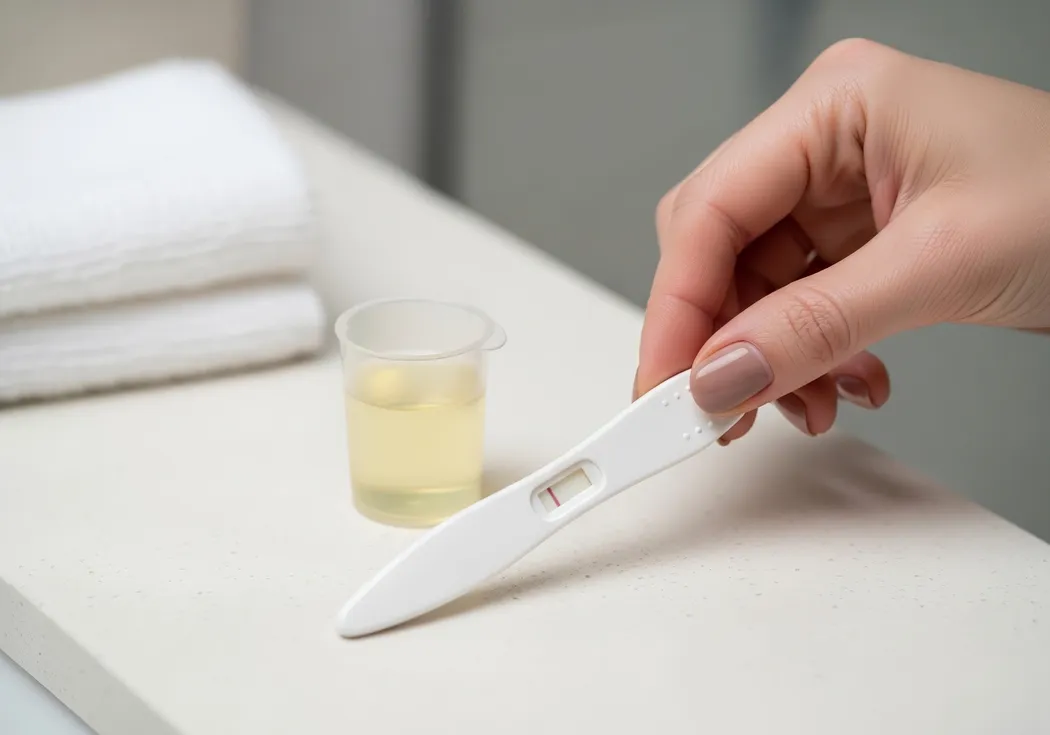
The two main ways to confirm pregnancy are a home urine test and a lab-based HCG blood test. Both detect human chorionic gonadotropin (HCG), a hormone the body starts producing shortly after a fertilised egg implants in the uterus.
A home pregnancy test is convenient and widely available at pharmacies across India. Most kits can detect HCG in urine from the first day of a missed period, though some sensitive brands claim earlier detection. For the best accuracy, use first-morning urine when HCG concentration is highest.
An HCG blood test can detect pregnancy earlier, sometimes as early as 8 to 10 days after conception. It is also more precise, making it the preferred choice when a doctor needs exact hormone levels rather than a simple yes-or-no answer.
Feature
Home Urine Test
HCG Blood Test
Earliest detection
Around missed period
8 to 10 days after conception
Result type
Positive or Negative
Qualitative or Quantitative
Accuracy
High if done correctly
Very high
Requires lab
No
Yes
Gives HCG level
No
Yes (quantitative test only)
Understanding HCG and Beta HCG Blood Tests
HCG has two components: an alpha subunit shared with other hormones, and a beta subunit unique to HCG. When a lab measures "beta HCG," it targets only this specific subunit, making the result far more precise and far less likely to cross-react with other hormones.
Qualitative vs quantitative tests
A qualitative beta HCG test gives a simple positive or negative result. Doctors order this to confirm whether pregnancy has occurred at all.
A quantitative beta HCG test, sometimes called a serum beta HCG, measures the exact amount of HCG in the blood in milli-international units per millilitre (mIU/mL). Doctors use this number to:
Track whether the pregnancy is progressing normally in early weeks
Investigate a suspected ectopic pregnancy, where the embryo implants outside the uterus
Monitor hormone levels after fertility treatment
Rule out a molar pregnancy or gestational trophoblastic disease
Confirm HCG has returned to baseline after a miscarriage
In uncomplicated pregnancies, a single result matters less than the trend. Doctors usually repeat the test 48 to 72 hours later to check whether levels are rising as expected.
Normal Beta HCG Levels by Week
HCG rises steeply in early pregnancy, roughly doubling every 48 to 72 hours through the first trimester, then plateaus and gradually falls after about 10 to 12 weeks. The table below shows typical reference ranges by gestational week counted from the last menstrual period (LMP).
Gestational Week (from LMP)
Typical Beta HCG Range (mIU/mL)
3 weeks
5 to 50
4 weeks
10 to 750
5 weeks
200 to 7,000
6 weeks
200 to 32,000
7 to 8 weeks
3,500 to 160,000
9 to 12 weeks
32,000 to 210,000
13 to 16 weeks
9,000 to 210,000
17 to 24 weeks
1,400 to 53,000
25 to 40 weeks
940 to 60,000
These are broad reference ranges. Normal values vary between laboratories and between individuals. A single HCG result should always be interpreted by your doctor alongside an ultrasound and clinical assessment, never in isolation.
Early Pregnancy Symptoms to Watch For
Some women notice signs of pregnancy before they take a test. Others feel nothing in the first few weeks. Both are normal. Common early pregnancy symptoms include:
A missed period, often the clearest first indicator
Breast tenderness or swelling, sometimes appearing within one to two weeks of conception
Nausea, with or without vomiting, which can strike at any time of day
Fatigue that feels disproportionate to how much you have done
Frequent urination, driven by increased blood flow to the kidneys
Light spotting or mild cramping around implantation time, roughly 6 to 12 days after conception
Heightened sensitivity to smells or food tastes
Mood changes from rapidly shifting hormone levels
How these differ from PMS
Early pregnancy symptoms and premenstrual symptoms overlap considerably, which is why symptoms alone cannot confirm pregnancy. Breast tenderness in pregnancy tends to be more intense and prolonged. Nausea is rarely a PMS feature. Implantation spotting, when it occurs, is lighter and shorter than a normal period. A test is the only reliable way to tell the two apart.
When to See a Doctor After a Positive Test
A positive result, whether on a home strip or a blood test, is the beginning of the process, not the conclusion. Here is what to do next:
Book an appointment with your gynaecologist within a few days of a positive result.
Your doctor will typically order a quantitative beta HCG test and, depending on how far along you are, a transvaginal ultrasound to confirm the pregnancy is intrauterine and developing.
Begin folic acid supplementation (400 to 800 mcg daily is commonly recommended) if you have not already, to support early foetal development.
Discuss any existing medications or health conditions with your doctor at this visit, as some drugs need to be reviewed or changed during pregnancy.
If you experience heavy bleeding, severe abdominal pain, or shoulder-tip pain, seek urgent care immediately, as these can be signs of an ectopic pregnancy.
As your pregnancy progresses, your doctor will guide you through prenatal care milestones, including scans, blood panels, and, eventually, newborn care basics after delivery as you prepare to bring your baby home.
Contraindications and Precautions for HCG-Related Medications
HCG is used not only as a marker for pregnancy detection but also as a medication in fertility treatments. If your doctor has prescribed an HCG injection as part of assisted conception, it is important to know who should not use it.
HCG injections are generally not appropriate for people who:
Known allergy: Avoid HCG-containing medicines if you have a known allergy to HCG or any other component of the formulation.
Hormone-sensitive cancers: HCG therapy may not be appropriate for people with certain hormone-sensitive cancers, including some ovarian, uterine, or breast cancers. Your doctor should assess your medical history before treatment.
Uncontrolled thyroid or adrenal disorders: Uncontrolled thyroid or adrenal conditions may require evaluation and stabilisation before HCG treatment is considered.
Previous ovarian hyperstimulation syndrome (OHSS): If you have experienced OHSS during a previous fertility treatment cycle, tell your fertility specialist before receiving HCG, as it may increase the risk of recurrence.
Pregnancy: Therapeutic HCG should generally not be used after pregnancy has been confirmed unless specifically prescribed and monitored by a specialist. This is different from the HCG naturally produced by the body during pregnancy.
Always inform your doctor about all medications, supplements, and health conditions before starting any fertility-related treatment. Report adverse events to your healthcare provider or the relevant regulatory authority.
Conclusion
Pregnancy detection usually begins with a home urine test, while HCG blood tests can provide earlier and more precise confirmation when needed. Beta HCG levels rise rapidly during early pregnancy, but normal ranges are broad, so a single value should not be used to determine how a pregnancy is progressing. Early symptoms such as a missed period, breast tenderness, nausea, fatigue, and frequent urination may suggest pregnancy, but they can overlap with PMS and cannot confirm pregnancy on their own. After a positive result, timely medical follow-up, appropriate HCG testing, ultrasound when indicated, and early prenatal care help confirm the pregnancy and support maternal and foetal health.
FAQS
How many days after a missed period should I test?
Testing on the first day of your missed period gives reliable results with most home kits. If you test earlier and get a negative result but your period still does not arrive, retest after two to three days, as HCG levels may not yet have been high enough to detect.
Can beta HCG levels indicate a multiple pregnancy?
Higher-than-average HCG levels can be associated with twins or multiples, but the overlap with singleton pregnancy ranges is significant. An ultrasound is the only reliable way to confirm multiple pregnancies; HCG alone is not diagnostic.
Does a low beta HCG always mean miscarriage?
Not necessarily. A single low reading needs context, including gestational age and whether levels are rising. Slow-rising or falling HCG over serial tests, combined with clinical findings and ultrasound, guides the diagnosis. Your doctor will interpret results together, not in isolation.
Can medications affect HCG test results?
Most common medications do not interfere with HCG tests. However, fertility drugs that contain HCG can produce a false-positive result if tested too soon after the injection. Tell your doctor and the lab about any fertility treatment you are receiving.
Is fasting required before a beta HCG blood test?
No, fasting is not required. You can eat and drink normally before a beta HCG blood test. If your doctor has ordered a panel of tests alongside it, check whether any of those other tests require fasting.