logo
0

hCG Levels in Pregnancy: What Your Results Mean

Learn about hCG levels in pregnancy, normal ranges by week, how hCG rises, what low or high levels may mean, and when testing or medical advice is needed.


article image

Dr.Rohini priyanaka

A missed period is often the first hint something has changed, but it is the pregnancy hormone hCG levels that confirm a pregnancy and give doctors an early window into how it is progressing. Whether you have just seen a faint line on a home test or you are waiting for blood results, understanding what hCG is and what the numbers mean can ease a great deal of anxiety.

What Is hCG and Why It Matters in Pregnancy

Human chorionic gonadotropin, or hCG, is produced by cells that eventually form the placenta. It appears in the blood within days of a fertilised egg implanting in the uterine wall, usually six to twelve days after conception.

Its main job is to signal the corpus luteum (a temporary structure in the ovary) to keep making progesterone. Progesterone maintains the uterine lining so the pregnancy can continue. Without this hormonal relay, the lining would shed and the pregnancy would not survive.

hCG also drives many classic first-trimester symptoms: nausea, breast tenderness, and fatigue tend to track alongside rising levels. Pregnancy hormone hCG levels climb steadily through the first trimester, peak around weeks 10 to 12, then gradually fall and stabilise for the rest of pregnancy.

When to Test hCG Levels

Knowing when to test hCG makes a significant difference to how useful the result is.

  • Urine tests (home pregnancy tests):: Detect hCG in urine and can often identify pregnancy from around the first day of a missed period. Using first-morning urine may improve accuracy because it is usually more concentrated.
  • Blood tests (beta-hCG): Are more sensitive than urine tests and can detect lower levels of hCG earlier in pregnancy. Depending on the test and timing, hCG may be detectable before a missed period. Blood tests are generally either qualitative, which gives a positive or negative result, or quantitative, which measures the actual hCG concentration.

Your doctor will usually order quantitative hCG blood test pregnancy results in pairs, two to three days apart, to assess whether levels are rising as expected. A single number alone is rarely enough for a firm conclusion, which is why knowing when to test hCG and how to interpret serial results matters so much.

Normal hCG Levels by Week (Chart)

The table below shows approximate reference ranges from the first day of your last menstrual period (LMP). Because ovulation and implantation timing vary, these are wide ranges, and a single number rarely tells the full story when looking at hCG levels by week.

Weeks from LMP Approximate hCG Range (mIU/mL)
3 weeks  5 to 50
4 weeks 10 to 750
5 weeks200 to 7,000
6 weeks    200 to 32,000
7 weeks3,000 to 160,000
8 to 12 weeks  32,000 to 210,000
13 to 16 weeks  9,000 to 210,000
17 to 24 weeks 1,400 to 53,000
25 weeks to term940 to 60,000

    
A few important points about this hCG levels chart pregnancy reference:

  • The ranges overlap considerably between weeks, and individual laboratories may use slightly different reference values.
  • What matters most in early pregnancy is the trend across serial tests, not any single value.
  • At 5 weeks pregnant, an hCG level anywhere from 200 to 7,000 mIU/mL can be completely normal. Two women at exactly 5 weeks may have readings that are hundreds of units apart and both have healthy pregnancies.

Always ask your doctor to interpret your specific result alongside your symptoms, ultrasound findings, and the exact timing of the test.

What High or Low hCG Levels Indicate

A result outside the expected range does not automatically signal a problem. Context is everything.

When Levels Run High

Higher-than-expected readings may point to:

  • Multiple pregnancy: carrying twins or more causes hCG to rise faster because more placental tissue is present. hCG levels twins situations often show significantly higher numbers than singleton pregnancies at the same gestational age, though an ultrasound is still needed to confirm.
  • Molar pregnancy: a rare condition where abnormal tissue grows instead of a normal placenta. hCG can climb to very high levels and requires prompt medical attention.
  • Inaccurate dating: if your dates are off by even a week, levels that look high may simply reflect a slightly older pregnancy.

Low hCG Levels Meaning

Low hCG levels can sometimes be associated with:

  • Pregnancy loss: falling or plateauing hCG levels in early pregnancy often indicate that the pregnancy is not continuing.
  • Ectopic pregnancy: when a fertilised egg implants outside the uterus, hCG levels may rise more slowly than expected. This is a medical emergency requiring urgent evaluation.
  • Early testing: checking before you think your period is due means levels will naturally be lower.

A single low reading is not a diagnosis. Serial beta hCG normal range comparisons, combined with an early ultrasound, give your doctor a far clearer picture than any one result can.

Contraindications and Precautions for hCG Testing

Certain situations can affect the accuracy or interpretation of hCG results, and self-interpreting without medical guidance can be misleading.

  • Fertility medications: some treatments use hCG injections to trigger ovulation. If you test within 10 to 14 days of such an injection, residual medication in your bloodstream may produce a false-positive result. Ask your doctor when it is safe to test after fertility treatment.
  • Certain medical conditions: rare tumours such as germ cell tumours or gestational trophoblastic disease can produce hCG in the absence of pregnancy. Persistently elevated hCG in someone who is not pregnant, or whose pregnancy has ended, should always be investigated promptly.
  • Laboratory variation: reference ranges differ between laboratories. A result flagged as low by one lab's range may be within normal limits at another. Always compare your result against your own lab's stated reference range and discuss it with your doctor rather than interpreting it in isolation.

Report adverse events or unexpected symptoms related to any medication or test procedure to your healthcare provider or the relevant regulatory authority.

Prescribing Information and Safety Disclaimer

This article is intended for general informational purposes only. It is not a substitute for professional medical advice, diagnosis, or treatment. hCG test results must always be interpreted by a qualified healthcare professional who knows your full medical history and current clinical picture.

If you are pregnant or planning a pregnancy and have concerns about your test results, please consult your obstetrician or gynaecologist. For further reading on what comes after a confirmed pregnancy, including practical guidance on newborn care after delivery, see our newborn care guide after delivery.

Conclusion

hCG levels are an important marker of early pregnancy, but a single result cannot reliably determine whether a pregnancy is progressing normally. hCG levels vary widely between individuals and depend on gestational age, ovulation, and implantation timing. Serial quantitative hCG tests, combined with ultrasound findings and symptoms, provide a more meaningful assessment. If hCG levels are unusually high, low, or changing unexpectedly, discuss the results with your healthcare professional rather than interpreting the number alone. Seek urgent care for severe abdominal pain, heavy bleeding, dizziness, or fainting during early pregnancy.

FAQS

What is a good hCG level at 4 weeks?

At 4 weeks from the last menstrual period, hCG levels typically range from about 10 to 750 mIU/mL. The exact number matters less than whether levels are rising appropriately on repeat testing two to three days apart.

Can hCG levels predict twins?

Higher-than-average hCG levels can hint at a multiple pregnancy, but levels alone cannot confirm twins. The ranges for singleton and twin pregnancies overlap considerably, and an ultrasound is the only reliable way to confirm twins.

How fast should hCG levels rise?

In a healthy early pregnancy, hCG generally doubles roughly every 48 to 72 hours up to around weeks 6 to 7, after which the doubling time slows. Your doctor tracks two or more readings to assess the pattern rather than relying on a single number.

What happens if hCG levels don't double?

Slower-than-expected rises can be associated with a pregnancy that is not progressing, such as an early miscarriage or an ectopic pregnancy. However, some healthy pregnancies rise more slowly. Your doctor will recommend further blood tests and an ultrasound to clarify what is happening.
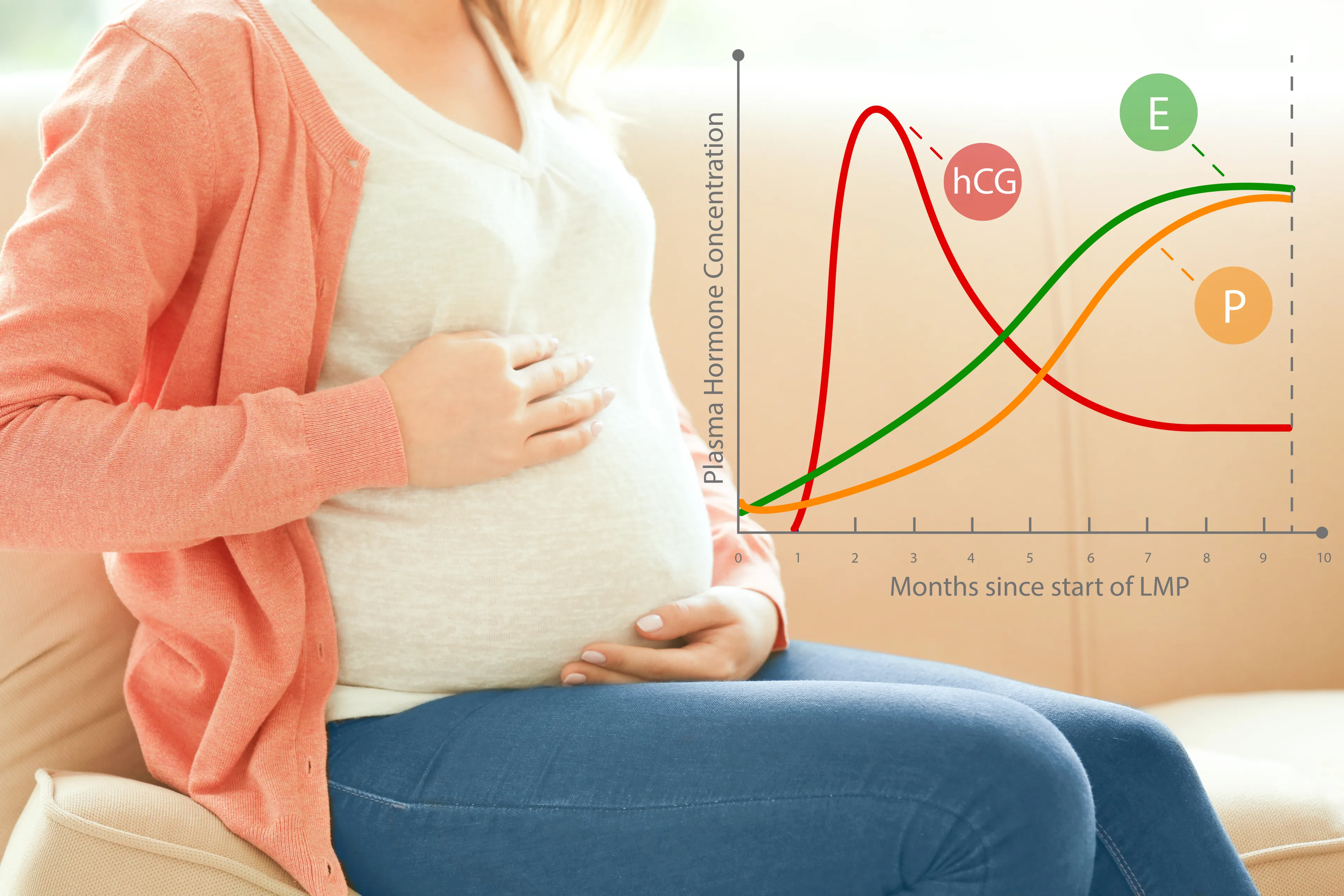
When does hCG peak in pregnancy?

Pregnancy hormone hCG levels usually peak between weeks 10 and 12 of pregnancy, reaching values that can range from around 32,000 to over 200,000 mIU/mL. After this peak, levels gradually decline and then stabilise through the second and third trimesters.

Apollo 247 Floating Action Button