logo
0

Pregnancy Test Line: How to Read Your Result Correctly

Learn how to read pregnancy test lines on a kit, including control and test lines, faint positives, negative results, and when to retest.

article image

Dr.Yusuf

Staring at a pregnancy test and feeling unsure about what you see is more common than you might think. The pregnancy line on kit results can appear faint, oddly timed, or just confusing, and that uncertainty can feel overwhelming. Understanding exactly what those lines mean, and why they look the way they do, helps you get a clear answer and take the right next step.

How to Read the Lines on a Pregnancy Test Kit?

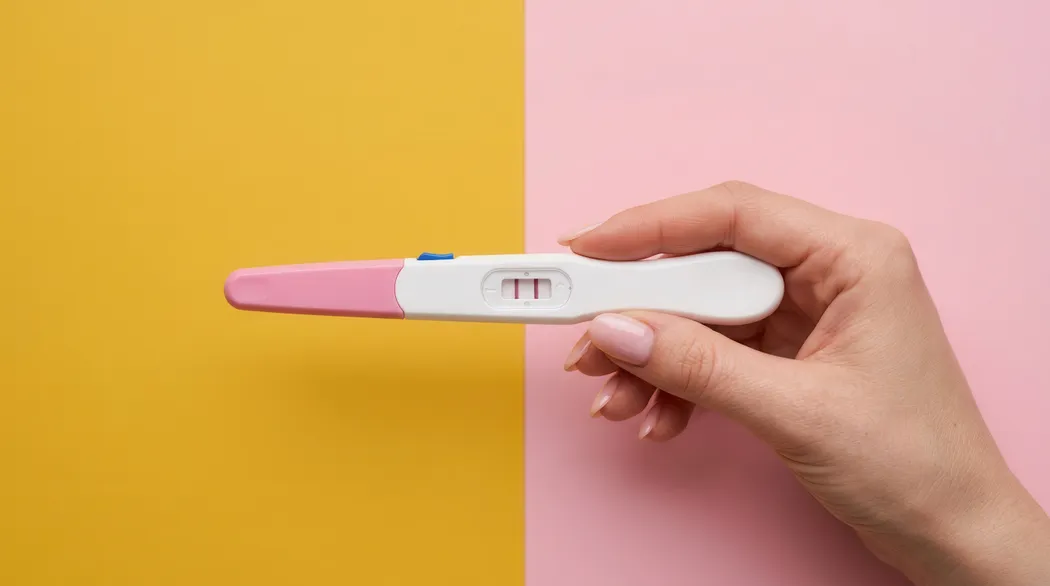
Every home pregnancy test has two key zones: the control line and the test line.

The control line (usually marked "C") appears whenever the test has worked correctly. Think of it as the kit confirming it is functioning. The test line (marked "T") appears only when the pregnancy hormone hCG (human chorionic gonadotropin) is present in your urine.

Here is what the combinations mean:

  • Two lines visible (C and T): Positive result, even if the T line looks lighter than the C line.
  • One line only (C line): Negative result. No hCG was detected.
  • T line only, with no C line: Invalid test. The kit has not worked properly. Discard and repeat with a new test.
  • No lines at all: Also invalid. Repeat with a fresh kit.

The most important rule: any T line, no matter how faint, counts as a positive when it appears within the reading window.

Why Do I See a Faint Line on My Pregnancy Test?

A faint line on pregnancy test results is one of the most common sources of confusion. It usually signals one thing: hCG is present, but at low levels.

This happens most often when you test early, before hCG has had time to build up. After a fertilised egg implants, hCG levels roughly double every 48 to 72 hours. In the first few days after implantation, those levels may be just high enough to trigger a faint response on the test strip.

Other reasons a line may appear light:

  • Testing later in the day when urine is more dilute
  • Drinking a large amount of fluids before testing
  • A very early pregnancy that is only a few days along

A faint T line is still a positive result. If you see it, take it seriously and confirm with a doctor. When learning how to read pregnancy test result markings, the rule is straightforward: any colour in the T zone means positive, regardless of how pale.

Evaporation Line vs Pregnancy Line: How to Tell the Difference

An evaporation line forms when urine evaporates off the test strip after the reading window has closed. It is one of the most common reasons people mistake a negative test for a false positive pregnancy test.

How to tell them apart:

  • Timing is the clearest cue. Read your result within the window stated in your kit's instructions, usually 3 to 5 minutes. Any line appearing after that window closes is likely an evaporation line, not a pregnancy line.
  • Colour matters. A real pregnancy line carries colour, typically pink or blue depending on the brand. An evaporation line is usually colourless or a very faint greyish-white streak.
  • Evaporation lines are often thin and uneven, compared to the solid band of a genuine test line.

If you are unsure whether what you saw was real, repeat the test with a fresh kit the next morning. Never re-read a test that has been sitting for hours.

Understanding Pregnancy Test Sensitivity

Pregnancy test sensitivity is measured in milli-international units per millilitre (mIU/mL). This number tells you the minimum concentration of hCG the test can detect.

A lower mIU/mL number means higher sensitivity. A test rated at 10 mIU/mL can detect pregnancy earlier than one rated at 25 mIU/mL, because it picks up smaller amounts of hCG in urine.

More sensitive kits are useful if you want to test early, but they also carry a slightly higher chance of detecting a chemical pregnancy, a very early loss that would otherwise go unnoticed. Check the package insert for your kit's sensitivity rating. If it is not listed, ask your pharmacist, who can help you choose a kit suited to your situation.

Best Time to Take a Pregnancy Test for Accurate Results

Knowing when to take pregnancy test for accurate result is just as important as choosing the right kit. For the most reliable reading, test on the first day of your missed period or after. By this point, hCG levels in most pregnancies are high enough for a standard kit to detect.

First-morning urine is ideal. After a night without drinking fluids, hCG is more concentrated, giving the test strip a stronger signal.

Can you test before your missed period? Technically yes, if you use a high-sensitivity kit. But results before a missed period carry a higher risk of a faint or ambiguous reading. A negative result at that stage does not fully rule out pregnancy. Waiting until your period is late gives you the clearest, most confident answer. When to take pregnancy test for accurate result ultimately comes down to timing it right: patience here pays off.

Other tips for accuracy:

  • Keep the test strip in urine for exactly the time stated in the instructions, not more, not less.
  • Lay the test flat on a clean surface while waiting.
  • Store kits at room temperature and check the expiry date before use.

What to Do After Reading Your Result?

A home pregnancy test is a screening tool, not a final diagnosis.

If your result is positive, book an appointment with a doctor as soon as possible. A blood test (serum beta-hCG) will confirm the pregnancy and give a more precise hCG level. Early confirmation helps ensure you receive appropriate care, including folic acid guidance, lifestyle advice, and any necessary monitoring.

If your result is negative but your period has not arrived, wait 48 to 72 hours and test again with first-morning urine. hCG levels that were too low to detect may be measurable a few days later.

Home pregnancy tests are not suitable for diagnosing ectopic pregnancy or other complications. If you have a positive result alongside abdominal pain, unusual bleeding, or shoulder tip pain, seek medical attention immediately.

Report adverse events related to any medical product to your healthcare provider or the relevant regulatory authority.

Conclusion

Reading a pregnancy test kit correctly can help you understand whether the test indicates pregnancy. A control line generally shows that the test has worked properly, while a second line within the specified reading time usually indicates a positive result, even if the line is faint. Results should always be interpreted according to the instructions provided with the specific test, as reading the test too late can lead to confusion from evaporation lines. If the result is unclear, negative despite a missed period, or inconsistent with your symptoms, repeating the test after a few days or consulting a healthcare professional can provide greater clarity. A confirmed positive result is an important reason to arrange appropriate prenatal care and medical follow-up.

FAQs

Can a faint line be a false positive?

A true false positive pregnancy test is rare. A faint but coloured line appearing within the reading window almost always means hCG is present. Confirm with a blood test if you are unsure.

How accurate are home pregnancy tests?

Most home pregnancy tests are highly accurate when used correctly after a missed period. Accuracy can drop if the test is used too early or if instructions are not followed carefully.

What if I see no line at all on the test?

No lines, including no control line, means the test is invalid. Repeat with a new kit, following the instructions exactly, particularly the dipping time and urine volume.
Can medications affect pregnancy test results?

Most common medicines do not interfere with home pregnancy tests. However, fertility treatments containing hCG can produce a positive result, so let your doctor know if you are on any such therapy.

How soon can a pregnancy test detect pregnancy after conception?

Most standard kits can detect pregnancy around 10 to 14 days after conception, which is close to the time of a missed period. High-sensitivity kits may detect it a few days earlier.

Apollo 247 Floating Action Button