logo
0

Pregnancy Symptoms Before Missing a Period

Spot early pregnancy symptoms before a missed period — discharge changes, breast tenderness, fatigue and more. Doctor-reviewed guide from Apollo Pharmacy.

article image

Dr.Nallapu Siri

Wondering whether fatigue, breast tenderness or other changes could mean you are pregnant? Pregnancy symptoms before a missed period can happen, but they are often subtle and can feel very similar to premenstrual symptoms.

Knowing which symptoms may occur, when pregnancy can be detected and when to seek medical care can help you make sense of these early changes without relying on symptoms alone.

Can You Have Pregnancy Symptoms Before a Missed Period?

Yes, some people notice changes before their period is due, while others do not notice any symptoms at all.

After fertilisation, the developing pregnancy travels towards the uterus and eventually attaches to the uterine lining. This process is called implantation. After implantation, the body begins producing human chorionic gonadotropin (hCG), the hormone detected by pregnancy tests.

Pregnancy symptoms can begin around the time of implantation or later, but there is no specific day when symptoms are expected to start. Early pregnancy symptoms also overlap with the hormonal changes that occur before a period.

That means a symptom such as breast tenderness or fatigue may occur with pregnancy, PMS or another condition. Symptoms can suggest that pregnancy is possible, but they cannot confirm it. A pregnancy test is the most practical way to find out.

What Are the Early Signs of Pregnancy Before a Missed Period?

Early pregnancy symptoms vary from person to person. Some people notice changes before their expected period, while others do not feel different until after they have a positive pregnancy test.

Possible early symptoms include:

  • Breast tenderness: Hormonal changes can make the breasts feel sore, fuller or more sensitive.
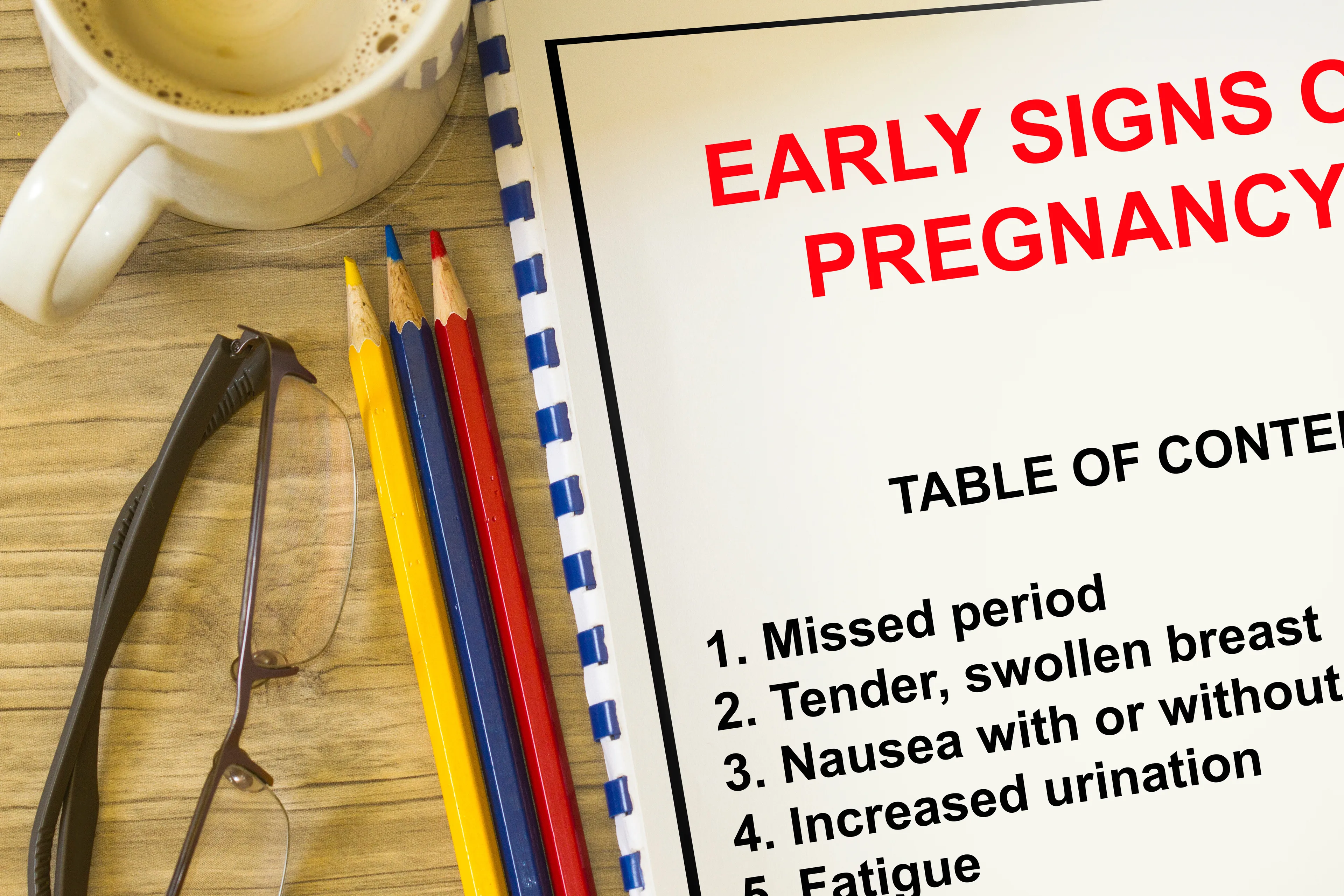
  • Fatigue: Increased progesterone and other changes during early pregnancy can contribute to tiredness.
  • Mild cramping: Some people experience mild, period-like cramps. Similar cramping can also occur before menstruation.
  • Light spotting: Light vaginal bleeding can occur in early pregnancy, but it has several possible causes and cannot by itself confirm pregnancy.
  • Nausea: Nausea can occur during pregnancy, although it is more commonly noticed later in the first trimester rather than immediately after conception.
  • Frequent urination: Pregnancy-related changes in blood flow and kidney function can make you need to urinate more often.
  • Changes in smell or appetite: Some people become more sensitive to certain smells or notice changes in their food preferences.
  • Bloating: Hormonal changes can cause bloating or a feeling of abdominal fullness.

You may experience several of these symptoms, only one or none at all. The absence of symptoms does not mean you are not pregnant, and having symptoms does not prove that you are.

Can Vaginal Discharge or Spotting Be an Early Sign of Pregnancy?

Vaginal discharge can change during pregnancy. Increased blood flow and hormonal changes can increase vaginal and cervical secretions. Clear or white discharge without a strong or unpleasant smell, itching or irritation can be normal.

Some people also notice light spotting in early pregnancy. This is sometimes referred to as implantation bleeding. When it occurs, it is usually light rather than a menstrual-type flow and may appear pink or brown. However, bleeding can have several causes, so its colour, amount or timing cannot reliably establish that implantation has occurred.

If you are pregnant or think you may be pregnant, contact a healthcare professional if you are unsure about bleeding. Heavy bleeding, clots, or bleeding accompanied by significant pain should not simply be assumed to be implantation bleeding.

When Should You Take a Pregnancy Test?

A Home pregnancy test detects hCG in urine. The amount of hCG increases during early pregnancy, but testing too soon can produce a negative result even when you are pregnant.

For a more reliable result, take a home pregnancy test around the time your period is due or after you have missed it. Some tests are designed to detect pregnancy earlier, but the earlier you test, the greater the chance of a false-negative result.

If you test early and receive a negative result but your period does not arrive, repeat the test after several days and follow the instructions provided with the test. Using first-morning urine may improve the chance of detecting a low level of hCG.

A healthcare professional can also order a blood test to measure hCG when earlier or more detailed assessment is appropriate. A blood test is not necessary for everyone.

What If Your Pregnancy Test Is Negative but You Still Have Symptoms?

A negative pregnancy test does not always rule out pregnancy if the test was taken very early. The timing of ovulation and implantation varies, and hCG may not yet be high enough for a urine test to detect.

If your period does not start, repeat the test after several days according to the test instructions. If repeated tests remain negative but your period is still absent or your symptoms continue, speak with a healthcare professional.

Symptoms such as fatigue, breast tenderness, bloating and cramping can also have causes unrelated to pregnancy, including PMS, thyroid disorders, stress, anaemia, medicines and other health conditions.

When Should You See a Doctor?

Most mild early pregnancy symptoms are not an emergency. However, certain symptoms need prompt assessment because they can occur with an ectopic pregnancy or another complication.

An ectopic pregnancy occurs when a pregnancy implants outside the uterus, most commonly in a fallopian tube. Early symptoms can resemble a normal pregnancy, including a missed period, breast tenderness or nausea. As an ectopic pregnancy progresses, it can cause pelvic or abdominal pain and abnormal bleeding. If a fallopian tube ruptures, severe pain, shoulder pain, weakness, dizziness or fainting can occur.

Seek urgent medical attention if you may be pregnant and have:

  • Severe or worsening abdominal or pelvic pain
  • Pain that is particularly strong on one side
  • Heavy vaginal bleeding
  • Shoulder-tip or shoulder pain
  • Dizziness, weakness or fainting

Do not wait for a pregnancy test to become positive before seeking urgent care if you have concerning symptoms and pregnancy is possible.

What Should You Do If You Think You May Be Pregnant?

If pregnancy is possible, taking a pregnancy test at the appropriate time is more useful than trying to interpret individual symptoms.

If the test is positive, arrange an appointment with a qualified healthcare professional to discuss the pregnancy and any medicines or health conditions that may need attention. If you take regular prescription medicines, do not stop them on your own. Ask your doctor or pharmacist whether they are appropriate during pregnancy.

It is also sensible to tell your healthcare professional about any over-the-counter medicines, vitamins, supplements or herbal products you use.

Conclusion

Pregnancy symptoms before a missed period can include breast tenderness, fatigue, mild cramping, light spotting, nausea, bloating, increased urination and changes in smell or appetite. However, these symptoms can also occur before a period or with other health conditions, and some people have no early symptoms at all.

If you think you may be pregnant, a home pregnancy test taken around the time your period is due is more reliable than trying to interpret symptoms. If you have severe or one-sided abdominal or pelvic pain, heavy bleeding, shoulder pain, dizziness or fainting and pregnancy is possible, seek urgent medical attention.

FAQS

How many days after conception do pregnancy symptoms start?

There is no fixed day when pregnancy symptoms begin. Pregnancy-related hormonal changes occur after implantation, but the timing varies. Some people notice changes around the time their period is due, while others do not notice symptoms until after a missed period or later. Symptoms this early can also be caused by PMS or other conditions.

Can implantation cramps feel like period cramps?

Mild cramping can occur in early pregnancy and may feel similar to period cramps. However, cramping cannot confirm that implantation has occurred. Severe, persistent or one-sided pain is not something to assume is implantation and should be medically assessed, particularly if pregnancy is possible.

Is fatigue an early sign of pregnancy?

Fatigue can occur during early pregnancy, partly because of hormonal changes. However, tiredness is also common before a period and can have many other causes, including poor sleep, stress, anaemia and thyroid problems. Fatigue alone cannot confirm pregnancy.

Can you be pregnant with no symptoms at all?

Yes. Some people have few or no noticeable symptoms in early pregnancy. Pregnancy symptoms vary considerably between people and can also differ between pregnancies. Not having symptoms does not rule out pregnancy.

What is the earliest sign of pregnancy?

There is no single earliest symptom that occurs in everyone. A missed period is one of the most common early signs, while some people notice breast tenderness, fatigue, mild cramping or light spotting around the time their period is due. Because these symptoms can also occur for other reasons, a pregnancy test is a more reliable way to determine whether you are pregnant.

Apollo 247 Floating Action Button