logo
0

Pregnancy Test App Download: Free Tools & Home Kits

Learn about pregnancy test app downloads, free tracking tools, home pregnancy kits, accuracy, and when to see a doctor.

article image

Dr.Rohini priyanaka

Confirming a pregnancy early can feel urgent, and many women reach for a pregnancy test app download before they buy a kit or visit a clinic. While these apps have genuinely useful features, understanding what they can and cannot do saves you from anxiety and, more importantly, from missing something that needs medical attention.

Can a Pregnancy Test App Actually Confirm Pregnancy?

No app can detect pregnancy. A pregnancy test app download gives you a digital space to log symptoms, track your menstrual cycle, and estimate ovulation dates, but it has no way to measure human chorionic gonadotropin (hCG), the hormone that rises in your blood and urine after a fertilised egg implants.

What these apps do well is pattern recognition. If your cycle has been regular for months and the app flags a missed period, that is useful information prompting you to take a physical test. Think of a free pregnancy test app as a personal diary with reminders, not a diagnostic tool.

Are pregnancy test apps accurate for confirming pregnancy? No. They are accurate at recording what you tell them. Whether you are actually pregnant still depends on a urine or blood test.

Types of Free and Low-Cost Pregnancy Testing Options

There are three practical categories worth knowing about.

Symptom and cycle tracker apps

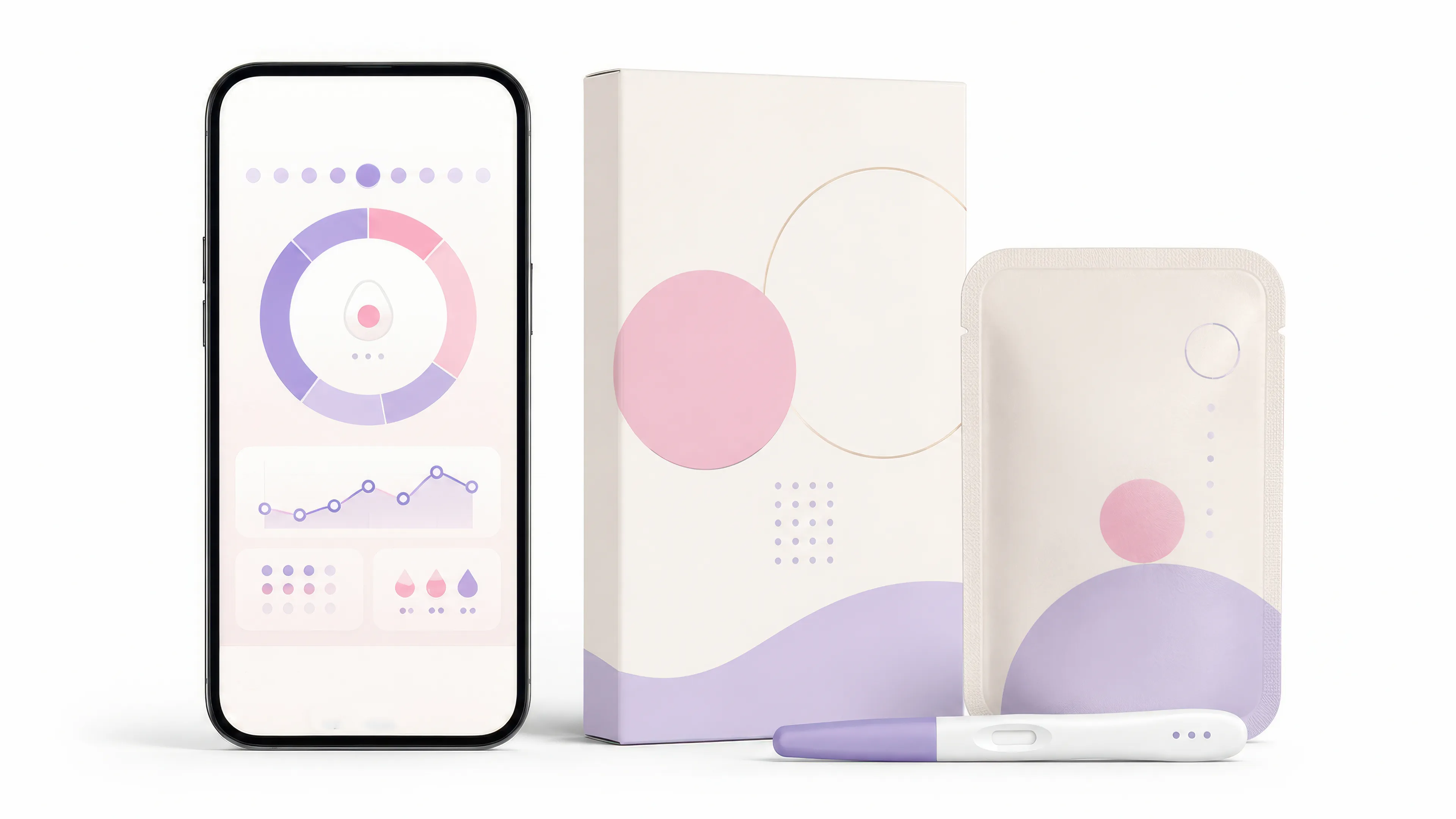
Period tracker pregnancy apps let you log period dates, basal body temperature, cervical mucus changes, and early symptoms such as nausea or breast tenderness. A pregnancy test calculator within these apps estimates your fertile window and flags a potential missed period. They are free or low-cost on Android and iOS. They do not replace a physical kit.

Over-the-counter urine pregnancy test kits

Home pregnancy test kits are widely available at pharmacies and online across India. Prices typically range from around Rs 30 for a basic strip to Rs 150 to 250 for a branded midstream or digital device. These are the most affordable ways to get a confirmed result outside a lab.

Laboratory blood tests

A serum beta-hCG blood test ordered by a doctor is the gold standard. It detects pregnancy earlier than most home kits and can quantify hCG levels to assess how the pregnancy is progressing. Costs vary by city and lab, but many diagnostic centres offer it for Rs 300 to 600.

How to Use a Home Urine Pregnancy Test Correctly

Getting the technique right matters as much as buying the kit.
  • Use first-morning urine: hCG is often more concentrated in the first urine of the day, which can make early testing easier to detect.
  • Test after a missed period: Testing on or after the first day of a missed period generally improves accuracy. Testing too early can result in a false negative.
  • Follow the instructions: Read the manufacturer's instructions before testing, as strip, cassette, and midstream tests may have different procedures.
  • Collect urine correctly: For strip or cassette tests, collect urine in a clean, dry container. For midstream tests, hold the device in the urine stream for the time specified on the package.
  • Read the result within the specified window: Keep the test flat if instructed and check the result within the manufacturer's stated time. Do not interpret changes that appear after the specified reading window, as they may be misleading.
  • Interpret faint lines carefully: A second line that appears within the specified reading window generally indicates a positive result, even if it is faint. If the result is unclear or you are unsure how to interpret it, repeat the test according to the manufacturer's instructions or consult a healthcare professional.

The most common errors are testing too early, using urine diluted by drinking large amounts of water beforehand, and ignoring the reading time window.

Contraindications and Limitations of Home Testing

Home kits are safe for most women, but certain situations can distort results and require professional interpretation.

Conditions and medications that can affect results

  • hCG-containing fertility treatments: Fertility medicines containing hCG, including trigger injections, can cause a false-positive pregnancy test for several days after treatment.
  • Rare medical conditions: Some rare tumours can produce hCG and may result in a positive pregnancy test even when there is no ongoing pregnancy.
  • Recent pregnancy loss or termination: hCG can remain detectable for several weeks after a miscarriage or termination, so a pregnancy test may remain positive even though the pregnancy is no longer ongoing.
  • Medications: Most medicines do not interfere with home pregnancy tests. Claims that anticonvulsants or diuretics commonly cause unreliable results should not be included without evidence for a specific medicine.
  • Diluted urine or an expired test: Drinking excessive fluids before testing can dilute urine and make hCG harder to detect. Using an expired or improperly stored test can also reduce reliability.

Report adverse events to your healthcare provider or the relevant regulatory authority.

Urine pregnancy test accuracy in context

Most home kits claim sensitivity of 20 to 25 mIU/mL hCG when used correctly from the day of a missed period. Real-world urine pregnancy test accuracy is high in that setting, but earlier testing or poor technique lowers reliability considerably.

Who should go straight to a professional

Anyone with a history of ectopic pregnancy, fertility treatment, or an irregular cycle caused by a diagnosed hormonal condition should not rely solely on a home kit. Consult a gynaecologist before concluding a home result.

When You Need Professional Testing Instead of an App or Kit

Some situations call for a call to your doctor rather than another trip to the pharmacy.

  • You have taken two home tests on different days and the results contradict each other.
  • You see a faint or ambiguous line that does not become clearer on a repeat test 48 hours later.
  • Your period is more than a week late but all home tests are negative.
  • You have a positive test accompanied by one-sided pelvic pain, shoulder tip pain, or vaginal bleeding. These can be signs of an ectopic pregnancy, a medical emergency.
  • You are more than 6 to 8 weeks from your last period without clinical confirmation or an ultrasound.
  • You have a condition such as polycystic ovarian syndrome that makes cycle tracking unreliable.

A blood test is more sensitive than a home kit, can detect hCG earlier, and gives a quantitative result that helps your doctor assess whether a pregnancy is developing normally. When in doubt, a clinic visit is always the right call.

Conclusion

A pregnancy test app download can help track periods, symptoms, ovulation, and possible missed periods, but it cannot confirm pregnancy because apps cannot detect hCG. For an actual result, use a home urine pregnancy test or a laboratory beta-hCG blood test. Testing at the appropriate time and following the kit instructions carefully improves accuracy. If results are unclear, your period remains delayed despite negative tests, or you have symptoms such as pelvic pain or bleeding with a positive test, seek medical evaluation promptly.

FAQS

Which app is best for tracking pregnancy symptoms for free?

Several period tracker pregnancy apps, including widely used ones available on the Google Play Store and Apple App Store, offer free symptom logging, cycle tracking, and a pregnancy test calculator. Look for apps with a large user base and clear privacy policies. No single app suits everyone, so choose one whose interface you find easy to use consistently.

Can I get pregnancy test app results without a physical kit?

No. An app can only record and analyse data you enter manually. It cannot detect hCG or any other biological marker of pregnancy. A physical urine kit or a lab blood test is always needed for an actual result.

How accurate are home pregnancy tests compared to lab tests?

When used correctly from the day of a missed period, quality home kits have high accuracy, often above 99 percent under ideal conditions. A lab serum beta-hCG test is more sensitive, detects pregnancy earlier, and provides a quantitative level that a home strip cannot offer.

How soon after a missed period should I test?

Testing on the first day of your missed period gives the most reliable result with most kits. Testing earlier is possible with high-sensitivity strips, but a negative result before a missed period should always be repeated once the period is due.

What should I do if my home test is positive?

Book an appointment with a gynaecologist or your nearest Apollo clinic as soon as possible. A doctor will confirm the result with a blood test or ultrasound, check that the pregnancy is in the correct location, and advise on next steps for prenatal care.

Apollo 247 Floating Action Button