logo
0

Pregnancy Test Online App: Accuracy vs Clinical Tests

Are pregnancy test apps accurate? Compare online period tracking apps with home urine kits and clinical blood tests to understand how to confirm pregnancy safely.

article image

Dr.J.T.Hema Prathima

Relying on a pregnancy test online app to find out whether you might be expecting is increasingly common, but these tools work very differently from the clinical tests your doctor uses. Understanding that difference matters: it could save you from false reassurance or unnecessary anxiety at a time when accurate information counts most.

What Is a Pregnancy Test Online App and How Does It Work

A pregnancy test online app is a period or symptom-tracking tool that uses data you enter, such as cycle length, last period date, basal body temperature, and symptoms like nausea or breast tenderness, to estimate whether conception may have occurred. Some apps add a short questionnaire and return a "likelihood" score.

The key word is estimate. These apps do not measure any hormone or biological marker. They run an algorithm against your logged data and generate a probability, not a diagnosis. No app, regardless of how sophisticated its interface looks, can detect pregnancy the way a lab test can.

So, can an app tell you if you are pregnant? Not definitively. An app can flag that your cycle is late or that your symptoms align with early pregnancy, but it cannot confirm conception. Think of it as a prompt to go and take a proper test, not as a result in itself.

Digital Apps vs Clinical Pregnancy Tests: Accuracy Compared

This is where the distinction matters most, and where many people are understandably confused.

How pregnancy apps predict

Apps rely on pattern recognition. If your cycle data shows a missed period and you have logged nausea and fatigue, the app flags a possible pregnancy. Pregnancy tracking app accuracy depends entirely on how consistently and correctly you have entered your data. An irregular cycle, a forgotten log entry, or a stressful month that shifts ovulation can all skew the prediction significantly.

How clinical tests detect pregnancy

Clinical tests measure human chorionic gonadotropin (hCG), the hormone produced after a fertilised egg implants in the uterus. There are two main types:

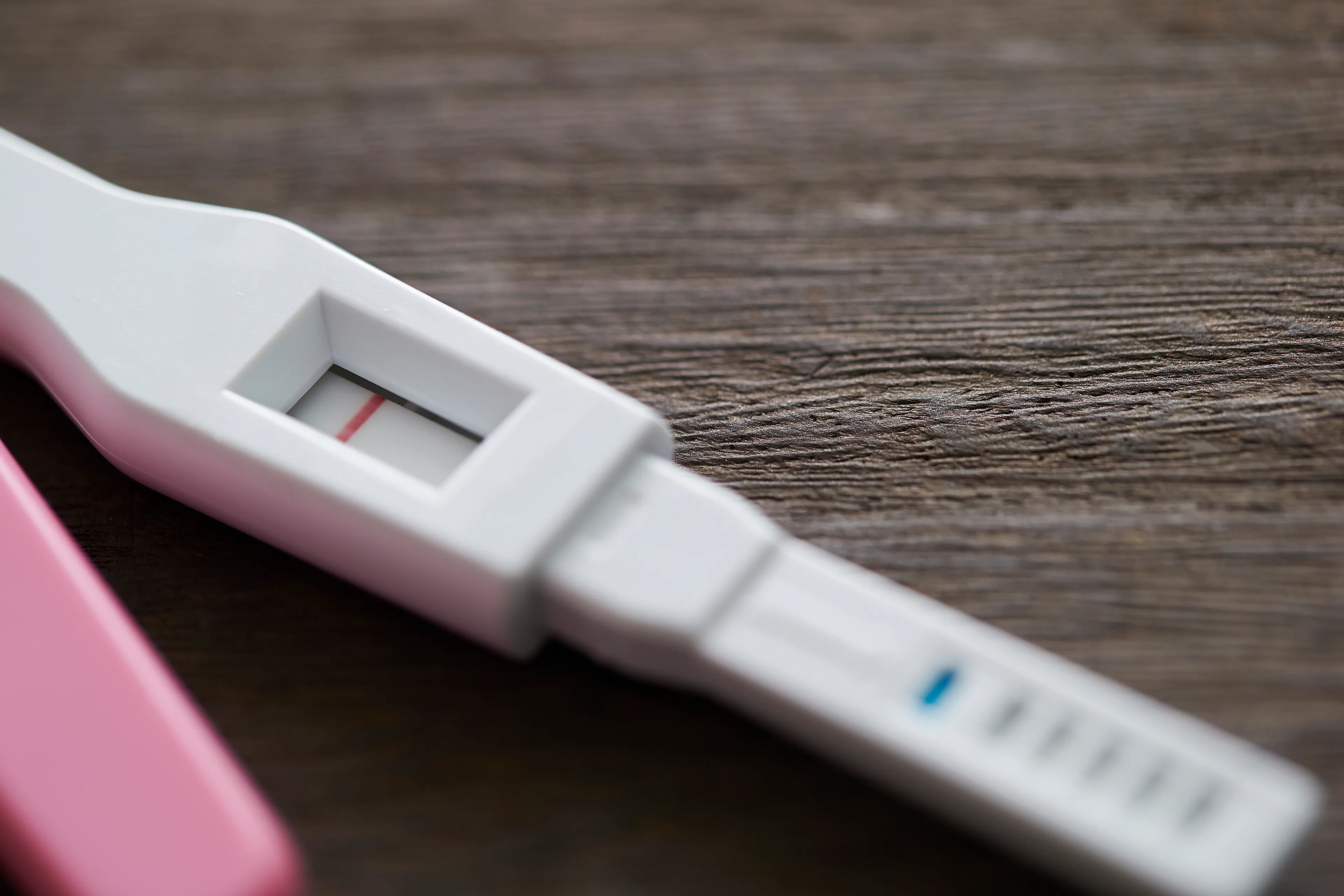
  • Urine-based home pregnancy tests detect hCG in urine. When used correctly after a missed period, most quality kits report accuracy above 99 percent for positive results, though sensitivity varies by brand and how early you test.
  • Blood tests (serum hCG) ordered by a doctor can detect pregnancy earlier and at lower hCG concentrations than urine tests. hCG test accuracy from a certified laboratory is very high, and a quantitative blood test also shows your doctor how the pregnancy is progressing over time.

The core contrast

Feature    Pregnancy AppHome Urine TestLab Blood Test
What it measuresSymptom and cycle patternshCG in urinehCG in blood
Can confirm pregnancyNo    Yes, with high accuracyYes, gold standard
Earliest reliable useAfter missed periodDay of missed period10 to 14 days post-ovulation
Requires a labNo    No    Yes
Cost    Free to lowLow    Moderate

When comparing home pregnancy test vs blood test results, the blood test wins on both sensitivity and clinical usefulness. Apps, by contrast, cannot compete with the biological certainty of an hCG measurement. They are useful companions for tracking your cycle, not replacements for testing.


Why Clinical Confirmation Still Matters

A positive reading, or even a strong "likely pregnant" result from an app, should always be followed by a clinical test and then a visit to your doctor. This step cannot be skipped.

Early pregnancy needs accurate dating. An ultrasound in the first trimester confirms how many weeks along you are and checks that the pregnancy is located in the right place, ruling out an ectopic pregnancy, which is a medical emergency requiring urgent care.

hCG trends carry important information too. A single positive home test tells you pregnancy is detected; serial blood hCG levels tell your doctor whether the pregnancy is developing as expected. Falling or plateauing levels can signal a problem that needs prompt attention.

Medical care also starts early. Folic acid supplementation, lifestyle adjustments, first-trimester screening, and specialist referrals all depend on a confirmed, clinically dated pregnancy. None of this can be triggered by an app prediction alone.

Digital pregnancy test accuracy discussions often focus on whether the app got it right or wrong. The more practical question is what you should do next. The answer is always clinical confirmation.

Contraindications and When Not to Rely on Self-Testing

Certain situations make app predictions and even home urine tests less reliable. If any of the following apply to you, speak to your doctor before drawing conclusions from any self-testing tool.

  • Irregular menstrual cycles: Period tracker pregnancy prediction relies on regular, predictable cycle data. Conditions like polycystic ovary syndrome (PCOS), thyroid disorders, or perimenopause make cycles unpredictable, throwing off both app algorithms and the timing needed for urine tests to be accurate.
  • Fertility treatments: If you have received an hCG trigger injection as part of an IVF or ovulation induction cycle, residual hCG can produce a false positive on a urine test. Your fertility specialist will advise on the right time to test and will usually rely on blood tests rather than home kits for this reason.
  • Recent pregnancy loss or delivery: hCG can remain detectable in blood and urine for several weeks after a miscarriage or birth, causing misleading results on both urine tests and blood tests.
  • Certain medical conditions: Some ovarian conditions and gestational trophoblastic disease can elevate hCG independent of pregnancy. Clinical interpretation by a doctor is essential in these cases.
  • Very early testing: Testing before a missed period, whether through an app or a urine kit, increases the chance of error. hCG may not yet be high enough for a urine test to detect, and an app has no reliable symptom data to work with so soon after possible conception.

If you experience unexpected symptoms such as severe pelvic pain, heavy bleeding, or dizziness alongside a positive result, seek medical attention immediately. Report adverse events or unexpected symptoms to your healthcare provider or the national pharmacovigilance programme. In India, adverse events related to medical devices or diagnostic products can be reported to the Central Drugs Standard Control Organisation (CDSCO) through the online reporting portal at CDSCO's official website.

Choosing and Using Digital Tools Safely

Apps are genuinely helpful when used for what they are designed for: logging cycles, spotting patterns, and knowing when to take a real test. A few practical habits make them more useful and reduce the chance of misreading their predictions.

Log data consistently and honestly. The more complete your symptom and cycle records, the more meaningful the app's pattern recognition becomes. Skipping days or entering approximate data reduces whatever predictive value the tool offers.

Use the app as a prompt, not a verdict. When an app suggests you may be pregnant, treat that as your cue to take a home urine test. If that test is positive, book an appointment with your gynaecologist promptly.

Cross-check with a home test kit first. A quality urine pregnancy test is inexpensive, widely available at pharmacies across India, and provides a result grounded in actual biology rather than logged symptoms. The online pregnancy test vs clinical test comparison almost always favours the clinical approach for confirmed results.

Know the limits of your data. If your cycles are irregular, you have recently stopped hormonal contraception, or you are under significant physical or emotional stress, your app's predictions will be less reliable. Factor this in before acting on what the app shows.

Conclusion

Online pregnancy apps and period trackers are helpful for logging menstrual cycles, but they rely strictly on statistical estimates and entered symptoms rather than biological markers like human chorionic gonadotropin (hCG). Because an app score is not a clinical diagnosis, confirming a pregnancy always requires biological testing starting with an over-the-counter urine kit on the first day of a missed period, followed by a quantitative serum beta-hCG blood test at a certified diagnostic lab. If an app suggests you might be pregnant or your cycle is delayed, confirm the result with an actual test and consult an obstetrician or gynecologist promptly to perform a pelvic ultrasound, date the pregnancy accurately, and rule out serious early complications such as an ectopic pregnancy.

FAQS

Can a pregnancy app be wrong?

Yes, quite easily. Apps predict based on the data you enter, and any gap, irregularity, or unusual cycle can produce an inaccurate result. They are not diagnostic tools.

How early can a pregnancy test app detect pregnancy?

Apps do not detect pregnancy at all in the clinical sense. They can flag a missed period or symptom pattern as early as the day your period was due, but this is a prediction, not a detection based on any biological measurement.
Is a home pregnancy test as accurate as a blood test?

A quality home urine test used correctly after a missed period is highly accurate, but a laboratory blood hCG test is more sensitive and can detect pregnancy earlier and provide quantitative information that urine tests cannot.

Should I see a doctor after a positive app result?

Yes, always. Take a home urine test first to get a biological result, and then consult your doctor for a blood test and early ultrasound to confirm and date the pregnancy properly.

What affects pregnancy test accuracy?

Testing too early before hCG has risen enough, diluted urine from drinking large amounts of fluid, expired test kits, certain medications, and medical conditions that affect hCG levels can all influence results. Follow kit instructions carefully and test with the first morning urine for best accuracy.

Apollo 247 Floating Action Button