logo
0

Pregnancy Test: Types, Timing, Results & HCG Levels

Learn about pregnancy test types, the best time to test, how results are interpreted, and how hCG levels change during early pregnancy.

article image

Dr. Mayank

Finding out whether you are pregnant is one of the most significant moments in a person's life, and a pregnancy test is often the first step. Whether you are hoping for a positive result or anxiously waiting to rule it out, knowing how these tests work, when to use them, and how to interpret what you see can make a stressful wait far more manageable.

What Is a Pregnancy Test and How Does It Work

A pregnancy test detects a hormone called human chorionic gonadotropin, or HCG. This hormone is produced by cells that form the placenta shortly after a fertilised egg implants in the uterine lining. HCG enters the bloodstream and is filtered into urine, which is why both blood and urine tests can detect it.

Most home tests use antibodies that bind specifically to HCG. When enough of the hormone is present, a visible signal appears, either a coloured line, a symbol, or a digital word. Blood tests run in a laboratory are more sensitive and can also measure the exact amount of HCG in circulation.

Types of Pregnancy Test Kits

Choosing the right format mostly comes down to convenience and how early you want to test.

  • Urine strip tests: These are thin paper or plastic strips dipped into a urine sample collected in a clean cup. They are widely available, affordable, and easy to use at home.
  • Midstream tests: These tests have a wider absorbent tip that you hold directly in the urine stream, so there is no need for a separate cup.
  • Digital tests: These tests replace lines with words such as "Pregnant" or "Not Pregnant" on a small screen, reducing uncertainty when interpreting faint lines. They generally cost more than strip or midstream tests.
  • Blood tests: These are performed at a clinic or diagnostic centre. A qualitative blood test checks whether hCG is present, while a quantitative test, also called a beta-hCG test, measures the exact hCG level. Blood tests can detect pregnancy earlier than most urine pregnancy tests and can provide more detailed information about hCG levels.

When to Take a Pregnancy Test for Accurate Results

The best time to take a home pregnancy test is on the first day of your missed period or later. At this point, HCG levels in urine are usually high enough for the test to detect reliably, and home pregnancy test accuracy is at its highest.

Use your first morning urine for the most concentrated sample. Drinking large amounts of fluids before testing can dilute HCG concentration, which raises the risk of a false negative pregnancy test even when you are pregnant.

Can you test before a missed period?

Some sensitive urine pregnancy test kits claim to detect HCG a few days before an expected period. Testing this early does carry a higher chance of a false negative because HCG may still be too low to register. If you test early and get a negative result, repeat the test after your period was due before drawing any conclusions.

How to Read Pregnancy Test Results Correctly

Reading a urine pregnancy test kit correctly avoids unnecessary confusion.

  • A single control line (usually marked C) means the test worked but detected no HCG: a negative result.
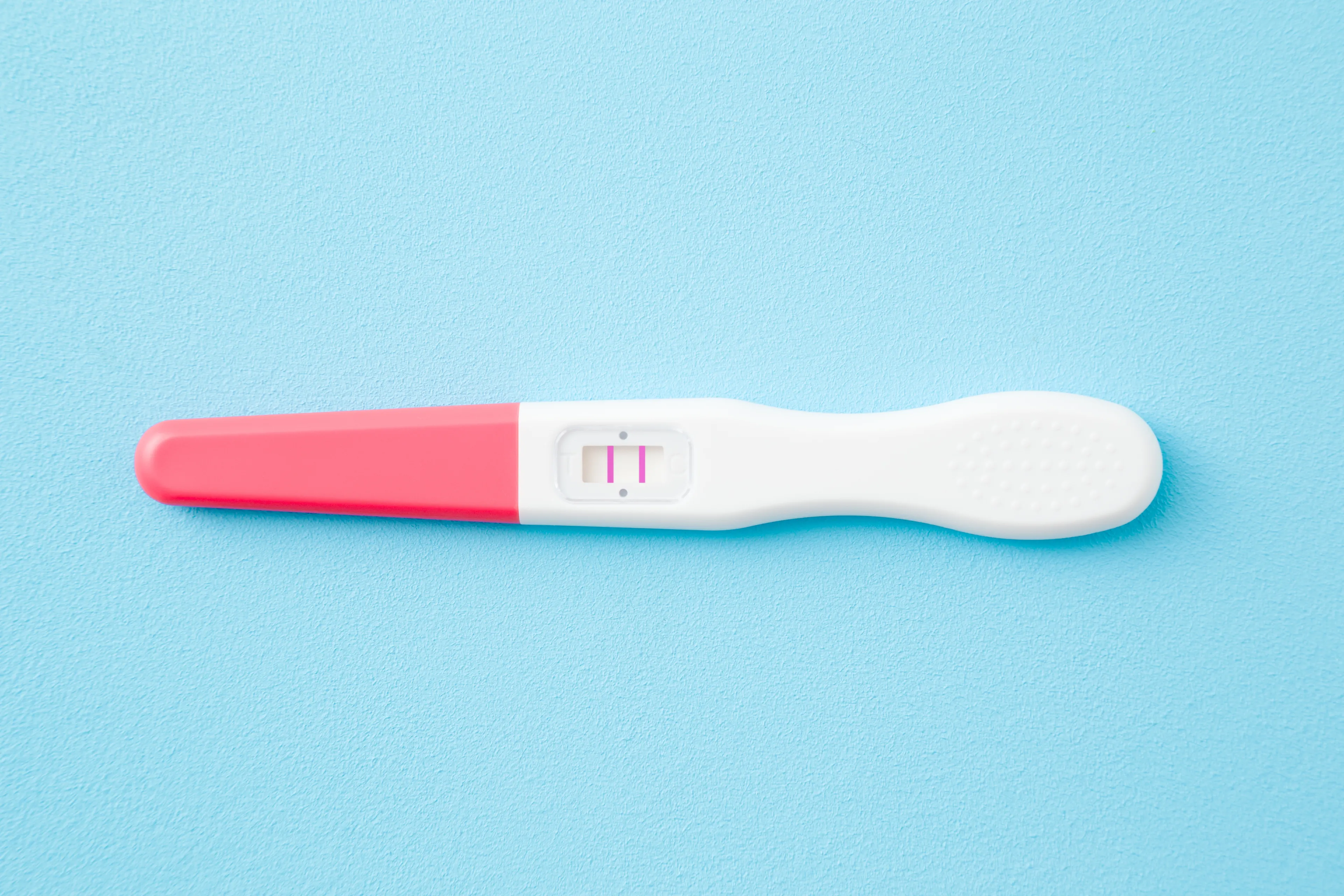
  • Two lines, including the test line (marked T), indicate a positive result regardless of how faint the second line appears. Any visible line counts.
  • No lines at all means the test is invalid. Discard it and use a new kit.
  • Digital tests display a word or symbol, so interpretation is straightforward.


What does a faint line mean?

A faint second line still indicates the presence of HCG and is generally a positive result. That said, an evaporation line can sometimes appear after the result window closes, usually around 10 minutes. Always read results within the time stated in the kit instructions. A line that appears after the window has passed should not be interpreted as a result.

Expired kits give unreliable readings. Check the expiry date before use and store kits at room temperature, away from direct sunlight and moisture.

Understanding HCG Levels During Pregnancy

HCG levels rise quickly in early pregnancy and then gradually fall after the first trimester. The table below gives approximate reference ranges. These are general figures and vary widely between individuals. A single HCG reading cannot confirm a healthy pregnancy on its own; what matters more is whether the level is rising appropriately over time.

Weeks Since Last Menstrual PeriodApproximate HCG Range (mIU/mL)
3 to 4 weeks5 to 50
4 to 5 weeks75 to 2,600
5 to 6 weeks850 to 20,800
6 to 7 weeks4,000 to 100,200
7 to 12 weeks11,500 to 289,000
Second trimester1,400 to 53,000
Third trimester    940 to 60,000

In early pregnancy, HCG roughly doubles every 48 to 72 hours. When a doctor orders serial beta-HCG tests, this doubling pattern is what they use to assess whether a pregnancy is progressing normally. A single number from the HCG levels chart above is less informative than the trend across two or three readings taken days apart.

False Positives, False Negatives, and When to Retest

A false negative pregnancy test is more common than a false positive, particularly when testing early or with diluted urine. Common reasons for a false negative include:

  • Testing too soon, before HCG has risen to detectable levels
  • Using urine that has been diluted by heavy fluid intake
  • Misreading the result or checking it outside the instruction time window
  • Using an expired or improperly stored kit
  • To improve home pregnancy test accuracy, always test with first morning urine, follow the kit instructions precisely, and test no earlier than your missed period if possible.

False positives are less frequent but do occur. They can result from a recent miscarriage (residual HCG in the body), certain fertility treatments that contain HCG, or, rarely, a medical condition such as a tumour that produces HCG.

If you get a negative result but your period still does not arrive, retest after 48 to 72 hours. A positive home result should always be confirmed with a blood test and an ultrasound through your doctor.

Contraindications and Precautions for Pregnancy Test Use

Home pregnancy tests are generally safe to use, but certain situations can affect accuracy and should be noted before testing.

  • Fertility medications containing hCG: Fertility medicines that contain hCG can cause a false-positive result on a urine pregnancy test kit, even when you are not pregnant.
  • Certain medical conditions: Some rare medical conditions, including certain tumours, can produce hCG and may lead to a positive result unrelated to pregnancy.
  • Kidney conditions: Kidney disease or conditions that affect urine production may alter the concentration of hCG in urine and potentially affect test results.
  • Very early testing: Testing too early, before implantation is complete and hCG has risen sufficiently, can result in a false-negative pregnancy test result regardless of the test's quality.
  • Need for confirmation: A home pregnancy test is a screening tool rather than a definitive diagnostic test. A positive, negative-but-unexpected, or unclear result should be followed up with appropriate clinical evaluation.

Report adverse events related to any medical device or test kit to your healthcare provider or the relevant regulatory authority.

When to Consult a Doctor After Testing

A positive home pregnancy test is an encouraging sign, but it is not a substitute for a clinical assessment. Book an appointment with your doctor to confirm the result through a blood test and an early ultrasound. This helps establish how far along the pregnancy is, rule out ectopic pregnancy, and begin appropriate prenatal care.

A negative result with ongoing symptoms such as a missed period, nausea, or breast tenderness also warrants a doctor's visit, especially if you tested earlier than recommended. Persistent symptoms with a negative home test may mean HCG is still rising and a repeat test or blood test is needed.

Once a pregnancy is confirmed, your doctor will guide you through the next steps, from prenatal vitamins to your first trimester schedule. If you deliver, you can find helpful newborn care tips after pregnancy to prepare for those first weeks at home.

Conclusion

A pregnancy test is a convenient first step for detecting pregnancy by identifying the hormone HCG in urine or blood. For the most reliable home result, testing from the first day of a missed period, preferably with first morning urine, can improve accuracy. A faint second line generally indicates a positive result when read within the recommended time window, while early testing can produce a false negative. Blood tests can measure HCG more precisely, but HCG levels should be interpreted based on their trend and clinical findings rather than a single value. If you receive an unexpected, unclear, or positive result, consult your healthcare provider for appropriate confirmation and follow-up.
FAQS

How early can a pregnancy test detect pregnancy?

Most sensitive urine pregnancy test kits can detect HCG from around the time of a missed period, which is roughly two weeks after conception. Some kits claim detection a few days earlier, but home pregnancy test accuracy is lower before the missed period, and a false negative pregnancy test is more likely at that stage.

Can I take a pregnancy test at night?

You can, but first morning urine gives the most concentrated HCG reading and the most reliable result. If you test at night after drinking fluids throughout the day, a diluted sample could produce a false negative even if you are pregnant.

Do pregnancy tests expire?

Yes. The antibodies used to detect HCG degrade over time, and an expired kit may give an inaccurate result. Always check the expiry date printed on the packaging before use.

What is the most accurate pregnancy test?

A quantitative blood beta-HCG test performed at a laboratory is the most accurate method, as it measures exact HCG levels and can detect pregnancy earlier than urine tests. Among home options, midstream and digital tests tend to reduce user error compared with strip tests, which improves practical home pregnancy test accuracy.

Can stress affect pregnancy test results?

Stress does not directly interfere with the HCG detection mechanism in a pregnancy test, so it cannot cause a false positive or false negative on its own. However, significant physical stress can occasionally disrupt the menstrual cycle, which may make it harder to know when to take a pregnancy test.

Apollo 247 Floating Action Button