logo
0

Pregnancy Test: How to Use, Read Results & hCG Levels

Learn how to use a pregnancy test, read positive or negative results, understand hCG levels, and know when to repeat testing or see a doctor.

article image

Dr. Vasantha Sree

Finding out whether you are pregnant is one of the most significant moments in a person's life, and a pregnancy test is often the first step toward that answer. Whether you are actively trying to conceive or have simply missed a period, understanding how these tests work, when to take them, and how to interpret the results can save you from unnecessary anxiety or costly mistakes.

What Is a Pregnancy Test and How Does It Work?

A pregnancy test detects a hormone called human chorionic gonadotropin, commonly known as hCG. Your body starts producing hCG shortly after a fertilised egg implants in the uterine wall, usually around six to twelve days after conception. Levels rise rapidly in early pregnancy, roughly doubling every 48 to 72 hours during the first trimester.

Two main testing approaches detect this hormone:

  • Urine-based tests: These tests detect hCG excreted through the kidneys. They are available over the counter and can be performed at home.
  • HCG Blood tests: These tests measure hCG directly from a blood sample collected at a clinic or laboratory and can detect lower concentrations of the hormone than urine tests.

Types of Pregnancy Test Kits

Urine Pregnancy Test Kits

Most home pregnancy test kits fall into three formats:

  • Strip tests are thin paper-like strips dipped into a urine sample collected in a cup.
  • They are the most economical option and widely available at pharmacies.
  • Midstream tests have an absorbent tip you hold directly in the urine stream, which many people find more convenient and less prone to handling errors.
  • Digital tests display a word result such as "Pregnant" or "Not Pregnant", removing any guesswork about interpreting lines or symbols.

All three work on the same antibody-based detection principle. A dye-tagged antibody in the test strip binds to hCG in your urine and produces a visible signal.

Blood Test for Pregnancy

A blood test for pregnancy, specifically a serum beta-hCG test, is ordered at a diagnostic laboratory on a doctor's prescription. There are two types:

  • Qualitative beta-hCG: Confirms whether hCG is present, giving a positive or negative result.
  • Quantitative beta-hCG: Measures the exact hCG concentration in mIU/mL, which can help monitor pregnancy progression or investigate concerns such as ectopic pregnancy.

Blood tests can detect pregnancy earlier than urine kits, sometimes as early as six to eight days after ovulation.

Best Time to Take a Pregnancy Test
 

The best time to take a pregnancy test is the day after your missed period or later. Testing too early is the most common reason for a false-negative result. Even if implantation has occurred, hCG levels may still be too low for a home kit to detect before your period is due.

A few practical points:

  • Use your first morning urine when possible. Urine is most concentrated after a night's sleep, which means hCG is at its highest detectable level in that sample.
  • If you test before a missed period and get a negative result, wait two to three days and test again if your period does not arrive.
    Irregular cycles make timing harder. If your cycle length varies significantly, testing at
  • least 14 days after the unprotected sex or ovulation you are tracking is a reasonable starting point.
  • Urine pregnancy test accuracy is highest when the test is taken at least one day after a missed period and the instructions are followed carefully.

How to Read Pregnancy Test Results

Line-Based Tests

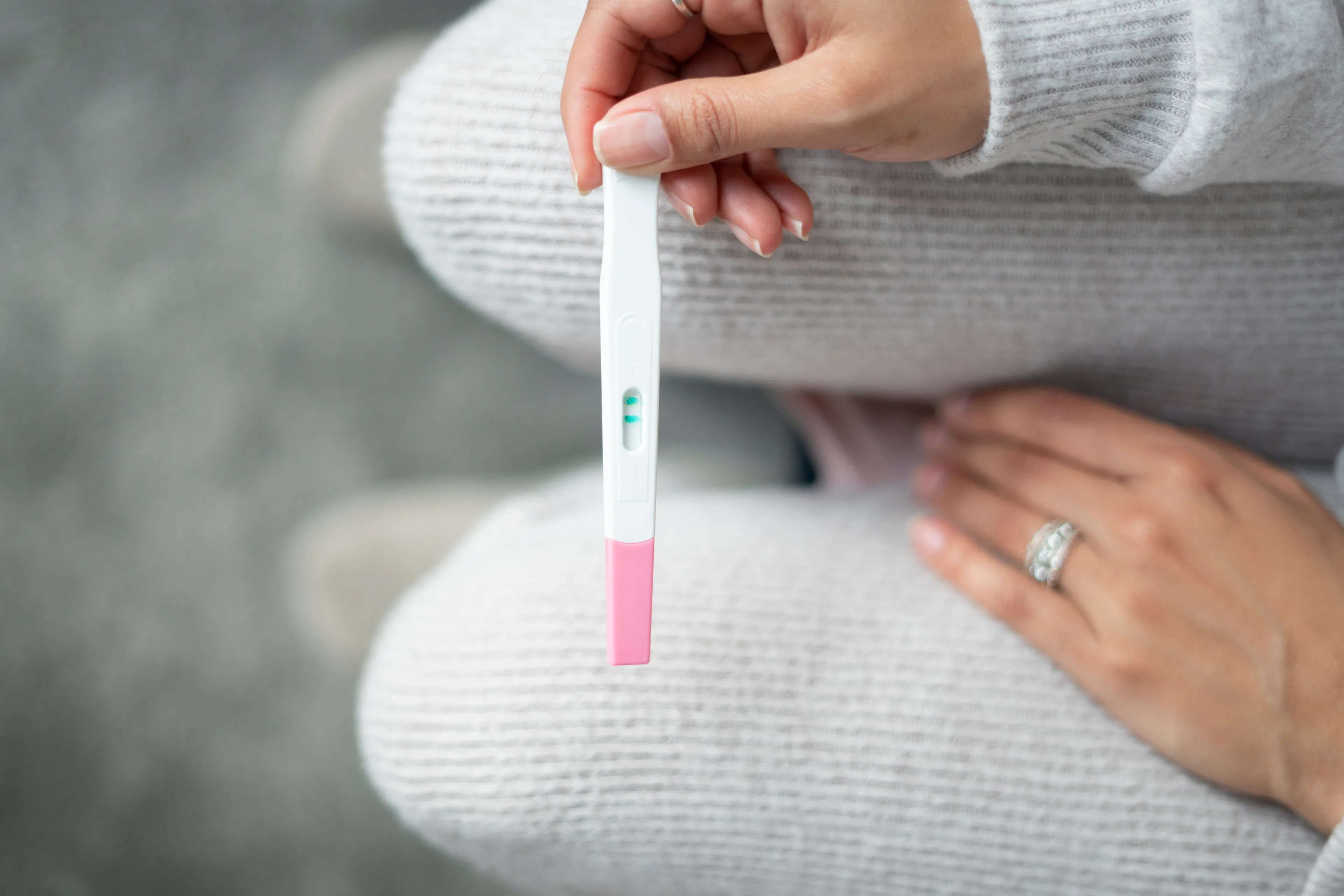
  • Most strip and midstream tests show results in a small window with two possible lines:
  • The control line (marked C) confirms the test has worked correctly. This line should always appear.
  • The test line (marked T) appears when hCG is detected.

How to read pregnancy test results from a line-based kit:

  • Two lines, even if one is faint, generally indicates a positive result.
  • One line (control only) means the test is negative.
  • No lines, or a line only at the T position without a control line, means the test is invalid. Repeat with a fresh kit.

Evaporation Lines

An evaporation line is a faint, colourless or greyish mark that can appear in the test window after the reading window has closed, usually beyond 10 minutes. These are not positive results. Always read your test within the time specified in the instructions, typically three to five minutes.

Digital Tests

Digital readouts eliminate line interpretation entirely. The display shows a clear text result. Some models also display weeks-pregnant estimates based on hCG concentration ranges, though these are approximations only.

Understanding hCG Levels by Week

For those who have had a blood test, the table below gives approximate hCG ranges by gestational week, counted from the first day of the last menstrual period. Individual variation is entirely normal, and a single value means less than the trend over serial measurements.

Gestational WeekApproximate hCG Range (mIU/mL)
3 to 4 weeks9 to 130
4 to 5 weeks75 to 2,600
5 to 6 weeks850 to 20,800
6 to 7 weeks4,000 to 100,200
7 to 8 weeks11,500 to 289,000
8 to 16 weeks7,650 to 229,000

If your hCG levels are not rising as expected, or if they fall, your doctor will investigate further. Levels that plateau or drop early may point to a non-viable pregnancy or, in some cases, an ectopic pregnancy.

Contraindications and Limitations of Home Testing

Home pregnancy tests are generally safe to use, but several conditions can lead to inaccurate results.

Who Should Be Cautious?

Certain situations can interfere with pregnancy test accuracy or cause unexpected results.

  • Fertility treatment: Women undergoing fertility treatment involving hCG trigger injections may test positive even when not pregnant because injected hCG can remain in the body for several days after administration.
  • Recent pregnancy loss: A recent miscarriage or termination of pregnancy can leave residual hCG in the body, producing a positive result for days to weeks afterward.
  • Dilute urine: Drinking large amounts of fluid before testing can dilute urine and reduce hCG concentration enough to cause a false-negative result. This is why first-morning urine is generally preferred.
  • Certain medical conditions: Rare conditions, including some ovarian tumours, can elevate hCG even when pregnancy is not present.
  • Test-kit issues: Expired or improperly stored pregnancy test kits may produce unreliable results. Check the expiry date and store kits at room temperature, away from moisture and direct sunlight.

Ectopic Pregnancy

A home pregnancy test may show a positive result in an ectopic pregnancy, where the embryo implants outside the uterus, usually in a fallopian tube. If you have a positive test along with lower abdominal pain on one side, shoulder tip pain, or unusual bleeding, seek medical attention immediately. This is a medical emergency.

Report adverse events to your healthcare provider or the relevant regulatory authority.

When to Consult a Doctor?

A positive home pregnancy test should always be confirmed with a doctor. Your doctor will typically arrange a blood test for pregnancy, a quantitative beta-hCG, along with an early ultrasound to confirm the location of the pregnancy and estimate gestational age.

A negative result that does not match your symptoms, or a period that does not arrive within a week of a negative test, also warrants a consultation. Some women have very low hCG levels early on, and a single home test may miss a pregnancy that a blood test would catch.

Your doctor will also discuss newborn care after delivery and other aspects of antenatal care once your pregnancy is confirmed.

Conclusion

Using a pregnancy test correctly and understanding how to read the result can help you identify pregnancy early and avoid unnecessary confusion. A positive result generally indicates that hCG has been detected, while a negative result may require repeat testing if the test was taken too early. For greater certainty, especially when results are unclear, your doctor may recommend a quantitative beta-hCG blood test and, when appropriate, an ultrasound. If you have a positive result with significant pain, heavy bleeding, dizziness, or fainting, seek medical care promptly.
FAQS

How accurate are home pregnancy tests?

Most home pregnancy test kits claim over 99% accuracy when used from the day of a missed period and instructions are followed correctly. Accuracy drops when tests are taken too early or with dilute urine.

Can a pregnancy test be wrong?

Yes. False negatives happen when testing too early or with very dilute urine. False positives are less common but can occur with certain fertility medications, recent pregnancy loss, or rare medical conditions that elevate hCG.

How soon can I take a pregnancy test after unprotected sex?

Most home kits are reliable only from the day of a missed period, roughly 14 days after conception. Testing earlier often gives a false negative because hCG has not yet reached detectable levels in urine.

Do I need to test with morning urine only?

Morning urine gives the most reliable result because it is most concentrated, but you can test at other times of day if you have not drunk large amounts of fluid in the preceding two to three hours.

What does a faint line on a pregnancy test mean?

A faint test line still indicates the presence of hCG and is generally considered a positive result. It may mean hCG levels are low because you are testing very early. Retest in two to three days to confirm, as the line should darken as hCG rises.

Apollo 247 Floating Action Button