logo
0

Pregnancy Test Kit: Home Tests, Blood Tests & hCG Guide

Learn how a pregnancy test kit works, when to test, hCG hormone levels, home vs blood pregnancy tests, accuracy, and what positive or negative results mean.

article image

Dr.Bhanu Prakash

Finding out whether you are pregnant is one of the most significant moments in a person's life, and choosing the right pregnancy test kit or blood test can make that moment clearer and less stressful. Modern pregnancy tests are reliable, accessible, and easy to use at home, but knowing how they work, what the results mean, and when to seek medical confirmation helps you act quickly and confidently.

What Is a Pregnancy Test Kit and How Does It Work?

A pregnancy test kit detects a hormone called human chorionic gonadotropin, or hCG, in your urine. The body starts producing hCG shortly after a fertilised egg implants in the uterine lining, usually around six to twelve days after conception. Levels rise rapidly in the first weeks of pregnancy.

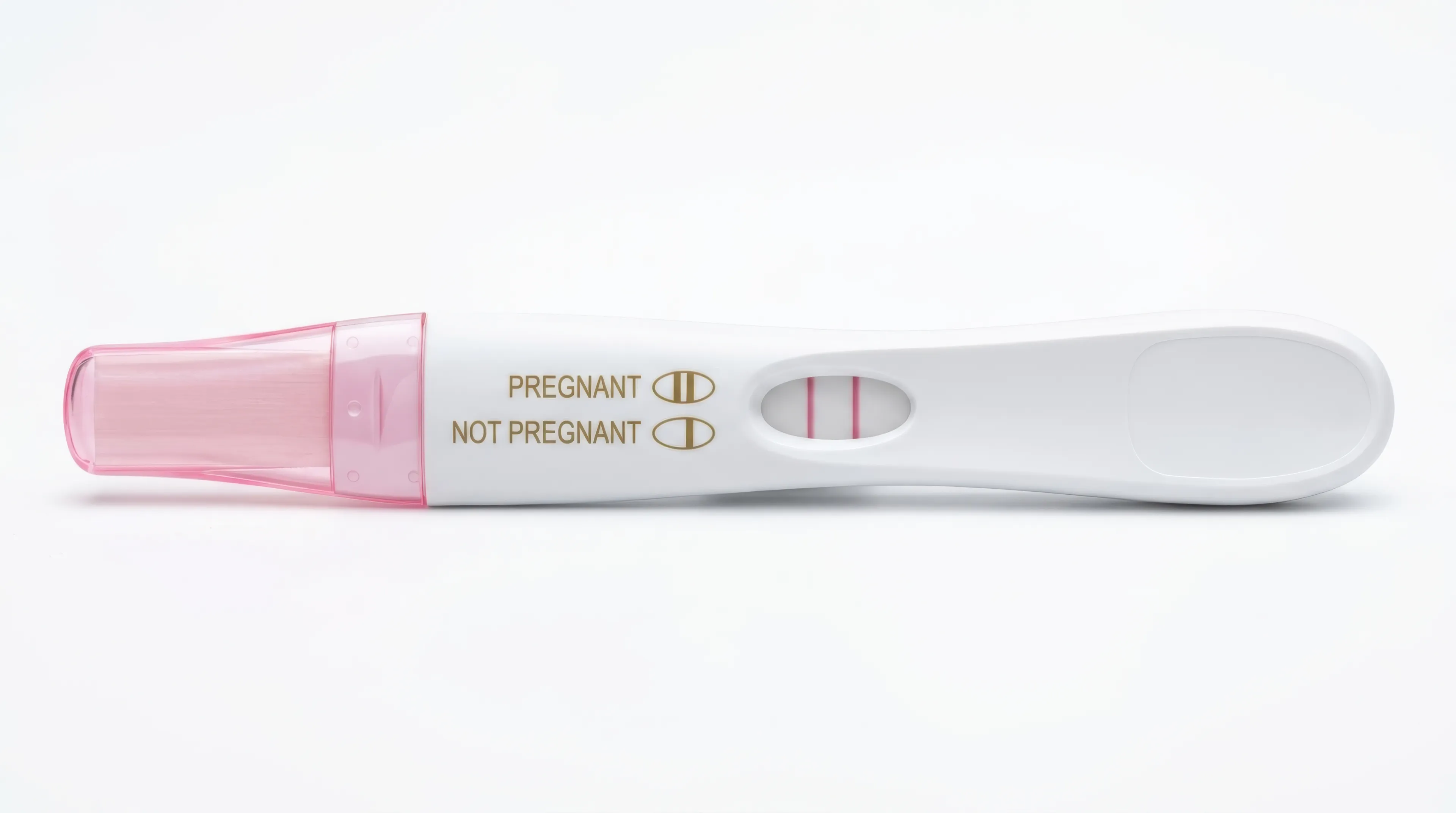
The kit contains an absorbent strip coated with antibodies that bind to hCG. When urine moves across the strip, those antibodies react if hCG is present, producing a visible line, symbol, or "Pregnant" message depending on the kit design. No hCG means no reaction, giving you a negative result.

Types of Pregnancy Tests: Home Kits vs Blood Tests

There are two main ways to test for pregnancy, each with its own strengths.

Home pregnancy tests (urine-based)

  • Strip tests: The most affordable option, sold widely at pharmacies without a prescription.
  • Midstream and cassette kits: Slightly easier to use and read than strip tests.
  • Digital kits: Display words rather than lines, removing the guesswork of interpreting faint marks.
  • Sensitivity: All urine kits detect hCG above a minimum threshold, but sensitivity varies by brand. Check the product insert for the specific mIU/mL value.

Blood tests (done at a clinic or laboratory)

There are two types of hCG blood tests:

  • Qualitative hCG blood test: Confirms whether hCG is present, similar in principle to a home kit but more sensitive.
  • Quantitative beta hCG test: Measures the exact amount of hCG in your blood in mIU/mL. This is the preferred test when a doctor needs to track how a pregnancy is progressing, rule out an ectopic pregnancy, or investigate a possible miscarriage.

Blood tests can detect hCG at lower concentrations than most home urine kits and can therefore confirm pregnancy earlier. Your doctor will advise which type of blood test is appropriate based on your clinical situation.

Understanding hCG Hormone Levels

hCG levels vary widely between individuals, so a single number is rarely the whole story. What matters more is the trend over time. In a healthy early pregnancy, levels generally double every 48 to 72 hours during the first trimester.

The table below shows approximate hCG ranges by week of pregnancy, measured from the last menstrual period (LMP). These are general reference ranges only; your laboratory will provide its own reference intervals, which may differ.

Levels peak around 8 to 11 weeks and then gradually decline for the rest of the pregnancy. A single low result is not automatically a cause for alarm. Your doctor will usually request a repeat beta hCG test 48 hours later to assess whether levels are rising as expected.

How to Use a Home Pregnancy Test Kit Correctly

Getting the technique right makes a real difference to accuracy.

The best time to take a home pregnancy test is with your first morning urine, because hCG is most concentrated then, especially if you are testing early. If you test later in the day, avoid drinking large amounts of fluid beforehand, as dilute urine can mask low hCG levels.

Step-by-step instructions:

  1. Check the expiry date on the kit before opening it.
  2. Remove the strip or device and set the cap aside.
  3. Hold the absorbent tip in your urine stream for the time stated in the instructions, or dip it into a clean container of urine.
  4. Lay the test flat on a clean, dry surface.
  5. Read the result within the window printed in the instructions, commonly 3 to 5 minutes. Do not interpret the result after 10 minutes, as evaporation lines can appear and be mistaken for a positive.

Common errors to avoid:

  • Testing too early: hCG may not yet be detectable before your period is due.
  • Using old urine: Urine stored in a container for too long can affect results.
  • Poor storage: Storing kits in a humid bathroom cabinet or anywhere with high heat can reduce accuracy.
  • Misreading faint lines: Repeat the test a day or two later if the result is unclear.

Accuracy, False Positives and False Negatives

Most home pregnancy tests claim high accuracy when used on or after the day of a missed period. Early pregnancy test accuracy drops the further before your missed period you test, because hCG levels may not yet be high enough for the kit to detect.

False negatives (a negative result when you are actually pregnant) can happen when:

  • Testing too early: hCG has not yet reached the kit's detection threshold.
  • Dilute urine: High fluid intake lowers hCG concentration.
  • Expired or damaged kit: Incorrect storage or expiry can affect accuracy.

False positives (a positive result when you are not pregnant) are less common but can occur with:

  • Chemical pregnancy: Implantation begins but ends very early.
  • Fertility medications: Some treatments contain hCG.
  • Rare medical conditions: Certain tumours can produce hCG.

Recent miscarriage or termination: hCG can remain in the body for several weeks.

If your result is unexpected or confusing, a beta hCG test at a clinic will give you a more definitive answer.

Contraindications and When to Avoid Self-Testing

While a home pregnancy test is safe for most people to use, some situations call for medical testing rather than a home kit alone.

Seek clinical confirmation rather than relying solely on a home kit if you:

  • Have recently had fertility treatment involving hCG injections: Residual hormone can produce a false positive.
  • Have been diagnosed with gestational trophoblastic disease or another condition that elevates hCG: A blood test is more appropriate.
  • Have severe pelvic pain or heavy bleeding with a positive result: This may suggest an ectopic pregnancy and requires urgent assessment.
  • Have had a recent pregnancy loss: hCG levels may not yet have returned to baseline.
  • Take medications that your healthcare provider says may interfere with hCG-based tests: Medical confirmation is recommended.

Report any unexpected symptoms or reactions associated with a testing product to your healthcare provider or the relevant regulatory authority. 

What to Do After a Positive or Negative Result

A positive result on a home pregnancy test is a strong signal, but it is not a substitute for clinical confirmation. Book an appointment with your doctor or an obstetrician as soon as possible. They will confirm the pregnancy with a blood test or ultrasound, estimate your gestational age, discuss prenatal vitamins, and help you plan the first steps of antenatal care.

A negative result with no period after a few days is worth following up. Repeat the home pregnancy test two to three days later using first morning urine. If your period still does not arrive or your symptoms persist, see a doctor who can order a beta hCG blood test to rule out a very early pregnancy or another underlying cause.

Conclusion

A pregnancy test kit is a convenient and reliable way to check for pregnancy when used correctly and at the right time, typically from the first day of a missed period. Understanding how hCG levels work, following the test instructions carefully, and repeating the test if needed can help improve accuracy. Whether your result is positive, negative, or unclear, consult a healthcare professional for confirmation and guidance, especially if your period does not arrive, you have persistent symptoms, or you experience severe pain or heavy bleeding.

FAQS

How soon can a pregnancy test detect pregnancy?

Most home kits can detect pregnancy from the first day of a missed period. Testing a few days before your expected period is possible with some sensitive kits, but accuracy is lower the earlier you test.

Can I trust a home pregnancy test over a blood test?

A home pregnancy test is reliable when used correctly after a missed period, but a quantitative beta hCG blood test is more sensitive and provides exact hormone levels. For clinical decisions, a blood test is the gold standard.

Why is my hCG level low but I am pregnant?

Low hCG can simply mean the pregnancy is very early and levels have not yet risen fully. Your doctor will repeat the test in 48 hours to check whether levels are doubling appropriately, which is more informative than a single reading.

How accurate are pregnancy test kits?

When used correctly on or after the day of a missed period, most kits are highly accurate. Testing too early, using dilute urine, or using an expired kit are the most common reasons for an inaccurate result.

Do I need to see a doctor after a positive home test?

Yes. A doctor can confirm the pregnancy, assess your health needs, estimate how far along you are, and start you on antenatal care, including prenatal supplements and screening tests.

Apollo 247 Floating Action Button