logo
0

Pregnancy Test Kit Positive: Guide to Testing & Results

Learn what a positive pregnancy test kit result means, when to test, how to read results, causes of false positives or negatives, and what to do next.

article image

Dr. Nallapu Siri

Finding out whether you are pregnant is one of the most significant moments in a person's life. A pregnancy test kit positive result can bring joy, relief, or even surprise, and understanding exactly what it means, how to get an accurate reading, and what to do next can make the experience far less stressful. This guide walks you through the types of home pregnancy test kits available in India, how to use them correctly, when to take a pregnancy test, how to interpret the results, what can cause false-positive or false-negative results, and what steps to take after receiving a positive result.

Types of Pregnancy Test Kits

Home pregnancy tests work by detecting human chorionic gonadotropin (hCG), a hormone produced after a fertilised egg implants in the uterine lining. The three common formats differ mainly in how you collect the sample and read the result.

Urine strip tests are thin, absorbent strips you dip into a container of collected urine. They are widely available, affordable, and accurate when used correctly.Pregnancy tests have different detection thresholds depending on the brand and test design, so sensitivity should be checked in the manufacturer's instructions rather than assumed to be the same for every kit.

Cassette tests use a small plastic housing with a sample well. You draw a few drops of urine into the well using a dropper, and results appear as lines in the result window. Cassette kits tend to be slightly easier to handle than bare strips.

Midstream or digital tests are held directly in the urine stream. Digital versions display a clear "Pregnant / Not Pregnant" message, removing any ambiguity around faint lines. Some early pregnancy test kit options in this format can detect hCG at lower thresholds, making them useful a day or two before a missed period, though accuracy is lower at that stage.

For most women, a standard strip or cassette kit is reliable and cost-effective. Digital formats are useful if you find interpreting lines stressful.

How to Use a Home Pregnancy Test Kit

Getting the steps right is what separates an accurate result from a misleading one. Most errors happen during sample collection or when reading the result outside the recommended time window.

Before you begin, read the leaflet that came with your specific kit, because timing instructions vary by brand. Use a clean, dry container if your kit requires dipping, and wash your hands before and after the test.

Step-by-step for a urine strip or cassette test:

  • Collect midstream urine in a clean container. Midstream means letting a small amount flow first, then collecting.
  • Dip the strip to the marked line (not beyond it) for the number of seconds stated in the instructions, usually 5 to 10 seconds.
  • Lay the strip flat on a clean, dry surface and wait. Follow the manufacturer's instructions for when to read the result, as the recommended reading window varies between test kits.
  • Read within the result window. Do not interpret a result that appears outside the manufacturer's stated reading window. Changes that develop after the recommended time may not represent a valid test result.

Common errors to avoid:

  • Testing with diluted afternoon or evening urine, when hCG concentration is lower.
  • Reading the result too early or too late.
  • Dipping the strip past the maximum line marker.
  • Using a test past its expiry date.

If you are unsure about a result, testing again the following morning with a fresh kit is a reasonable first step.

When Is the Best Time to Take a Pregnancy Test

Timing is the single biggest factor in urine pregnancy test accuracy.For the most reliable result, most people should take a home pregnancy test from the first day of a missed period or later, following the instructions provided with the specific test. By this stage, hCG is often detectable in urine, although the timing of ovulation and implantation varies, so a negative result does not always exclude pregnancy.

First-morning urine gives the most concentrated sample of the day. Testing right after waking up is especially important if you are testing early, because diluted urine later in the day can push hCG below the kit's detection threshold and produce a false negative.

Testing before a missed period is possible with an early pregnancy test kit, but hCG levels vary widely in early implantation. A negative result at that stage does not rule out pregnancy. If the result is negative but your period still has not started, repeat the test after several days or speak with a healthcare professional, particularly if you continue to have pregnancy symptoms.

If your cycles are irregular or you are unsure when your period was due, follow the test manufacturer's guidance or speak with a healthcare professional about when to test. Testing too soon after conception can result in a false negative.

What Does a Positive Pregnancy Test Result Mean

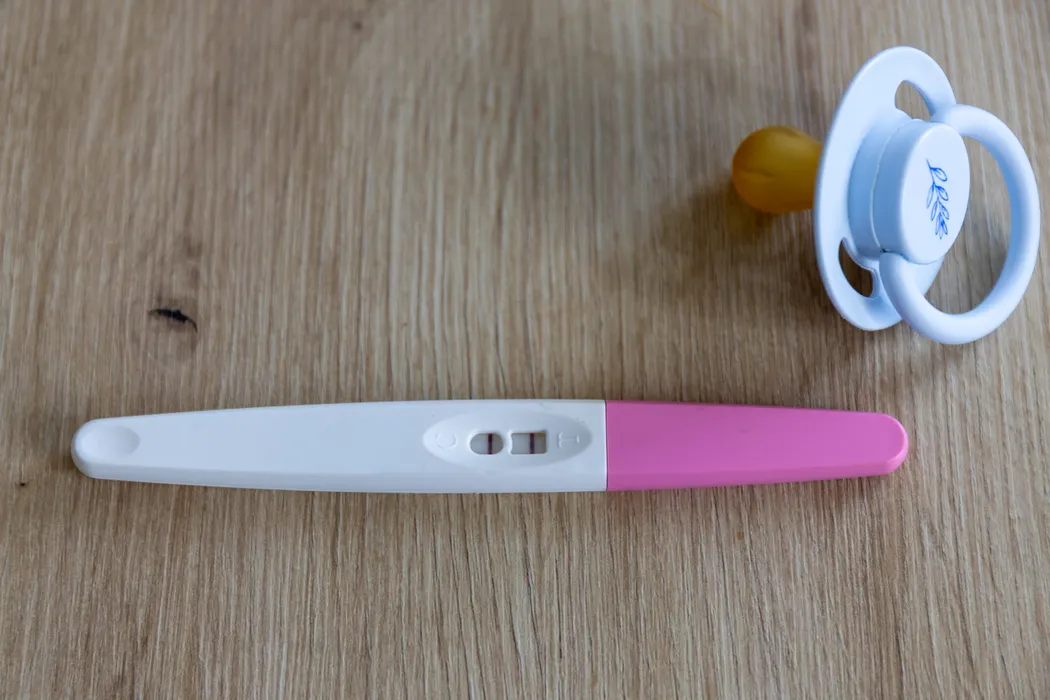
A pregnancy test kit positive result means the test has detected hCG in your urine. If a second coloured line appears within the manufacturer's specified reading window, it generally indicates a positive result, even if the line is faint. Always interpret the result according to the instructions for your particular test. The intensity of the line reflects hormone concentration at the time of testing, not the health of the pregnancy.

After a positive home pregnancy test, contact a healthcare professional to discuss the next steps. A blood test or ultrasound may be recommended depending on your circumstances, symptoms, medical history, and how far along the pregnancy may be. Blood tests can measure the amount of hCG in the blood and may be useful in specific clinical situations. Your healthcare professional can determine whether blood testing or an ultrasound is appropriate.

A positive result can, in rare cases, not indicate a normal intrauterine pregnancy. Chemical pregnancies (very early losses), ectopic pregnancies, and certain medical conditions can all produce positive readings. This is why professional confirmation matters, and why you should contact a healthcare professional for appropriate evaluation, particularly if you have pain, bleeding, dizziness, or other concerning symptoms.

Once confirmed, your doctor will advise on prenatal supplements, early scans, and care through the first trimester. As you look further ahead, you may find it helpful to read about next steps after pregnancy: newborn care basics for later in the journey.

Contraindications and Limitations of Home Pregnancy Tests

Understanding what can affect your result protects you from unnecessary anxiety or false reassurance.

Conditions and medicines that may cause a false positive:

  • Fertility medicines that contain hCG can cause a false-positive pregnancy test because the medication itself can be detected by the test. How long this effect lasts depends on the medicine and dose, so follow your fertility specialist's advice about when to test.
  • Certain rare conditions, including some ovarian cysts and tumours that secrete hCG, can trigger a positive result in the absence of pregnancy.
  • After a pregnancy loss or termination, hCG can remain detectable for some time and gradually decline. The time required for the test to become negative varies between individuals, so persistent positive results should be discussed with a healthcare professional.
  • Most medicines do not affect the accuracy of home pregnancy tests. However, medicines containing hCG, particularly some fertility treatments, can cause a false-positive result. If you are unsure whether a medicine could affect your test, ask your doctor or pharmacist. Always tell your doctor every medicine you are taking when discussing your test outcome.

Factors that increase false-negative risk:

  • Testing too early, before hCG has risen to a detectable level.
  • Using diluted urine or a kit that is expired or stored incorrectly.

Evaporation lines are a specific source of confusion. These colourless or grey marks appear after the result window closes and are not a positive result. A true positive line appears within the window and usually has colour.

Device safety note: Home pregnancy test kits are single-use diagnostic devices. If you suspect a defective kit caused a misleading result, or if you experience any unexpected reaction related to kit use, report adverse events to your healthcare provider or the relevant regulatory authority (in India, the Central Drugs Standard Control Organisation, CDSCO).

Conclusion

A positive pregnancy test kit result is usually a strong indication of pregnancy when the test is used correctly and the result is read within the recommended time window. Testing from the first day of a missed period can improve reliability, while testing too early or using diluted urine can increase the chance of a false-negative result. If you receive a positive result, arrange follow-up with a qualified healthcare professional to discuss the next steps and appropriate prenatal care. Seek urgent medical attention if a positive test is accompanied by severe abdominal or pelvic pain, heavy bleeding, fainting, or severe dizziness, as these symptoms may require prompt evaluation.

FAQS

How accurate are home pregnancy test kits?

The accuracy of a home pregnancy test depends on the specific product, when you test, how the test is used, and whether the result is read within the recommended time window. Many pregnancy tests advertise very high accuracy when used from the day of an expected period, but performance can be lower when testing earlier.

Can I take a pregnancy test at night?

You can take a pregnancy test at night, but first-morning urine may be preferable when testing early because it is usually more concentrated. Follow the instructions for your particular test. If your urine is diluted, particularly early in pregnancy when hCG levels may still be low, a urine test may be more likely to give a false-negative result.

How soon after a missed period should I test?

Testing on the first day of a missed period is reliable for most kits. Waiting two to three days after a missed period gives an even more dependable result, particularly if your cycles are irregular or you tested very early and got a negative.

What should I do after getting a positive result?

If you get a positive home pregnancy test, arrange an appointment with a healthcare professional to discuss your pregnancy and next steps. Depending on your medical history, symptoms, and stage of pregnancy, your clinician may recommend blood testing, an ultrasound, or other follow-up. They can also advise you about folic acid and prenatal care.

Can medications affect pregnancy test results?

Most medicines do not affect home pregnancy test results. However, fertility medicines that contain hCG can cause a false-positive result. If you take regular medicines or fertility treatment and are unsure whether they could affect your result, speak with your doctor or pharmacist.Always inform your doctor of all medicines you are taking so they can interpret your pregnancy test positive result accurately.

Apollo 247 Floating Action Button