logo
0

Pregnancy Test Kit: Types, HCG Levels & Accurate Results

Pregnancy Test Kit: Types, HCG Levels & Accurate Results\ URL: /pregnancy-test-kit-types-hcg-levels-results\ Meta Description: Learn about pregnancy test kit types, HCG levels, the best time to test, how to read results, and tips for getting accurate pregnancy test results.

article image

Dr. Bhanu Prakash

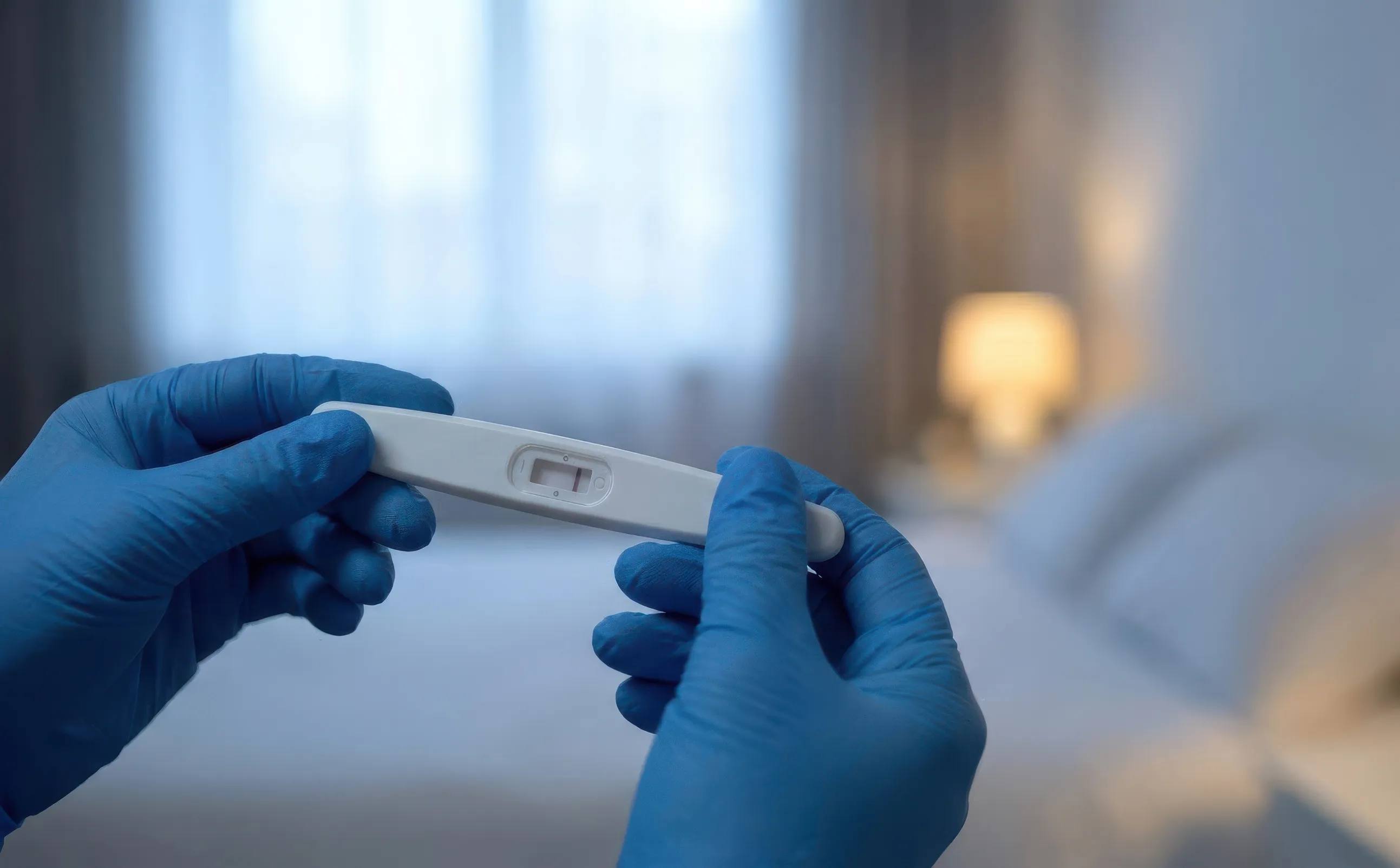
Finding out whether you are pregnant is one of the most emotionally significant moments in a person's life, and a pregnancy test kit is usually the first step. These kits detect a hormone your body produces only during pregnancy, and understanding how they work, which type to choose, and when to test can mean the difference between a reliable result and a confusing one.

How a Pregnancy Test Kit Works

Every pregnancy test kit detects human chorionic gonadotropin, commonly called HCG. This hormone is produced by the cells that eventually form the placenta, and it enters your bloodstream and urine shortly after a fertilised egg implants in the uterus, typically six to twelve days after conception.

In a urine-based test, an antibody strip reacts to HCG in the sample. If HCG is present above the kit's detection threshold, a visible line, symbol, or word appears on the test window. Below that threshold, the result reads negative even if you are pregnant, which is why timing is so important.

Types of Pregnancy Test Kits: Urine vs Digital vs Strip


Home pregnancy test kits are available in several formats, each offering different levels of convenience, sensitivity, and ease of result interpretation. The main types include:

  • Strip tests: These are thin, paper-like strips that you place into a collected urine sample. They are generally affordable and widely available at pharmacies. Many strips detect HCG at around 20–25 mIU/mL, making them suitable for testing around the time of a missed period.
  • Midstream or cassette tests: These are more convenient to use because you can hold some midstream tests directly in the urine stream, while cassette tests are used with a collected urine sample. They typically have clearer result windows and may be easier to handle than simple strips.
  • Digital tests: These tests display results such as "Pregnant" or "Not Pregnant" in words, reducing uncertainty when interpreting faint lines. Some digital kits also provide an estimate of the number of weeks since conception. They generally cost more, and some may have higher HCG detection thresholds, which can make them less suitable for very early testing.
Kit TypeEase of UseSensitivity    Approximate Cost
Approximate CostStripModerate20 to 25 mIU/mL    Low
Midstream/CassetteEasy20 to 25 mIU/mL    Moderate
DigitalEasiest25 to 50 mIU/mLHigher

For most people, a good-quality strip or midstream kit used on the first day of a missed period provides an accurate enough initial answer. Urine pregnancy test accuracy is highest when you test at the right time and follow the instructions carefully.

Blood Test for Pregnancy: Quantitative vs Qualitative HCG

A doctor may recommend an HCG blood test when a home pregnancy test gives an unclear result, pregnancy symptoms occur despite a negative urine test, or closer monitoring is needed during early pregnancy. The two main types are:

  • Qualitative HCG blood test: This test checks whether HCG is present in the blood and provides a positive or negative result. It can detect pregnancy earlier than many home urine tests, sometimes around 8–10 days after conception.
  • Quantitative beta-HCG test: This test measures the exact amount of HCG in the blood, reported in mIU/mL. Doctors may use repeated measurements to assess changes in
  • HCG during early pregnancy. HCG often rises rapidly during early pregnancy, but the pattern can vary, so results should be interpreted by a healthcare professional.
  • Blood tests are generally more sensitive than home urine pregnancy tests and can provide more detailed information. However, an HCG blood test alone does not determine whether a pregnancy is developing normally; your doctor may also consider symptoms, repeat HCG measurements, and ultrasound findings.

HCG Hormone Levels by Week of Pregnancy

HCG rises rapidly in the first trimester and then gradually falls after about 10 to 12 weeks. The table below shows approximate beta HCG levels by week; there is wide normal variation, and a single reading means less than the trend over time.

Gestational Week Approximate HCG Range (mIU/mL)
3 to 4 weeks5 to 426
4 to 5 weeks18 to 7,340
5 to 6 weeks1,080 to 56,500
6 to 7 weeks7,650 to 229,000
7 to 12 weeks25,700 to 288,000
12 to 16 weeks13,300 to 254,000
16 to 29 weeks4,060 to 165,400
29 to 41 weeks3,640 to 117,000

These figures are approximate reference ranges. Your doctor will interpret your individual results in the context of your symptoms, ultrasound findings, and overall clinical history, not just a single number.

How to Use a Pregnancy Test Kit for Accurate Results

Getting a reliable reading depends mostly on timing and technique.

The best time to take a pregnancy test is with your first morning urine. Overnight, HCG concentrates in the bladder, so first-void urine gives the strongest signal. Testing later in the day after drinking a lot of fluids can dilute the sample and produce a false negative. Choosing the best time to take a pregnancy test, meaning the first morning void on or after your expected period date, is the single most effective way to improve accuracy.

Test on or after the first day of your missed period. If you use an early pregnancy test kit that detects HCG as low as 10 mIU/mL, you may get a result a few days sooner, but the risk of a false negative rises the earlier you test.

Steps for accurate use:

  • Check the expiry date on the packaging before opening.
  • Read the instructions for your specific kit, as timing and technique vary between brands.
  • Collect urine in a clean, dry container, or hold a midstream stick in the flow for the recommended number of seconds.
  • Lay the test flat and read the result within the time window stated, usually 3 to 5 minutes. Do not read after 10 minutes, as evaporation lines can appear and look like a faint positive.
  • A second control line confirms the test worked. If no control line appears, the kit is invalid and you need to retest with a new kit.

Causes of False Positive or False Negative Results

A pregnancy test can occasionally give a misleading result.

False negatives (pregnant but test says no) are more common and usually happen when:

  • You tested too early, before HCG reached detectable levels.
  • The urine was too dilute because you had been drinking a lot of fluids.
  • The kit had passed its expiry date.
  • The instructions were not followed correctly, particularly around timing.
  • False positives (not pregnant but test says yes) are rare but can occur with:

A very early pregnancy loss, sometimes called a chemical pregnancy, where HCG was briefly present before the pregnancy ended.
Fertility medications that contain HCG, which can persist in the body and trigger a positive result.
Certain rare medical conditions that cause HCG to be produced outside of pregnancy.
An ectopic pregnancy, where the embryo implants outside the uterus, can also produce a positive home pregnancy test kit result alongside one-sided pain or spotting.

When to Consult a Doctor?

A positive result on a home pregnancy test kit should always be confirmed by a doctor, ideally with a blood HCG test and an early ultrasound. Your doctor can calculate your due date, check that HCG levels are rising as expected, and screen for complications.

Seek care urgently if you have a positive result alongside severe one-sided pelvic pain, heavy bleeding, or shoulder-tip pain. These can be signs of an ectopic pregnancy, which is a medical emergency.

Once your pregnancy is confirmed and you are preparing for what comes next, it helps to read up on newborn care tips after pregnancy confirmation so you feel ready well in advance.

Report any adverse events related to test kit use or unexpected symptoms to your healthcare provider or the relevant regulatory authority.

Contraindications and Precautions

A home pregnancy test kit is a screening tool, not a diagnostic device. There are situations where you should not rely on it alone.

  • Fertility treatment with HCG: Women receiving fertility treatment containing HCG should avoid testing too soon after an injection, as residual HCG can cause a false-positive result. Ask your reproductive specialist when it is appropriate to test.
  • Negative result: A negative result does not always rule out pregnancy, particularly if you tested before your missed period or used diluted urine. Consider retesting after 48–72 hours or discussing a blood HCG test with your doctor.
  • History of ectopic pregnancy or miscarriage: Women with a history of ectopic pregnancy, recurrent miscarriage, or irregular menstrual cycles should discuss a positive pregnancy test with a clinician promptly for appropriate evaluation.
  • Medical conditions affecting HCG: Certain medical conditions can cause elevated HCG even when pregnancy is not present. In such situations, a urine pregnancy test alone may not be sufficient, and further clinical evaluation may be needed.

Conclusion

A pregnancy test kit is a convenient first step for detecting pregnancy, but timing and correct use are essential for reliable results. Home urine tests can provide accurate results around the time of a missed period, while blood HCG tests can detect and measure the hormone more precisely when clinical confirmation is needed. HCG levels vary widely throughout pregnancy, so a single result should not be interpreted on its own. If a result is unclear, unexpectedly negative, or positive—particularly when accompanied by pain or bleeding—consult your healthcare provider for appropriate follow-up and confirmation.

FAQS

How early can a pregnancy test detect pregnancy?

Most standard home pregnancy test kits can detect HCG from the first day of a missed period. Kits labelled as early pregnancy tests may detect HCG three to four days before a missed period, though accuracy is lower at that stage and a repeat test closer to the expected period date is advisable.

Can I test pregnancy at night?

You can, but the best time to take a pregnancy test is first thing in the morning, when urine is most concentrated. An evening test using diluted urine is more likely to miss low HCG levels, especially in early pregnancy.

Do pregnancy test kits expire?

Yes. Expired kits can give unreliable results because the antibody strips degrade over time. Always check the expiry date printed on the packaging before use, and discard any kit that has passed it.
How accurate are home pregnancy test kits?

A good-quality home pregnancy test kit used correctly on or after the first day of a missed period is generally over 99% accurate. Urine pregnancy test accuracy drops significantly if you test too early, use dilute urine, or use an expired kit.

What if the test line is faint?

A faint line that appears within the reading window is still considered a positive result, because any detectable HCG suggests pregnancy. Retest with fresh first-morning urine in 48 hours, or arrange an HCG blood test with your doctor to confirm.

Apollo 247 Floating Action Button