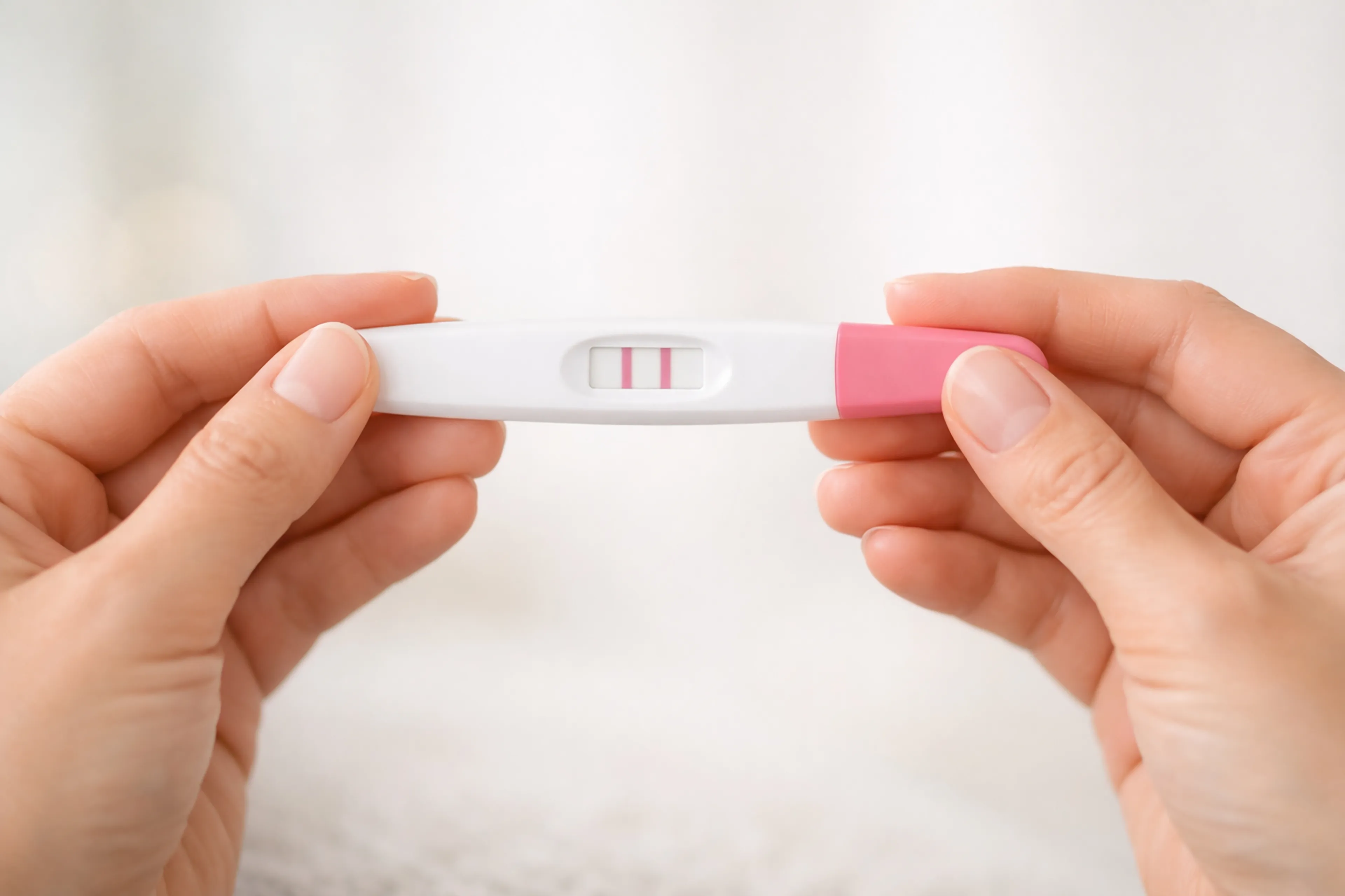
How to Use a Pregnancy Test Kit: Step-by-Step Instructions
Learn how to use a pregnancy test kit correctly, when to take the test, how to interpret positive, negative and faint-line results, and when to consult a doctor.
Dr.Kamran
Waiting to find out whether you are pregnant can bring a range of emotions. A home pregnancy test is often the first step towards getting an answer. These kits detect human chorionic gonadotropin (hCG), a hormone produced during pregnancy after a fertilised egg implants in the uterus. Although most kits are simple to use, testing at the right time and following the instructions carefully can help you get a reliable result.
Understanding when to take a pregnancy test, how to use it and what the result means can help you decide what to do next.
When to Take a Pregnancy Test for Accurate Results
The best time to take most home pregnancy tests is from the first day of your missed period. By this stage, hCG levels are often high enough for a standard test to detect. Some sensitive kits may detect pregnancy earlier, but testing before your expected period increases the chance of a false-negative result.
If your periods are irregular or you are unsure when your next period is due, take a pregnancy test at least 21 days after the last time you had unprotected sex.
You can usually take a pregnancy test at any time of the day. However, if you are testing early or repeating a test after a negative result, first-morning urine may improve the chance of detecting hCG because it is generally more concentrated. Drinking excessive amounts of water shortly before testing can dilute your urine and make hCG harder to detect.
Remember that hCG levels vary between pregnancies and do not rise at exactly the same rate in everyone. A negative result may therefore be less reliable if you test too early.
Step-by-Step Instructions to Use a Pregnancy Test Kit
Most home pregnancy tests detect hCG in urine. Depending on the product, you may need to hold the absorbent tip in your urine stream or collect urine in a clean, dry container and dip the test into it.
Before starting, read the instructions supplied with your specific kit. The amount of urine required, dipping time and result-reading window can vary between products.
Follow these general steps:
Check the expiry date: Make sure the kit is within its expiry date and that the sealed pouch is intact.
Wash your hands: Clean your hands with soap and water before handling the test.
Open the pouch: Remove the test stick or strip as instructed. Avoid touching the absorbent tip.
Collect a urine sample: If your kit requires a container, collect urine in a clean, dry cup. Some kits allow you to hold the absorbent tip directly in your urine stream.
Apply the urine: Dip the absorbent tip into the sample up to the marked line or hold it in the urine stream for the specified time. Do not immerse the entire test unless the instructions specifically say to do so.
Place the test correctly: If instructed, place the test on a clean, flat surface with the result window facing upwards.
Wait for the result: Allow the test to develop for the time stated in the leaflet. Many kits take a few minutes.
Read the result within the specified window: Check the result at the recommended time. Changes that appear after the stated reading window should not be interpreted as a valid result.
How to Interpret Pregnancy Test Results
Most line-based pregnancy test kits have two areas: the control line (C) and the test line (T). The control line indicates whether the test has worked correctly, while the test line indicates whether hCG has been detected.
The appearance of the lines can vary depending on the brand. Always compare your result with the guide supplied with your kit.
Result
What you see
What it means
Positive
Both C and T lines appear
hCG has been detected, so pregnancy is likely
Negative
Only the C line appears
hCG has not been detected at the test's detection level
Invalid
The C line does not appear, whether or not a T line is visible
The test has not worked correctly; repeat with a new kit
What Does a Faint Line on a Pregnancy Test Mean?
Seeing a faint line on a pregnancy test can leave you uncertain about the result. A faint coloured line in the test area (T), appearing within the reading window specified by the manufacturer, generally indicates a positive result. It means the test has detected hCG, even if the line is lighter than the control line.
A faint line may appear when you are testing very early in pregnancy, when hCG levels are still relatively low. However, line intensity can also vary with the test brand, urine concentration and testing conditions. The darkness of the line cannot reliably show how a pregnancy is developing.
If you are unsure about the result, repeat the test with a new kit after a few days or consult your doctor about a blood hCG test.
What Is an Evaporation Line?
An evaporation line is a faint, often colourless or greyish mark that may appear as urine dries on the test. It can be mistaken for a positive result, particularly if you check the kit after the recommended reading time.
To avoid confusion, read the result only within the time window specified in the instructions. Do not interpret a line that appears after this period as a positive result.
If the result is unclear, repeat the test with a fresh kit after a few days. A blood hCG test may also help clarify the result.
Common Mistakes That Can Affect Pregnancy Test Results
Even a reliable pregnancy test kit may give an inaccurate result if it is not used correctly. A few common mistakes to avoid include:
Testing too early: hCG may not have reached a detectable level, resulting in a false-negative result.
Drinking excessive fluids before testing: Diluted urine may contain a lower concentration of hCG, making it harder for the test to detect.
Not following the instructions: Incorrect dipping time, urine volume or sample application can affect how the test works.
Reading the result too early or too late: Checking before the recommended time may give an incomplete result, while reading it after the specified window can lead to confusion.
Using an expired or damaged kit: An expired kit or one with a damaged or unsealed pouch may not work reliably.
Storing the kit incorrectly: Exposure to moisture, excessive heat or unsuitable storage conditions may affect the test. Follow the storage instructions on the packaging.
Most home pregnancy tests are highly accurate when used correctly from the day of a missed period. However, no home test is completely reliable in every situation. Testing at the right time and following the product instructions can improve the likelihood of obtaining a dependable result.
Contraindications and When Results May Be Unreliable
Home pregnancy test kits are generally safe to use as directed. However, certain medicines and medical conditions can affect hCG levels or make the result harder to interpret.
Fertility treatments involving hCG injections: Medicines containing hCG, including some ovulation trigger injections, can cause a positive result for a period after treatment. Follow your fertility specialist's advice on when to test.
Certain medical conditions: Rare conditions, including gestational trophoblastic disease and some ovarian or testicular tumours, can produce hCG and affect test results.
Recent miscarriage or pregnancy termination: hCG can remain in your body for several weeks after a pregnancy ends. A positive result during this time does not necessarily indicate a new pregnancy.
Possible ectopic pregnancy: An ectopic pregnancy can produce hCG, but levels may rise differently from those in a typical pregnancy. A faint line or negative home test does not rule it out if you have concerning symptoms.
If you have recently received fertility treatment, experienced a pregnancy loss or have a medical condition that may affect hCG levels, discuss your result with your doctor.
When to Consult a Doctor After Testing
A home pregnancy test is a useful first step, but you may need further assessment depending on the result and your symptoms.
Consult your doctor if:
Your pregnancy test is positive. Your doctor can advise you about the next steps, pregnancy care and whether blood tests or an ultrasound are needed.
Your test is negative, but your period does not arrive. Repeat the test after a few days. If a second test is negative and your period is still delayed, seek medical advice.
You have pregnancy symptoms despite a negative result. Your doctor can assess your symptoms and decide whether further testing is appropriate.
You get mixed or unclear results from different tests. A blood hCG test may help clarify whether you are pregnant.
Seek urgent medical attention if you may be pregnant and experience severe or one-sided lower abdominal pain, vaginal bleeding with pain, shoulder-tip pain, dizziness or fainting. These symptoms can occur with an ectopic pregnancy, even if you have not had a positive home test. Sudden severe abdominal pain, fainting or collapse requires emergency assessment.
Conclusion
Using a pregnancy test kit correctly can help you find out whether hCG is present in your urine. For most people, testing from the first day of a missed period gives a reliable result. Check the expiry date, follow the instructions supplied with the kit and read the result within the recommended time window.
If the result is negative but your period remains delayed, repeat the test after a few days. A positive result is a reason to arrange pregnancy care, while unclear results or concerning symptoms may need further assessment by a doctor.
FAQs
How accurate are home pregnancy test kits?
Most home pregnancy test kits are highly accurate when used correctly from the first day of a missed period. However, testing too early, using diluted urine or not following the instructions can affect the result. A negative result does not always rule out pregnancy, particularly if your period is still delayed.
Can I take a pregnancy test at night?
Yes. Most home pregnancy tests can be used at any time of the day. However, first-morning urine may be more concentrated and can be helpful if you are testing early or repeating a test after a negative result. Avoid drinking excessive fluids immediately before testing.
How many days after a missed period should I take a pregnancy test?
You can take most home pregnancy tests from the first day of your missed period. If the result is negative but your period does not arrive, repeat the test after a few days. If your periods are irregular or you are unsure when your period is due, test at least 21 days after unprotected sex.
Can drinking water affect pregnancy test results?
Yes. Drinking a large amount of water shortly before testing can dilute your urine and reduce the concentration of hCG in the sample. This may make it harder for the kit to detect pregnancy, particularly in the early stages. You do not need to restrict your usual fluid intake, but avoid drinking excessive amounts just before taking the test.
What should I do if the pregnancy test line is very faint?
A faint coloured test line that appears within the manufacturer's recommended reading window generally indicates a positive result. It means hCG has been detected, but the line's darkness cannot show whether the pregnancy is developing normally. Repeat the test after a few days or consult your doctor if you are unsure about the result.