logo
0

Pregnancy Urine Test at Home: Timing & Accuracy Guide

Learn when to take a home pregnancy urine test, how to use it correctly, how accurate the results are and what to do if you get a positive or negative result.
 

article image

Dr. Mayank

A pregnancy urine test at home is often the first step in finding out whether you are pregnant. These tests are widely available, easy to use and offer privacy. However, the accuracy of your result depends on when you take the test, how you use the kit and how you interpret the result. Testing too early or not following the instructions can lead to misleading results.

This guide explains how home pregnancy tests work, when to take one, how to interpret the results and when to seek medical advice.

What Is an At-Home Pregnancy Urine Test?

A home pregnancy test detects human chorionic gonadotropin (hCG), a hormone produced after a fertilised egg implants in the uterus. As pregnancy progresses, hCG levels rise rapidly during early pregnancy, making the hormone easier to detect in urine.

Most home pregnancy test kits contain a strip or absorbent tip coated with antibodies that react with hCG. When the hormone reaches the kit's detection threshold, a visible line, symbol or digital result appears, depending on the type of test.

If hCG is not detected, the test usually displays a negative result. However, a negative result does not always mean you are not pregnant, particularly if you test too early, when hCG levels may still be too low to detect.

How to Use a Pregnancy Test Kit Step-by-Step

Using a home pregnancy test correctly is essential for obtaining a reliable result. Although the instructions may differ between brands, the general procedure is similar.

Follow these steps to use a pregnancy test kit:

  1. Read the instructions: Check the manufacturer's instructions before starting. The amount of urine required, the recommended exposure time and the result-reading window can vary between kits.
  2. Collect your urine: Depending on the kit, either collect urine in a clean, dry container or hold the absorbent tip in your urine stream for the specified time.
  3. Place the test correctly: If you are using a dipstick, immerse it in the urine only up to the marked limit. For midstream tests, follow the instructions on the packaging.
  4. Wait for the specified time: Place the test on a clean, level surface if instructed and wait for the recommended duration. Use a timer if necessary.
  5. Read the result: Check the result within the time window specified by the manufacturer. Results that appear after this window may be unreliable.
  6. Dispose of the kit: Discard the used test according to the manufacturer's instructions.

First-morning urine is generally preferable, particularly if you are testing early, because it is usually more concentrated. If you need to test later in the day, avoid drinking excessive amounts of fluid immediately beforehand, as diluted urine can reduce the concentration of hCG.

Best Time to Take a Pregnancy Test

When you take a pregnancy test can significantly affect the reliability of the result. Testing too early may produce a negative result even if you are pregnant.

After fertilisation, the developing embryo travels towards the uterus. Once implantation occurs, hCG production begins, and the hormone gradually becomes detectable in your urine. Implantation timing varies, so testing immediately after unprotected sex is unlikely to provide a reliable result.

For most women with regular menstrual cycles, the first day of a missed period is a suitable time to take a home pregnancy test. Some early-detection kits claim to detect pregnancy before a missed period, but testing earlier increases the likelihood of a false negative.

If your menstrual cycles are irregular or you are unsure when your period is due, consider testing at least 21 days after your last episode of unprotected sex. If the result is negative but your period still does not arrive, repeat the test after a few days.

How Accurate Are At-Home Pregnancy Tests?

Most home pregnancy tests are highly accurate when used correctly from the first day of a missed period. However, their actual performance depends on the kit's sensitivity, the timing of testing and whether the instructions are followed properly.

Several factors can affect the accuracy of your result:

  • Testing too early: Your hCG levels may not yet be high enough for the test to detect pregnancy.
  • Urine concentration: Drinking excessive amounts of fluid before testing can dilute your urine and increase the likelihood of a false negative.
  • Test sensitivity: Kits with lower hCG detection thresholds may detect pregnancy earlier than those requiring higher hormone concentrations.
  • Incorrect use: Not following the instructions or reading the result outside the specified time window can lead to misinterpretation.
  • Kit storage and expiry: Heat, humidity and expired kits can affect test performance.

The sensitivity of a pregnancy test is often expressed in milli-international units per millilitre (mIU/mL). A test with a lower detection threshold can potentially identify pregnancy earlier, although no kit can guarantee an accurate result before sufficient hCG has accumulated.

Always check the manufacturer's instructions and expiry date. If your result is unclear or inconsistent with your symptoms, repeat the test or consult your healthcare provider.

Causes of False Positive Results

A false positive occurs when a pregnancy test indicates pregnancy even though you are not currently pregnant. Although less common than false negatives, false positives can occur for several reasons.

Possible causes include:

  • Chemical pregnancy: This occurs when implantation takes place and hCG is produced, but the pregnancy stops developing very early. The test may detect the hormone before its levels decline.
  • Fertility medicines containing hCG: Certain fertility treatments use hCG injections to trigger ovulation. Residual hCG from these medicines can cause a positive result for a period after treatment.
  • Evaporation lines: A faint, colourless or grey line may appear as urine dries. If it develops after the manufacturer's reading window, it should not be interpreted as a positive result.
  • Rare medical conditions: Certain uncommon conditions, including some hCG-producing tumours, can cause a positive result in the absence of an ongoing pregnancy.
  • Recent pregnancy: Following a miscarriage, termination or delivery, hCG may remain detectable for some time, resulting in a positive test.

If you receive a positive result that is unexpected or inconsistent with your circumstances, consult your healthcare provider. A blood test may help clarify the result.

Causes of False Negative Results

A false negative occurs when a pregnancy test shows a negative result even though you are pregnant. This is more common when testing is performed too early.

Common causes include:

  • Testing too early: If you take the test before hCG levels have risen sufficiently, the kit may not detect the hormone.
  • Diluted urine: Drinking large amounts of water before testing can lower the concentration of hCG in your urine.
  • Expired or improperly stored kits: Exposure to excessive heat or humidity and using an expired kit can affect test performance.
  • Incorrect testing technique: Not following the instructions, using too little urine or reading the result at the wrong time can lead to an inaccurate interpretation.

If you receive a negative result but your period does not arrive, repeat the test after a few days. If you continue to get negative results and your period remains absent, consult your doctor to identify the cause.

When to Consult a Doctor

A positive home pregnancy test is a useful first indication of pregnancy. Arrange an appointment with your healthcare provider to discuss the result and plan appropriate antenatal care.

You should also seek medical advice in the following situations:

  • Positive test result: Arrange an appointment to confirm the pregnancy and discuss your next steps.
  • Persistent missed period: If your period remains absent despite repeated negative tests, consult your doctor to investigate possible causes.
  • Unclear or conflicting results: If you obtain inconsistent results from different tests, your healthcare provider can recommend further testing.
  • Pelvic pain or bleeding: Pain or bleeding with a positive pregnancy test requires prompt medical assessment because it may indicate an ectopic pregnancy or another complication.
  • Severe symptoms: Sudden, severe abdominal pain, fainting, marked dizziness or heavy bleeding require emergency medical attention, particularly if pregnancy is possible.

Your doctor may recommend a blood test to measure beta-hCG levels. Unlike a home urine test, a quantitative blood test measures the amount of hCG in your blood. An ultrasound may also be recommended at the appropriate stage to assess the location and development of the pregnancy.

Contraindications and Precautions

Home pregnancy urine tests are generally safe and non-invasive. However, certain circumstances can affect the reliability or interpretation of your results.

Keep the following precautions in mind:

  • Fertility treatment: If you have received an hCG injection as part of fertility treatment, consult your fertility specialist about when to take a pregnancy test. Testing too soon may produce a misleading positive result.
  • Certain medical conditions: Rare conditions that produce hCG may affect the interpretation of a positive test. Follow your doctor's advice if you have a known condition associated with abnormal hCG levels.
  • Kidney disease and urine concentration: Some kidney conditions and medicines that affect fluid balance may alter urine concentration, potentially affecting test results.
  • Expiry and storage: Check the expiry date and follow the manufacturer's storage instructions. Avoid using kits that have been exposed to excessive heat or moisture.
  • Reading instructions: Follow the specified reading window. Do not interpret lines or symbols that appear after the recommended time.

If you experience an unexpected issue associated with a pregnancy test kit, inform your healthcare provider. Suspected medical device-related adverse events can also be reported to the relevant regulatory authority in India, the Central Drugs Standard Control Organisation (CDSCO).

Conclusion

A home pregnancy urine test offers a convenient way to check for pregnancy, but its reliability depends on the timing of testing, urine concentration and correct use of the kit. Testing on or after the first day of a missed period generally provides more dependable results. If your result is negative but your period remains absent, repeat the test after a few days.

If you receive a positive result, arrange an appointment with your healthcare provider to confirm the pregnancy and begin appropriate care. Seek urgent medical attention if you experience severe abdominal pain, fainting or heavy bleeding, regardless of your test result.

FAQS

Can I take a pregnancy test at night?

Yes, you can take a pregnancy test at night. However, first-morning urine is generally preferable, particularly if you are testing early, because it is usually more concentrated. If you test at night, avoid drinking excessive amounts of fluid beforehand and follow the kit's instructions.

How many days after a missed period should I test?

You can usually take a home pregnancy test on the first day of your missed period. If the result is negative but your period does not arrive, repeat the test after a few days. If your menstrual cycles are irregular, consider testing at least 21 days after your last episode of unprotected sex.

Can drinking water affect pregnancy test results?

Yes. Drinking excessive amounts of water before taking a pregnancy test can dilute your urine, lowering the concentration of hCG and increasing the likelihood of a false negative. Using first-morning urine can help reduce this risk, especially when testing early.
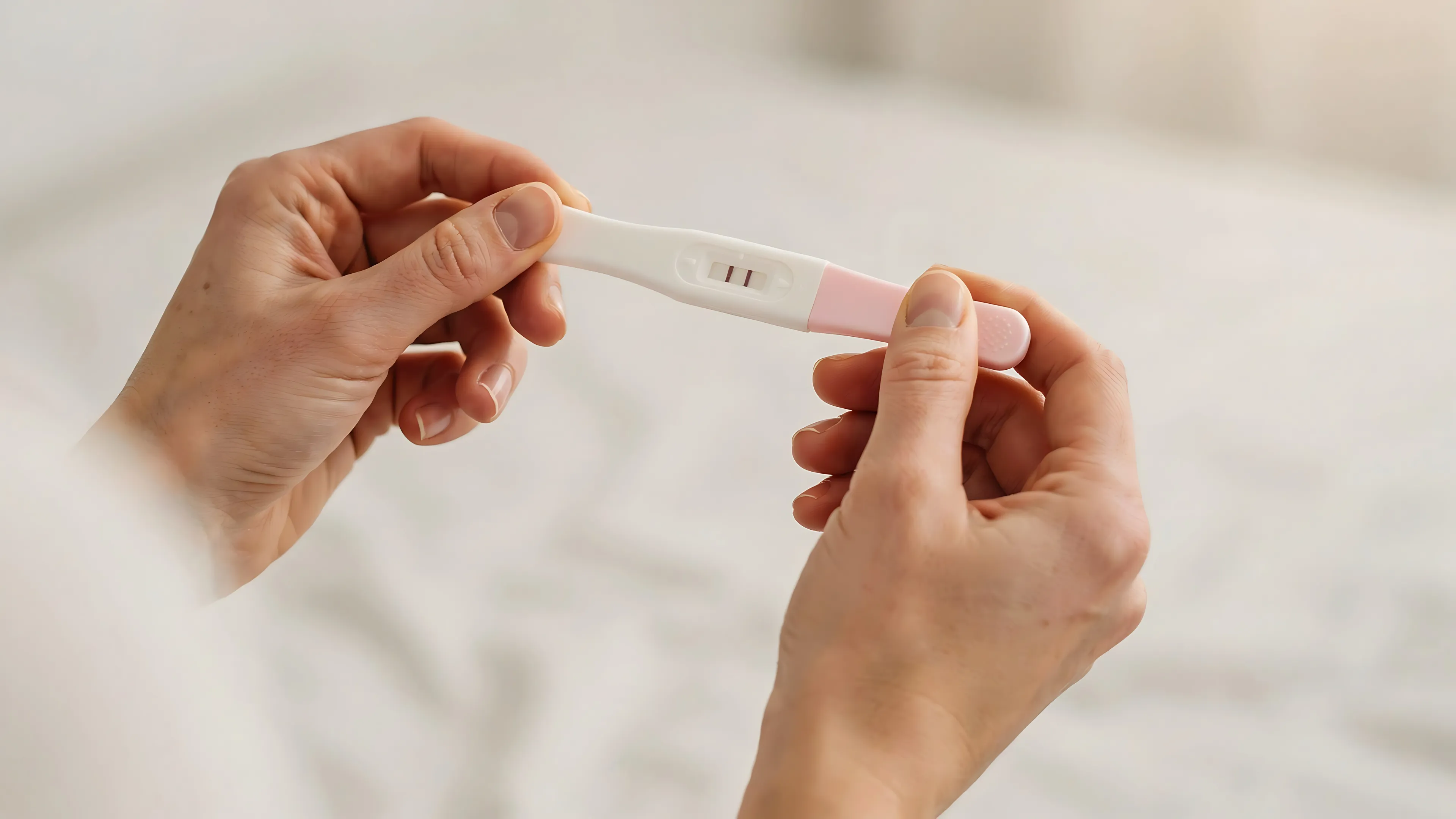
Is one line always negative on a pregnancy test?

On most standard line-based pregnancy tests, one line in the control region indicates a negative result, provided the control line appears correctly. However, test formats vary, so always follow the manufacturer's instructions. If the control line does not appear, the test is invalid and should be repeated with a new kit.

Do I need to confirm a positive home pregnancy test with a doctor?

Yes. A positive home pregnancy test is a good indication of pregnancy, but a healthcare provider can recommend further testing and arrange appropriate antenatal care. Blood tests and ultrasound examinations may be needed, depending on how far along you are and your symptoms.

Apollo 247 Floating Action Button