logo
0

Prickly Heat Powder for Newborns: Safe Heat Rash Guide

Learn how to manage newborn heat rash safely, choose talc-free prickly heat powders, apply powder correctly, and spot red flags needing a paediatrician.

article image

Dr. Ezhilrasan

Few things unsettle new parents faster than seeing red, bumpy skin on their baby. Prickly heat powder for newborns is one of the most searched remedies during India's warm months, and for good reason: heat rash is extremely common in babies and can cause real discomfort. Knowing what is safe, what works, and what to avoid can protect your baby's delicate skin and spare you a stressful night.

What Is Prickly Heat (Heat Rash) in Newborns?

Prickly heat, medically called miliaria, happens when sweat gets trapped under the skin because sweat ducts are blocked. Newborn sweat ducts are still immature, which makes babies far more prone to this blockage than older children or adults.

Common triggers include:

  • High ambient temperature or humidity
  • Over-bundling or too many layers of clothing
  • Prolonged skin contact without air circulation
  • Sleeping on surfaces that trap body heat

Heat rash in babies is not a sign of poor parenting. It is a predictable response to a hot environment and underdeveloped skin physiology.

Signs and Symptoms to Watch For

Knowing what prickly heat looks like helps you tell it apart from eczema or an allergic rash.

Typical appearance: tiny red or pink bumps, sometimes with small fluid-filled blisters, clustered in areas where sweat collects. The surrounding skin may look flushed.

Common sites include neck folds, upper back, chest, armpits, and the diaper area. In newborns, you may notice increased fussiness, scratching motions, or reluctance to be held close to the body.

If the rash is scaly, oozing, spreading rapidly, or covers large areas of the face and limbs, consult your paediatrician before assuming it is heat rash.

How to Choose a Safe Prickly Heat Powder for Newborns?

Not every powder on the shelf is appropriate for a newborn, and this is where parents need the most guidance.

Avoid talc-based powders: Talcum powder poses an inhalation risk for infants. Fine talc particles can reach deep into the lungs if accidentally inhaled during application. Most pediatric guidelines now recommend against talcum powder in babies.

Choose a talc-free powder for babies instead: Safe formulations use ingredients such as cornstarch, arrowroot, or zinc oxide as the base. These are gentler on the skin and carry a lower inhalation risk, though careful application is still essential.

Key criteria when choosing:

  • Labelled talc-free and fragrance-free
  • Free of parabens and harsh preservatives
  • Formulated specifically for infant or newborn skin
  • Recommended or cleared by a paediatrician

If a product in your home contains talc, keep it away from your baby entirely.

Report any adverse events related to baby powder to your healthcare provider or the relevant regulatory authority.

How to Apply Prickly Heat Powder Safely?

Even a safe powder can cause harm if applied incorrectly. Technique matters as much as the product itself.

  • Make sure the affected skin is clean and completely dry before applying anything.
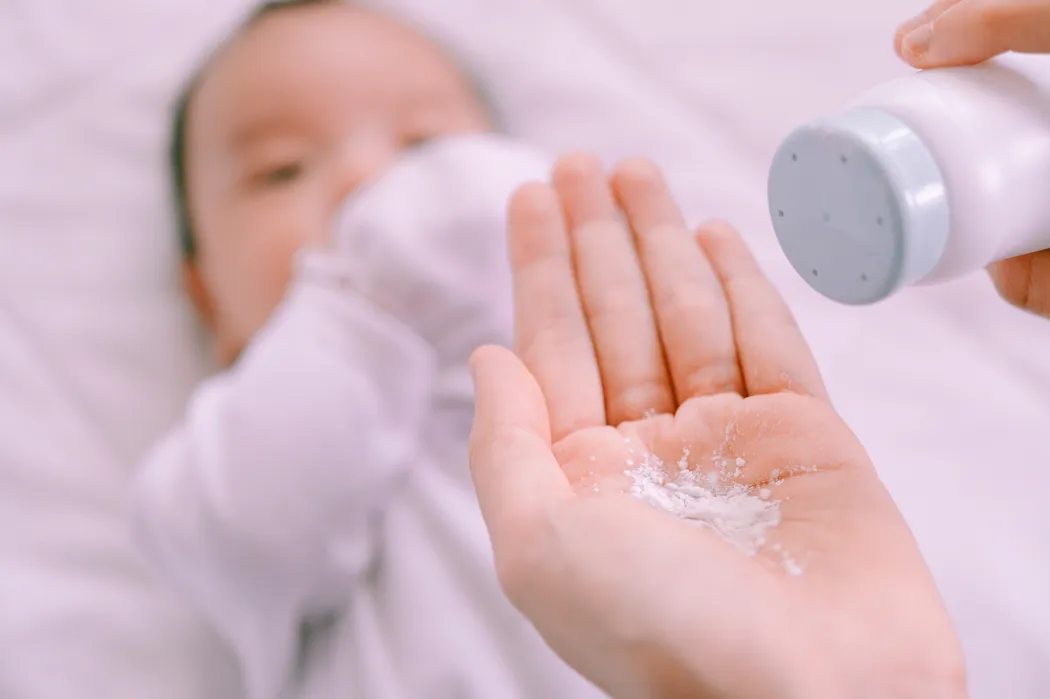
  • Pour a small amount of powder into your own palm first, away from the baby's face.
  • Gently pat, do not rub, the powder onto the affected area using your fingertips.
  • Keep the baby's face turned away or shielded throughout.
  • Use a thin, even layer. Excess powder clumps in skin folds and can worsen irritation.

Once or twice a day after bathing is generally sufficient. More frequent applications do not speed healing and increase the chance of inhalation. Always follow the product's directions and ask your baby's doctor for advice tailored to your child.

Home Care Tips to Prevent and Soothe Heat Rash

Newborn prickly heat treatment starts with the environment, not the medicine cabinet.

Clothing and bedding:

  • Dress your baby in loose, lightweight cotton that allows airflow.
  • Avoid synthetic fabrics, tight elastic over the rash, and over-layering.
  • Use breathable cotton sheets and ensure the sleeping surface does not trap heat.

Cooling and baths:

  • A lukewarm (not cold) bath twice a day soothes inflamed skin and clears sweat from pores.
  • Pat the skin dry gently afterwards. Do not rub.
  • Keep the room ventilated with a fan or air conditioning set to a comfortable temperature.

Avoid applying thick creams or oils over heat rash. Heavy moisturisers and coconut oil can further block pores and make prickly heat worse. The goal is cool, dry skin.

For other aspects of caring for your newborn's skin, this newborn belly button care guide offers similarly practical advice on keeping sensitive areas clean and infection-free.

Contraindications and When to Avoid Powder Use?

Baby powder for rashes is not suitable in every situation. Do not use prickly heat powder if:

  • The skin is broken, cracked, or has open sores. Powder on broken skin can introduce infection; see guidance on treating minor skin cuts and wounds if the skin is damaged.
  • Your baby has eczema, psoriasis, or another chronic skin condition. Always get medical advice first.
  • There is any sign of infection: pus, weeping discharge, or warm, hardened skin around the rash.
  • Your baby has a known allergy to any ingredient in the product.
  • The rash is near the eyes, nose, or mouth. Powder should never be applied near the face.

When in doubt, check with your paediatrician before using any topical product on newborn skin.

When to See a Doctor?

Most cases of heat rash in babies resolve within two to three days once the baby is kept cool and comfortable. Seek medical attention promptly if:

  • The rash spreads rapidly or does not improve after two to three days of home care
  • You see pus, crusting, or weeping discharge
  • The skin around the rash feels warm and hard
  • Your baby develops a fever
  • Your baby is unusually difficult to settle or seems to be in significant discomfort.

Do not try to manage these signs at home. A paediatrician can rule out a skin infection or another underlying condition that needs specific treatment.

Conclusion

Managing prickly heat (miliaria) in newborns centres on maintaining cool, well-ventilated skin and preventing sweat duct blockages. While environmental adjustments—such as lightweight cotton clothing, lukewarm baths, and ventilated rooms—are the primary line of care, any powder used must strictly be talc-free (cornstarch- or zinc-oxide-based) to prevent lung inhalation risks. Never apply powders to broken skin or near the baby's face, and avoid heavy creams or oils that clog pores further. If the rash spreads rapidly, develops pus, or persists past three days despite cooling measures, consult your paediatrician promptly.

FAQS

Can newborns use prickly heat powder?

Yes, but only a talc-free, fragrance-free formulation made for infant skin, and only when applied with care to avoid inhalation. Always check with your baby's paediatrician before starting any new product on a newborn.

Is prickly heat powder safe for daily use on babies?

Using a safe, talc-free powder once or twice a day after bathing is generally acceptable during hot weather. Avoid daily use if the rash has cleared, as routine powder application is not necessary for healthy skin.

What is the difference between talc and talc-free powder?

Talc is a mineral derived from rock; when inhaled, fine talc particles can cause lung damage in infants. Talc-free powders use plant-based or mineral alternatives such as cornstarch or zinc oxide, which are considered safer for use around babies.

Can prickly heat powder cause breathing problems in babies?

Any fine powder can irritate a baby's airway if inhaled. Talc-based powders carry the highest risk, but even talc-free powders should be poured into your palm first and applied away from the baby's face to minimise exposure.

How long does prickly heat take to heal in newborns?

With proper cooling, loose clothing, and gentle skin care, most cases of prickly heat in babies clear within two to three days. If the rash persists beyond this or worsens, consult your paediatrician.

Apollo 247 Floating Action Button