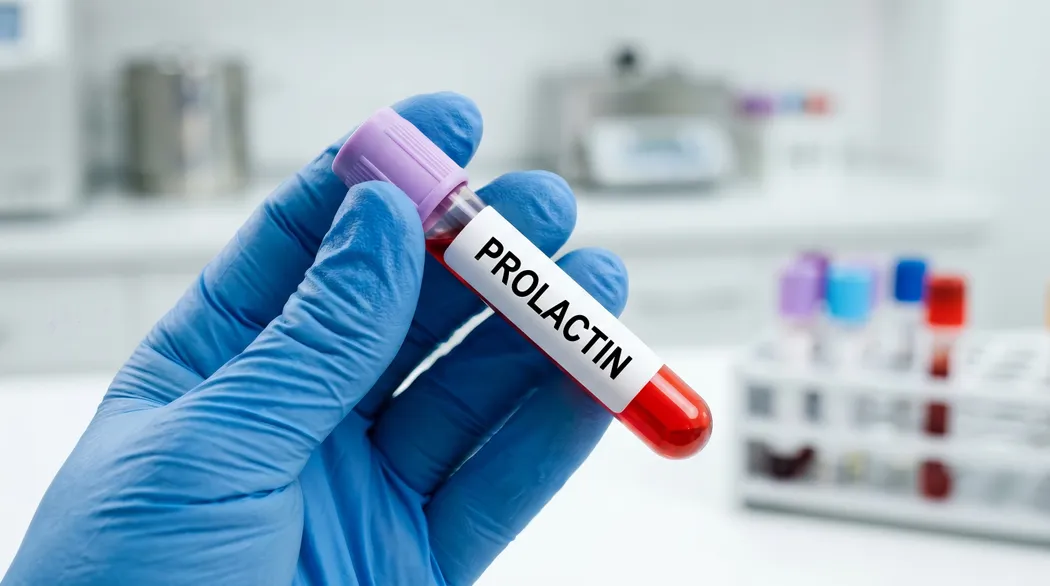
Prolactin Serum Blood Test: Purpose, Range & Results
Learn what a prolactin serum blood test measures, why it is done, how to prepare, what high prolactin levels may mean and when further tests may be needed.
Dr.Kamran
Changes in your menstrual cycle, unexpected milk production from the breasts or difficulty becoming pregnant can sometimes be linked to changes in prolactin levels. A prolactin serum blood test measures the amount of this hormone in your blood and can help your doctor understand whether it may be contributing to your symptoms.
Prolactin levels can change naturally and may also be affected by pregnancy, breastfeeding, stress, exercise, medicines and certain health conditions. This article explains why a prolactin test may be recommended, how to prepare for it, what your results may mean and when further testing may be needed.
What Is a Prolactin Serum Blood Test?
Prolactin is a hormone produced by the pituitary gland, a small gland at the base of the brain. Its main role is to support breast development and milk production during pregnancy and breastfeeding. It also affects reproductive function because high prolactin levels can interfere with the hormones involved in ovulation and menstruation.
A prolactin serum blood test measures the amount of prolactin in a sample of blood. Your doctor will interpret the result along with your symptoms, medical history and the reference range provided by the laboratory.
Why Is a Prolactin Test Done?
Your doctor may recommend a prolactin test if you have:
Irregular or absent periods
Milk or milky discharge from the breasts when you are not pregnant or breastfeeding
Difficulty becoming pregnant when a hormonal cause is being considered
Symptoms that may suggest a problem with the pituitary gland
Headaches or changes in vision along with other symptoms associated with high prolactin levels
Prolactin Test for Infertility
A prolactin test for infertility may be recommended when irregular or absent periods suggest a problem with ovulation. High prolactin levels can interfere with the hormones that regulate ovulation and menstruation, which may make it harder to become pregnant.
Prolactin testing is not needed for every woman being assessed for infertility. Your doctor will decide whether the test is appropriate based on your symptoms and medical history.
A healthcare professional takes a small sample of blood from a vein in your arm. The procedure usually takes only a few minutes.
Prolactin levels change during the day and are influenced by sleep. Your doctor or laboratory may therefore recommend having the sample collected several hours after you wake up. Follow the instructions provided by your healthcare professional or laboratory.
Does a Prolactin Test Require Fasting?
Fasting is not always required for a prolactin test. Some laboratories may ask you to fast for several hours, while others may not require fasting.
Follow the instructions given by your doctor or laboratory rather than assuming that fasting is necessary.
What Precautions Should You Take Before a Prolactin Test?
Certain activities and physical or emotional factors can temporarily increase prolactin levels and affect the test result.
Avoid vigorous exercise shortly before the test.
Avoid breast or nipple stimulation before the test.
Tell your doctor if you have recently had a breast examination.
Try to remain relaxed before the blood sample is taken, as stress can temporarily increase prolactin levels.
Tell your doctor about all medicines, vitamins and supplements you take.
Do not stop a prescribed medicine unless your doctor advises you to do so.
Follow any instructions about fasting and the timing of the blood test provided by your laboratory.
Sexual activity may temporarily increase prolactin levels. Follow your doctor's instructions if you have been asked to avoid sexual activity before the test.
If your prolactin level is mildly elevated, your doctor may recommend repeating the test after considering these factors.
Understanding Prolactin Test Results
Prolactin levels are usually reported in nanograms per millilitre (ng/mL), although some laboratories use different units. The expected level can vary depending on factors such as pregnancy and breastfeeding, and laboratories may use different reference ranges.
Group
Prolactin level
Non-pregnant women
Usually below 25 ng/mL
Pregnant women
Levels are higher than in non-pregnant women
Men
Usually below 20 ng/mL
Always compare your result with the reference range shown on your laboratory report. A result outside this range does not necessarily mean that you have a health problem. Your doctor will consider the result along with your symptoms, medicines and other test findings.
What Does a High Prolactin Level Mean?
A high prolactin level is called hyperprolactinaemia. It can occur for several reasons, including pregnancy, breastfeeding, certain medicines, hypothyroidism, kidney disease, chest wall irritation and conditions affecting the pituitary gland.
A mildly raised result may be temporary. Your doctor may repeat the test, particularly if stress, recent exercise, breast stimulation or other factors could have affected the result.
What Does a Low Prolactin Level Mean?
Low prolactin levels are uncommon. When clinically significant, they may be associated with a problem affecting the pituitary gland and may contribute to difficulty producing breast milk after childbirth.
What Causes High Prolactin Levels in Females?
High prolactin levels in females can have several causes, including:
Pregnancy and breastfeeding
Certain medicines, including some medicines used to treat mental health conditions, nausea, depression, pain and high blood pressure
An underactive thyroid, known as hypothyroidism
Kidney or liver disease
Chest wall injury or irritation
A prolactinoma, which is usually a benign tumour of the pituitary gland that produces prolactin
Other conditions affecting the pituitary gland
Macroprolactin, a form of prolactin that can raise the measured level without causing typical symptoms in some people
In some cases, no specific cause is identified
Your doctor may review your medicines, check thyroid function and recommend other tests to identify the reason for the raised prolactin level.
What Are the Symptoms of High Prolactin?
Some people with high prolactin have no noticeable symptoms. When symptoms occur, they may include:
Irregular or absent periods
Milk or milky discharge from the breasts when you are not breastfeeding
Difficulty becoming pregnant because of problems with ovulation
Reduced sexual desire
Vaginal dryness
Headaches
Changes in vision, particularly when a pituitary tumour is large enough to affect nearby structures
Persistently high prolactin levels can also reduce oestrogen levels, which may affect bone health over time.
What Happens If Your Prolactin Level Is High?
A raised result does not always mean that treatment is needed immediately. Your doctor will first consider possible causes and whether the level remains high.
Depending on your symptoms and test results, you may need:
A repeat prolactin test
Thyroid function testing
A pregnancy test when appropriate
A review of your medicines
Further testing for macroprolactin in selected cases
Assessment by an endocrinologist
An MRI scan of the pituitary gland if a pituitary problem is suspected
Treatment depends on the underlying cause. For example, hypothyroidism can be treated with thyroid hormone replacement. Prolactinomas are commonly treated with medicines that lower prolactin levels and can reduce the size of the tumour. Surgery may be considered in selected cases.
Prolactin Hormone Test Cost
The prolactin hormone test cost can vary depending on the diagnostic laboratory, location and whether the test is performed on its own or as part of a wider hormone panel. Ask the laboratory for the current price when booking the test.
Contraindications and Precautions
There are generally no specific contraindications to having a prolactin blood test. However, several factors can affect prolactin levels and should be considered when interpreting the result.
Pregnancy and breastfeeding normally increase prolactin levels.
Stress can temporarily increase prolactin.
Vigorous exercise may increase prolactin levels.
Recent breast examination or nipple stimulation can temporarily raise prolactin.
Sexual activity may temporarily increase prolactin.
Certain medicines can increase prolactin levels.
Kidney disease, hypothyroidism and some pituitary conditions can also affect prolactin levels.
Tell your doctor about all medicines and supplements you take before the test.
Do not stop prescribed medicines unless your doctor advises you to do so.
If your result is unexpectedly high, your doctor may repeat the test after considering these factors before deciding whether further investigation is needed.
When Should You Speak to Your Doctor?
Talk to your doctor if you have persistent changes in your periods, unexpected milk production when you are not breastfeeding, difficulty becoming pregnant or other symptoms that may suggest a hormonal problem.
Seek medical assessment if you develop persistent headaches or changes in vision along with symptoms associated with high prolactin. These symptoms may need further assessment of the pituitary gland.
If your prolactin result is outside the laboratory's reference range, do not try to interpret it on its own. Your doctor can consider the result alongside your symptoms, medicines and other test findings and explain whether further testing is needed.
Conclusion
A prolactin serum blood test is a simple blood test that can help determine whether changes in prolactin may be contributing to menstrual problems, unexpected milk production or difficulties with ovulation and fertility.
An abnormal result does not always indicate a serious health problem. Prolactin levels can change for several reasons, and your doctor may repeat the test or recommend further investigations to understand the cause. If treatment is needed, it will depend on the reason for the abnormal prolactin level.
FAQS
What is the normal range for a prolactin serum test?
The reference range varies between laboratories. A commonly used reference point for non-pregnant women is below 25 ng/mL, but you should use the reference range printed on your own laboratory report when interpreting your result. Prolactin levels are normally higher during pregnancy and breastfeeding.
Can high prolactin affect fertility?
Yes. High prolactin can interfere with the hormones that regulate ovulation and menstruation, which may make it harder to become pregnant. Treating the underlying cause can help restore normal reproductive function in many women.
Does a prolactin test require fasting?
Not always. Some laboratories may ask you to fast for several hours, while others may not require fasting. Prolactin levels also vary during the day, so the test may be scheduled several hours after you wake up. Follow the instructions provided by your doctor or laboratory.
What treatment is given for high prolactin levels?
Treatment depends on the cause. For example, hypothyroidism may be treated with thyroid hormone replacement, while a prolactinoma is commonly treated with medicines that lower prolactin levels. Some people with a mild elevation may only need repeat testing and monitoring.
When should prolactin levels be retested?
There is no single retesting schedule for everyone. If the level is mildly elevated, your doctor may repeat the test after considering factors such as stress, exercise, breast stimulation, sexual activity, medicines and the timing of the original sample. People receiving treatment for high prolactin may need regular follow-up testing based on their condition and response to treatment.