logo
0

Saline Drops Newborn: Safe Use for Congestion Relief

Learn how to safely use saline drops for newborn congestion, including dosage, frequency, nasal suction, hygiene tips, and when to seek medical care.

article image

Dr. J.T.Hema Prathima

Newborns rely heavily on nasal breathing, so nasal congestion can interfere with feeding, sleep, and comfort. Saline drops for newborns are one of the safest and most widely recommended first-line options to ease that stuffiness without any medication. This guide walks you through exactly how to use them, when to stop, and when to call your doctor.

What Are Saline Drops and How Do They Help Newborns?

Saline nasal drops are salt-water solutions used to moisturise the nasal passages and loosen mucus. Many commercially available products contain 0.9% sodium chloride, but the concentration can vary by product, so check the label before use. They contain no decongestants, antihistamines, or other active ingredients, which is precisely why they suit newborns well.

When placed in the nostril, saline works by:

  • Loosening thick or dried mucus so it can be suctioned or drained more easily
  • Moisturising the nasal lining, reducing irritation
  • Helping restore normal mucus flow without affecting the baby's breathing pattern

Saline drops do not contain medicated decongestants and can help moisturise the nasal passages and loosen mucus. Medicated cough-and-cold products containing decongestants or antihistamines should not be given to children under 2 years because of the risk of serious side effects.

Step-by-Step: How to Use Saline Drops Safely

Knowing how to use saline drops for infants correctly makes the process quicker and less stressful for both of you.

What you need: a commercially available sterile saline drop bottle (0.9% sodium chloride), a rubber bulb syringe, and a clean soft cloth.

Steps:

  • Wash your hands thoroughly before touching the baby's face.
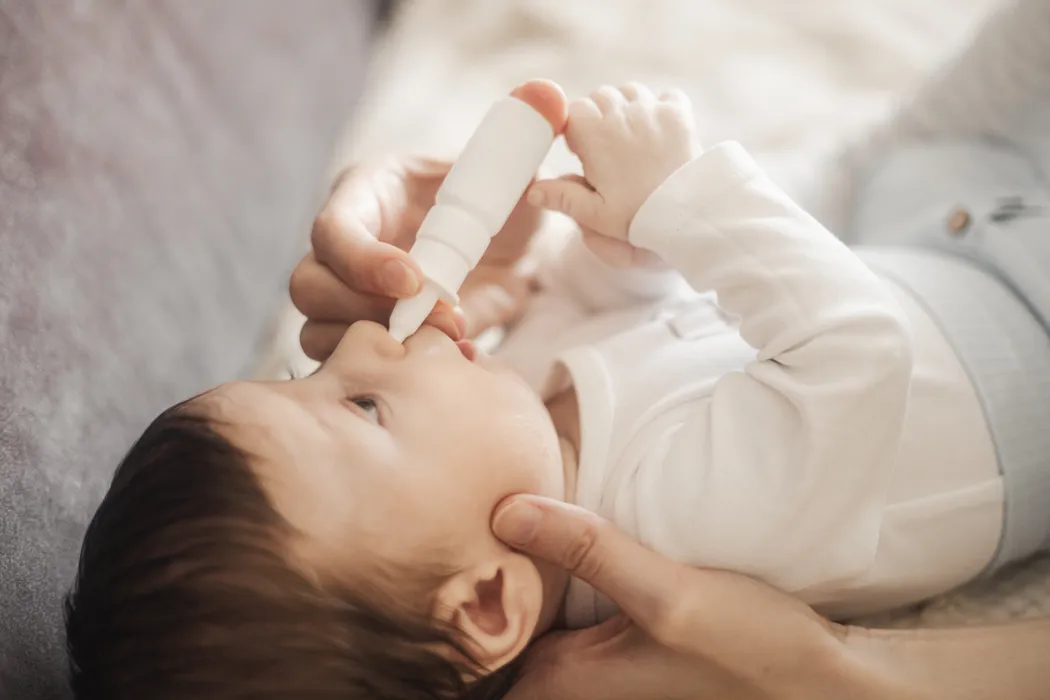
  • Lay your newborn on their back on a firm, flat surface. Support the head so the nostrils face upward.
  • Tilt the baby's head back slightly. Do not force the position.
  • Hold the dropper tip at the nostril opening without inserting it deeply.
  • Instill 1 to 2 drops into each nostril, or follow the specific instructions on the product label or your pediatrician's advice. The AAP describes 1–2 drops in each nostril as an option for infants with congestion.
  • Wait 30 to 60 seconds to allow the saline to loosen mucus.
  • Use a bulb syringe to gently suction the softened mucus. Squeeze the bulb before inserting the tip, place the tip just inside the nostril, then slowly release the bulb.
  • Wipe the syringe clean between nostrils.
  • Wipe the baby's nose with a soft cloth.

For frequency: Use saline when your baby's congestion is interfering with feeding, sleeping, or comfort. Avoid repeated or excessive suctioning because it can irritate and make the nasal passages sore or swollen. Follow your pediatrician's advice if your baby needs frequent nasal care. Think of it as a comfort measure, not a round-the-clock treatment.

Proper Nasal Hygiene Practices for Infants

Getting the drops right is only part of the picture. Good nasal hygiene for newborns helps prevent congestion from building up repeatedly.

Clean the bulb syringe after every use.

Squeeze out mucus, wash with warm soapy water, rinse thoroughly, and air-dry. A contaminated syringe can reintroduce bacteria into your baby's nose.

Use a cool-mist humidifier in the room.

Adding moisture to dry air keeps nasal passages comfortable, making this one of the simplest baby stuffy nose home remedies to set up. Clean the humidifier every 24 to 48 hours to prevent mould. Warm-mist versions carry a scalding risk and are generally avoided around infants.

Skip cotton swabs inside the nostril.

They can push mucus deeper or injure delicate tissue. Stick to the bulb syringe and soft cloths for safe nasal hygiene for newborns.

Hydration matters.

Breast milk or formula feeds keep the baby well-hydrated, which keeps mucus thinner and easier to clear. Very young infants do not need additional water.

For other aspects of keeping a newborn comfortable during the early weeks, our newborn belly button care guide covers hygiene practices that are equally simple but often overlooked.

Contraindications and When to Avoid Saline Drops

Saline drops are generally very well tolerated, but there are situations where you should pause or skip them entirely.

Do not use saline drops if:

  • The baby has visible nasal trauma, a cut inside the nostril, or a nosebleed that has not stopped
  • There is a known sensitivity to any ingredient in the formulation. Check the label for preservatives such as benzalkonium chloride, which can occasionally cause irritation in sensitive infants.

A doctor has specifically advised against nasal drops for a particular medical reason
Saline nasal drops for babies are not a substitute for a proper medical evaluation. If congestion follows an injury, or if discharge is thick and yellow-green for more than a few days, the baby needs clinical review rather than continued home treatment.

If you notice any unexpected reaction after using saline drops, stop use immediately. Report adverse events to your healthcare provider or the relevant regulatory authority.

When to Consult a Pediatrician

Newborn nasal congestion relief at home works well for mild stuffiness. Certain signs, however, point to something more serious.

Seek medical attention promptly if your baby has:

  • Fever under 3 months: A rectal temperature of 38°C (100.4°F) or higher requires prompt medical evaluation, even if the baby otherwise appears well.
  • Breathing difficulty: Seek medical attention for nostril flaring, skin pulling inward between the ribs, or a bluish tinge around the lips.
  • Feeding problems: Contact your pediatrician if your baby refuses feeds or is feeding significantly less than usual across more than one feeding.
  • Persistent or worsening congestion: Contact your pediatrician if congestion worsens, significantly interferes with feeding or breathing, or does not improve as expected.
  • Thick nasal discharge: Seek medical advice if yellow or green discharge occurs with eye redness or swelling.
  • Unusual sleepiness: Seek prompt medical attention if your baby is unusually lethargic or difficult to wake.

These could indicate a respiratory infection or another condition requiring prescription treatment. Do not delay a consult in any of these situations. For broader ideas on managing cold symptoms in other family members, you may also find it useful to read about natural remedies for cold symptoms, though home remedies are never a replacement for paediatric care when red flags appear.

Conclusion

Saline nasal drops can be a simple, non-medicated way to help relieve congestion in newborns by loosening mucus and keeping the nasal passages comfortable. Use a sterile saline product according to its label or your pediatrician's advice, and use gentle suction when needed. Avoid medicated decongestants unless specifically prescribed, and seek prompt medical attention if your newborn has a fever, breathing difficulty, feeding problems, unusual lethargy, or worsening symptoms.
FAQS

How many times a day can I give my newborn saline drops?

Most guidance recommends using saline drops 3 to 4 times a day for newborn nasal congestion relief. If your baby's symptoms are severe or persistent, check with your paediatrician before increasing frequency.

Can I make saline drops at home for my baby?

Homemade saline can be prepared using appropriately sterile water and the correct salt concentration, but incorrect preparation or contamination can make it unsuitable for a newborn. Commercially prepared saline products are a convenient option. If you are considering homemade saline for a newborn, ask your pediatrician or pharmacist for appropriate preparation instructions.

Are saline drops the same as saline spray?

Saline drops and sprays can both contain salt-water solutions, but they deliver the solution differently. For newborns, saline drops allow a small amount to be placed into each nostril at a time. Follow the product's age recommendations and instructions for use

Do saline drops help with newborn colds?

Yes, saline drops for newborns help loosen and clear mucus caused by a cold, making breathing and feeding easier. They do not treat the viral infection itself, so symptoms will resolve on their own timeline, but clearing the airway provides meaningful comfort in the meantime.

Can saline drops be used with breast milk instead?

Breast milk is not a substitute for sterile saline. It contains proteins and sugars that can irritate nasal tissue or promote bacterial growth if placed inside the nostril. Stick to properly formulated saline nasal drops for babies and reserve breast milk for feeding.

Apollo 247 Floating Action Button