logo
0

Saline Drops for Newborns: A Safe Usage Guide

Learn how to use saline drops for newborns safely, including benefits, correct application, dosage, precautions, and when to consult a paediatrician.

article image

Dr. Kamran

Caring for a congested newborn can feel alarming, especially when your baby is too young for most medicines. Saline drops for newborns are one of the safest, most widely recommended tools for easing a blocked nose in the early weeks of life. This guide walks you through how to use them correctly, what to watch for, and when to call your doctor.

What Are Saline Drops and Why Newborns Need Them?

Saline nasal drops are a sterile solution of salt and water, typically containing around 0.9% sodium chloride. There are no active drugs or prescription-only ingredients. That simplicity is exactly what makes them appropriate even for very young babies.

Newborns breathe almost exclusively through their noses. When mucus builds up from a cold, dry air, or dust, they cannot clear it by blowing or sneezing effectively. The salt solution draws moisture into the nasal passages, thinning thick mucus so it drains or can be suctioned out easily. The result is a clearer airway and a baby who can feed and sleep more comfortably.

Benefits of Saline Drops for Newborn Nasal Care

Saline nasal drops for infants offer several practical advantages over other approaches.

  • Minimal systemic effects: Saline is a simple salt-water solution and does not contain the active decongestant medicines associated with effects such as drowsiness or changes in heart rate.
  • Support for feeding: Clearing nasal mucus can make it easier for a congested newborn to latch, suck, and feed comfortably.
  • Suitable from birth: Plain saline drops are commonly used in newborns, unlike medicated decongestant drops, which are generally unsuitable for young infants.
  • Easy to include in newborn care: Saline drops can be incorporated into a simple newborn-care routine when nasal congestion makes breathing or feeding uncomfortable.

When used as directed with a commercially prepared, sterile product, saline drops are considered safe for newborns.

How to Apply Saline Drops Safely: Step-by-Step

Getting the technique right matters. Poor positioning or too many drops can cause discomfort or, rarely, aspiration.

Before you begin

  • Wash your hands thoroughly.
  • Confirm the product label says sterile, isotonic saline solution suitable for infants.
  • Have a bulb syringe or nasal aspirator ready if you plan to suction afterwards.

Application steps

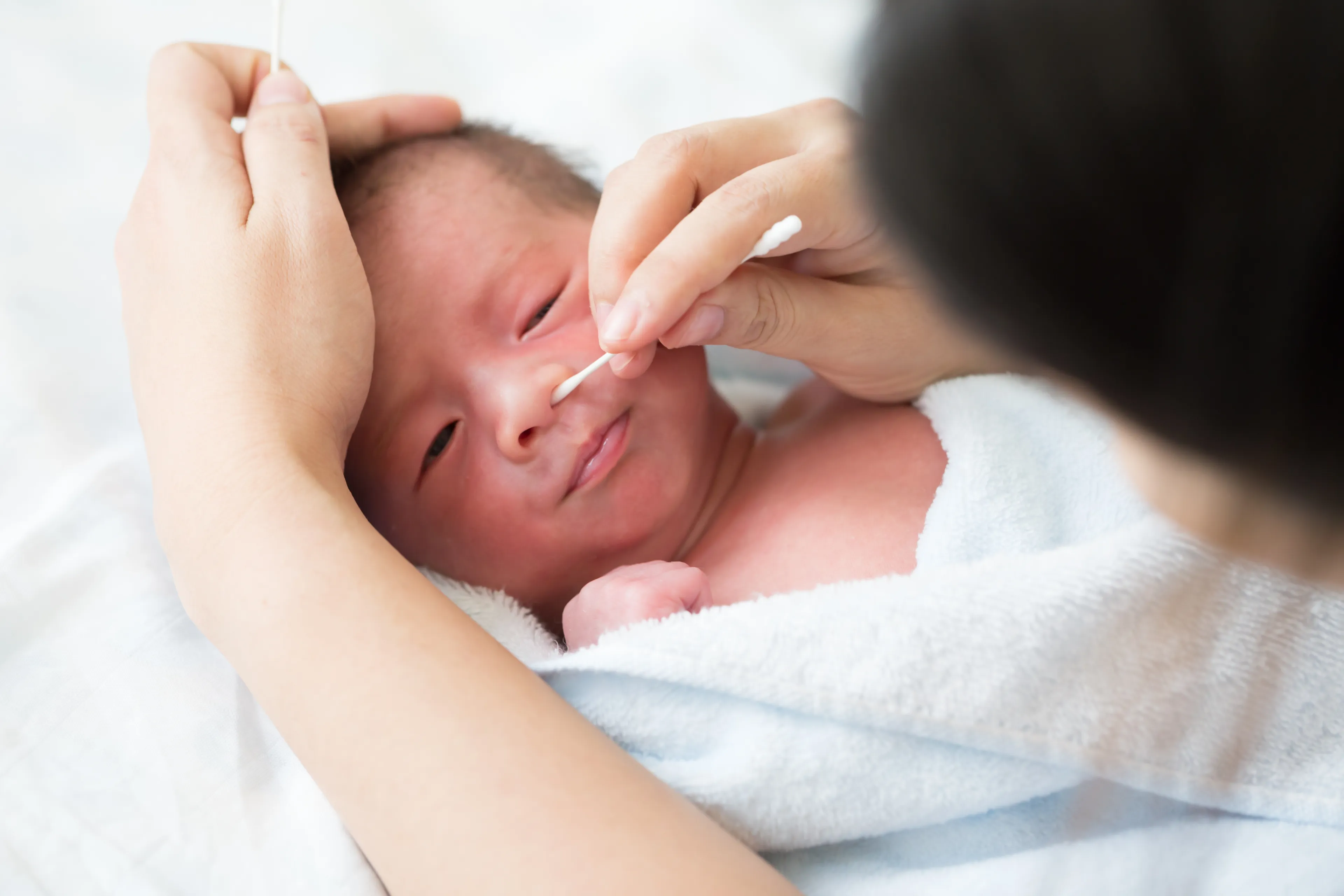
  • Lay your baby on their back on a firm, flat surface. Support the head so it tilts back slightly, not sharply.
  • Hold the dropper tip just at the nostril opening. Do not insert it deeply.
  • Apply 1 to 2 drops per nostril. This is the standard saline drops dosage for most newborns; always follow the specific product label.
  • Keep your baby still for 20 to 30 seconds so the saline can reach the mucus.
  • If mucus appears or your baby sneezes it out, gently wipe the nostril. If congestion remains, use a bulb syringe: squeeze the bulb first, place the tip just inside the nostril, then slowly release.
  • Repeat on the other nostril.
  • Wipe the dropper tip clean and recap it. Never share droppers between children or skip wiping the tip between uses.

How often can you use saline drops?

Most doctors suggest 2 to 3 times a day, or before feeds and bedtime when congestion is most disruptive. Overuse can dry out delicate nasal membranes. If your baby still seems congested after a week of regular use, speak with your paediatrician.

Contraindications and Precautions

There are situations where saline drops should not be used, or should only be used under medical guidance.

  • Nasal injury or recent surgery: do not apply drops if there is visible trauma, bleeding, or if your baby has had any nasal procedure.
  • Known sensitivity to ingredients: some products contain preservatives such as benzalkonium chloride. If your baby has reacted to a product before, choose a preservative-free formulation and confirm ingredients with your pharmacist.
  • Homemade solutions: preparing saline at home risks incorrect salt concentration and contamination. An overly concentrated solution can irritate or damage the nasal lining. Always use a commercially prepared, sterile product.
  • Medicated or decongestant drops: do not substitute these for plain saline in newborns unless a doctor has specifically prescribed them.

Report adverse events to your healthcare provider or the relevant regulatory authority if your baby shows an unexpected reaction after using any nasal product.

When to Consult a Doctor?

Newborn nasal congestion is usually minor, but certain signs mean it is time to stop home management and call your paediatrician promptly.

  • Fever: A temperature of 38°C (100.4°F) or higher in a baby under 3 months requires prompt medical assessment.
  • Laboured breathing: Watch for nostril flaring, pulling in of the skin around the ribs or neck, or grunting with breathing.
  • Bluish or greyish colour: Blue or grey colour around the lips or fingernails can indicate a breathing or oxygenation problem.
  • Poor feeding or fewer wet nappies: Refusing feeds or having a significant reduction in wet nappies can indicate that your baby needs assessment.
  • Persistent congestion: Congestion that does not improve after several days of saline use should be discussed with your paediatrician.
  • Worsening nasal discharge: Increasing thick yellow or green discharge, particularly with other symptoms, warrants medical advice.

These signs can point to respiratory infections or other conditions that need prompt assessment. If you are also exploring natural remedies for cold symptoms alongside saline drops, share everything you are using with your doctor so they have the full picture.

Conclusion

Saline drops are a simple and generally well-tolerated option for helping relieve nasal congestion in newborns. Use a commercially prepared, sterile infant saline product, follow the product instructions, and apply the drops gently without inserting the dropper deeply into the nostril. Saline can be particularly helpful before feeds or sleep when congestion interferes with feeding or comfort. Avoid homemade solutions and medicated decongestant drops unless specifically advised by a doctor. If your newborn develops fever, breathing difficulty, poor feeding, fewer wet diapers, bluish skin, or persistent or worsening congestion, contact your paediatrician promptly.

FAQs

Can I make saline drops at home for my baby?

Homemade saline carries a real risk of incorrect salt concentration or contamination, both of which can irritate a newborn's nasal lining. Commercially prepared, sterile saline nasal drops for infants are safer and inexpensive enough to be the better choice.

How long can newborns use saline drops?

Saline drops can be used for as long as congestion persists, but if symptoms have not improved within 3 to 5 days, check with your pediatrician to rule out an infection or other cause.

Do saline drops have side effects?

When used correctly, side effects are uncommon. Overuse can dry out the nasal lining, and a baby may sneeze or briefly fuss after application. If you notice irritation, bleeding, or any unexpected reaction, stop use and report the adverse event to your healthcare provider or the relevant regulatory authority.

Can saline drops be used with a humidifier?

Yes, a cool-mist humidifier in the room adds moisture to the air and can complement saline drops as a baby blocked nose treatment. Clean the humidifier regularly to prevent mold and bacterial growth.

Is saline the same as decongestant drops for babies?

No. Saline is plain sterile saltwater with no active drug. Decongestant drops contain medicines that shrink blood vessels and are not recommended for young infants due to the risk of serious side effects. Always use plain saline unless a doctor has prescribed something else.

Apollo 247 Floating Action Button