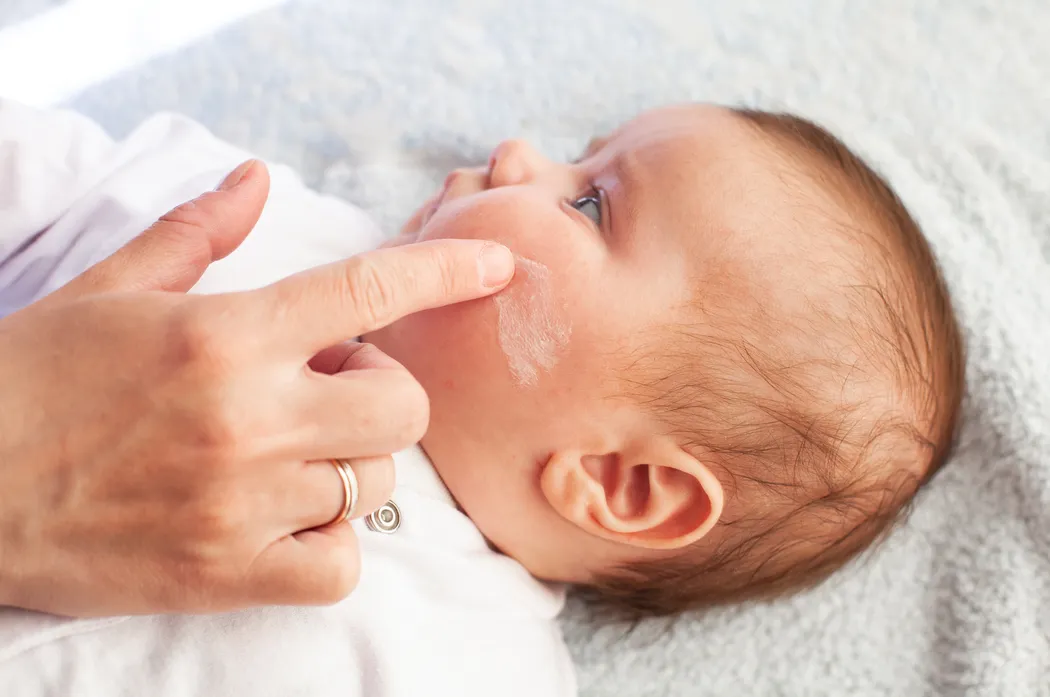
Why Newborn Skin Needs Special Care?
A baby's skin is not simply smaller adult skin. It is structurally different in ways that make it far more reactive to the products you use on it.
At birth, a newborn's outer skin layer (the stratum corneum) is thinner and less developed than an adult's. Moisture escapes more easily, irritants absorb more readily, and the skin takes longer to recover from minor disruptions. Natural moisturising factors are also lower in the first weeks, making dryness a constant risk.
The role of skin pH
Healthy adult skin sits at a pH of around 5.5, mildly acidic. This "acid mantle" supports the skin's protective microbiome and helps resist bacterial and fungal growth. Newborn skin starts closer to neutral pH at birth and gradually shifts toward the 5.5 range over the first weeks to months.
Using products with an alkaline pH, typical of conventional bar soaps, can disrupt the skin's natural acid mantle and microbiome. Research has shown that alkaline cleansers can raise skin pH and may affect the skin barrier, which is one reason dermatologists often recommend pH-balanced baby washes instead of conventional alkaline soaps.
Key concerns specific to newborn skin:
Newborn skin has several characteristics that make it more sensitive and prone to irritation:
- Higher water loss per unit surface area means rapid dehydration if skin is disrupted.
- Thinner skin allows greater absorption of both beneficial and harmful substances.
- An immature immune response can cause even mild irritation to escalate quickly.
For related early-weeks guidance, see Apollo's guide on newborn belly button care, which covers the umbilical stump area that also benefits from gentle, pH-appropriate attention.